 Scriptural characteristics in Indus script drops hints towards synthesis of various primeval language structures, some borrowed from extraneous languages. Indus script is essentially written from right to left and sometimes espouses a boustrophedonic (from Greek "ox-turning", i.e., turning like oxen in ploughing, it represents an ancient way of writing manuscripts and other inscriptions) style. Since the number of principal symbols is approximately 400 to 600 - halfway between archetypal logographic and syllabic scripts, several scholars admit Indus script to be logo-syllabic (typically syllabic scripts have approximately 50-100 symbols, whereas logographic scripts possess an enormous number of principal signs). Scholars assert the view that structural analysis hints towards a polysynthetic language beneath the ancient Indian script. However, this view is again negated by the presence of symbols hypothetically exemplifying prefixes and infixes.
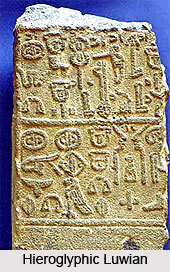
Structural characteristics in Indus script bears evidence of extremely short and brief texts. The average number of symbolisations on the seals is 5, with the longest being only 26. A count of the number of symbols uncovers a lot about the type of system that was utilised during those eras. Alphabetic systems in the script barely have more than 40 symbols. Syllabic systems like Linear B or Cherokee characteristically possess 40 to 100 or so symbols. The third ranges from logophonetic to logographic, reaching to upwards of hundreds of signs (such as 500 signs in Hieroglyphic Luwian, and 5000 symbols in modern Chinese).
It emerges in view that the maximum number of Indus script symbols is 400, even though there exists 200 basic signs (i.e. signs that are not immixed from others). This signifies that structural characteristic of Indus script is probably logophonetic, in that it possesses both symbols used for their meanings and symbols employed for their phonetic standards.
Structural characteristics in Indus script analyses that several symbols in the script set off as pictorial illustration of a physical object, are often misleadingly referred to as pictograms. On the other hand, these actually symbolise logograms, due to their representation of words in language. However, this method of scripting an alphabetical word pictorially was next to impossible and almost abstract. What all early writers solved out was to use a logogram not for the object or idea it was originally reckoned to stand for, but for all words sounding similar to the original word for that object or idea. This form of writing is referred to as `rebus writing`, regarded as a hugely common pattern in all early writing systems. Hence, the logogram in Indus script gained a phonetic value as well.