|
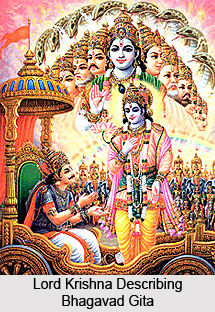 Religion in India was never dogmatic. It was a rational synthesis which went on amassing into itself new conceptions as Indian philosophy progressed. Religious philosophy is experimental and provisional in nature, attempting to keep pace with the progress of thought. Indian thought by its emphasis on intellect, had placed philosophy in the place pf religion, thus bringing out the rational character of religion in India. No religious movement has ever come existence without developing as its support, a philosophic content. From such promising information from time immemorial, it stands evident that religious influence on Indian philosophy has been incredible and sublime in its content and making. Early in the 20th century, several scholars, intellectuals and philosophers looked towards the relationship of religion, Indian religious philosophy and science as an evolutionary one in which the more sophisticated ways of viewing the world simply replaced the older ways. Religion itself was often thought to have arisen from 'magic' and so intelligent schemes illustrated the development of human thought. Religion in India was never dogmatic. It was a rational synthesis which went on amassing into itself new conceptions as Indian philosophy progressed. Religious philosophy is experimental and provisional in nature, attempting to keep pace with the progress of thought. Indian thought by its emphasis on intellect, had placed philosophy in the place pf religion, thus bringing out the rational character of religion in India. No religious movement has ever come existence without developing as its support, a philosophic content. From such promising information from time immemorial, it stands evident that religious influence on Indian philosophy has been incredible and sublime in its content and making. Early in the 20th century, several scholars, intellectuals and philosophers looked towards the relationship of religion, Indian religious philosophy and science as an evolutionary one in which the more sophisticated ways of viewing the world simply replaced the older ways. Religion itself was often thought to have arisen from 'magic' and so intelligent schemes illustrated the development of human thought.
A book like the Bhagavad Gita is a profoundly crucial religious document for Hinduism, yet it is also one of the fundamental documents of Indian philosophy. Indeed, the Gita appears to have been produced by Indian philosophy, the Samkhya and Yoga Schools and then been transformed into a religious document. Finally, the text came to be used for both religious and philosophical (by Vedanta) purposes later on. This kind of aspect makes distinctions between religion and philosophy very difficult in the Indian tradition. India is the home of philosophy, religion and spirituality. In India, spirituality basically adjusts one's mind to consider one's self and others as different from the gross physical body and the subtle mental body and to be beyond the limitations of space, time and causation. Philosophy is the theoretical aspect and religion is the practical aspect of this principle. The 'Indian religious temper', called Hinduism, is more ancient than the oldest known Rig Vedic hymn, which is dated to approximately 5000 B.C. Yet, Indian philosophy is as modern as the school of thought formed in recent past. This dynamic nature of the religion, based on a concrete foundation makes it one of the most knowledgeable and vibrant of religions. Hence, religious influence on Indian philosophy has been almost historical and intrinsic, making the various emerging schools interlinking themselves in thoughts and principles.
The Indian perspective on philosophy is to view all religions as diverse ways to reach the same goal of manifesting the fundamental divinity in man. So a follower of the Indian spiritual tradition accepts all religions to be true and suited for people with various mental structures, if followed in the right spirit. Be it in Hinduism, Jainism, Buddhism or Sikhism, religious influence on Indian philosophy is too profound to be called just mere exaggeration. The ethical doctrines of Jainism are based on the path of liberation, right belief, right conduct and right knowledge. This very verve of Jainism also contours the vase of the Indian philosophy. The Jains believe in Anekantavada, or the theory that reality is many-sided. This also adds to the base of Indian philosophy and is perhaps the reason why so ideally Indian philosophy negates dogmatism.
Buddhism as a religion rejects the "idea of idea of divine providence, but they teach that vices are punished and virtues are recompensed by a fatal necessity"- while this is the kernel of the Buddhist religion, this is also the central idea of Indian Philosophy and explicitly explains the theory of karma.
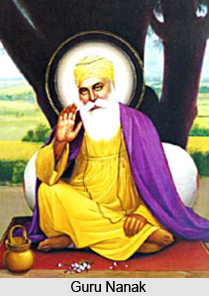 Sikhism is yet another sublime organised religion in India that had originated during the 15th century, precisely in northern India. The principle teachings and scriptures were formulated by Guru Nanak, followed by nine successive gurus. The basic belief or faith in Sikhism is Vahiguru, symbolised by the sacred symbol of ek oankar (one God). Mirroring the quintessential Punjab in each of their tradition and teaching, adherents of Sikhism initially had begun with a relatively neutral faith system. Sikh gurus had proposed to include the best practices of Hinduism or Islam, which, over time had to be relinquished with, due to crusades with both the mentioned faiths, notably with the Mughals. Sikhism counsels the quest of salvation through disciplined, individual meditation, concentrating on the name and message of God. A key distinguishing feature of Sikhism is a non-anthropomorphic concept of God, to the degree that one can infer God as the Universe itself. Sikh followers believe in equality of all beings and shun favouritism on the basis of caste, creed and gender. Essentially behaving as a monotheistic religious faction, Sikhism has time and again fixed their impressive religious influence on Indian philosophy.
As a matter of fact, religion and philosophy compliment each other in values, spirituality and governance. These theories were explicitly demonstrated by Sri Ramakrishna (1836-1886) during his lifetime. The supremacy of religion and of social tradition in life does not hamper the free pursuit of philosophy.
|