Post independent India reflects the aspirations of the bygone leaders, the dreams of foreseers, and the hopes of independent midnight`s children. India acquired its long cherished independence on 15th August, 1947, after British government decided to lay down all claims of the Indian dominion. India was no longer to stay a slave nation under British Empire and a decision was arrived fast, under Lord Mountbatten, the last Viceroy of British Indian Empire Chakravarti Rajagopalachari began to serve in the office of the Governor General of India, the first ever Indian under this category.
Jawaharlal Nehru became the first Prime Minister of India and Sardar Vallabhbhai Patel was named the Deputy Prime Minister of India and its Minister of Home Affairs. However, behind all these rosy and promising state of affairs, there also was underlying the extreme dark side of post independence India, in the terrible fate of Partition of India into India and Pakistan, a nation largely dedicated to Muslim living, in the aftermath of various bloodbath of Divide and Rule during British administration. Post independence India was not only a concern of India and Indians, but also Pakistan and Pakistanis and their ministerial matters.
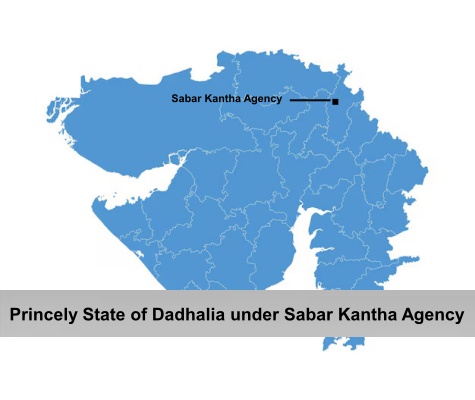
When the British dispensed with their claims to paramount, the 562 independent princely states were afforded the option to join either of the two nations. A few princely states voluntarily joined Pakistan, but the rest, excluding Hyderabad (the largest of the princely states with 132,000 square kilometres and a population of more than 14 million), Jammu and Kashmir (with 3 million dwellers) and Junagadh (with a population of 545,000), united with India.
 Post independence India fruitfully annexed Hyderabad and Junagadh after "police actions" and assurances of privileges to its royals. The Hindu Maharajah of the predominantly Muslim Jammu and Kashmir remained unattached, until armed tribesmen and regular troops from Pakistan infiltrated his sphere, rushing him to sign the Instrument of Accession to India on October 27, 1947.
In this wake of post Independence India and its soon to burst balloon of the Swaraj illusion, Mahatma Gandhi was assassinated on January 30, 1948, in New Delhi, by a Hindu extremist, Nathuram Godse. He was grossly opposed to Gandhi`s candidness towards Muslims, thus ending the fragile celebration of independence and deepening the revulsion and mutual suspicion in Hindu-Muslim relations. Amidst such commotion, Indian government post independence was to behave in a secular and sovereign manner, taking decisions pertaining to economy, foreign relations, border security and the likes. Keeping these sublime important key facts to mind and looking towards establishing India as a respected free nation worldwide, the country framed its one of a kind Constitution on 26th November, 1949.
The Constituent Assembly of India adopted and embraced the Constitution of India, drafted by a colossal committee, headed by the enigmatic B. R. Ambedkar. India from then onwards became a federal, democratic republic after its Constitution came to effect on January 26, 1950, the day which was declared henceforth as Republic Day to its citizens. Dr. Rajendra Prasad became the first President of India. With the path of gradual increase of post independence India towards a socialist secular and sovereign republic, the country held its first national elections under the Constitution in 1952. A first time breathtaking turnout of over 60 percent footfall was recorded. The Congress Party won a sweeping majority and Pandit Jawaharlal Nehru began his second term as Prime Minister. President Rajendra Prasad was also re-elected to a second term by the electoral college of the first-ever formed Parliament of India.
Prime Minister Jawaharlal Nehru led the Congress to astounding election victories in 1957 and 1962. The Parliament went on to pass extensive reforms that amplified the legal rights of women in Hindu society and further legislated strictly against caste discrimination and untouchability. Nehru had much to do with these deeds, with India shining in leaps and bounds, by adapting a view of absolute democracy. However, much as was being assayed to uplift post independence India towards betterment, dark forces still hovered around, in the form of the Jammu & Kashmir issue and its delimitations, one of the primary causes that was to lead to the Indo-China War in 1962, a war fundamentally fought on the basis of border disputations. Additional Kashmir conflicts erupted in the form of Indo-Pak War in 1971, wherein Pakistan had dangerously come down onto Indian control line-ups, forcing Indian Army to take dire measures. The 1971 Indo Pak War was won by Indian brave hearts. Industrialisation and commercialisation of technology and general goods product was another domain that was laid primary emphasis by the post independence Indian government to verily influence foreign trade and import.