
 Medieval Indian literature was greatly influenced by various factors, dominated mostly by Hindu and Muslim religions. The Middle Ages in India were an incessant period of perpetual fluctuation. Ordinary life during medieval period was exceedingly complex, undergoing fast changes. The continuous influx of migratory population brought with it different beliefs, customs, practices and lifestyles, turning major portions of India into an ablaze pot. The spread of philosophical movements or the sublime popularity of these genres, cultivated innate resources and responses to external forces were bettered to be prepared for the worse. The end result to this period a vibrant kaleidoscope of language and literature, which absolutely mirrored and reflected upon these themes of competition between two dominant religions: Hinduism and Islam. Medieval Indian literature wholly banked upon these themes, creating its own distinctive history in the long run.
Medieval Indian Literature
Medieval Indian Literature had developed with the advent of the Bhakti Movement and was greatly influenced by the Hinduism and Islamic beliefs.
Introduction
Medieval Indian literature was greatly influenced by various factors, dominated mostly by Hindu and Muslim religions. The Middle Ages in India were an incessant period of perpetual fluctuation. Ordinary life during medieval period was exceedingly complex, undergoing fast changes. The continuous influx of migratory population brought with it different beliefs, customs, practices and lifestyles, turning major portions of India into an ablaze pot. The spread of philosophical movements or the sublime popularity of these genres, cultivated innate resources and responses to external forces were bettered to be prepared for the worse. The end result to this period a vibrant kaleidoscope of language and literature, which absolutely mirrored and reflected upon these themes of competition between two dominant religions: Hinduism and Islam. Medieval Indian literature wholly banked upon these themes, creating its own distinctive history in the long run.Emergence of Bhakti Movement
Medieval period was also recognised by umpteen social movements, which contested the prevailing orthodoxy and dogmatism, that was propagated by the so-called keepers of both Hindu and Muslim religions. These reformist movements accomplished heavy-weight mass support and were in totality clubbed under the idiom Bhakti Movement. The key players of the Bhakti Movement were Guru Nanak, the founder of Sikh religion, Kabir and numerous Sufi saints. They together echoed religious harmony and ostracised intolerance, Casteism and pomposity. These reformers, armed with their writings, verses or oral preaching, played a sizeable role in bridging the emotional chasm between practitioners of two predominant religions of India of that age.
Medieval Indian Literature in Mughal Era
Though orthodoxy ruled in medieval India and consequently trammelled the process of learning to some extent, yet, medieval Indian literature bears its very first testimony in the authoritative biographies. Baburnama by Mughal Emperor Babur himself depicts Hindustan with grand prose, though with a rather distorted view. Ain-i-Akbari and Akbarnama by Abul-Fazl are some of the only other instances of the vast body of biographies created during the Mughal era. Furthermore, the verses of the Sufi saints and other saint poets of the Bhakti Movement in medieval India produced a literature for the first time, which was sensitive to the aspirations of the masses. Numerous regional languages like Hindi, Urdu, Marathi, Bengali, etc., also achieved their distinguished identities during the Mughal era, which in later period, helped to generate a vast body of classic regional literature.

Recurrence of Classics in Medieval Indian Literature
One of the striking features of early medieval Indian literature is several of the new languages that were developed, intrinsically revitalised and recreated the classics of ancient Indian literature. Epics like Ramayana and Mahabharata received a revival in these newly formulated languages. Other ancient works like Panchatantra and numerous other Puranas and myths, came to be retold. Creating an inter-relation between these classics and modern languages, the authors like Kampan in Tamil, Krittivas Ojha in Bengali, Sarala Das in Oriya, Ezhuttacchan in Malayalam, Tulsi Das in Hindi and Nannaya in Telugu, stood out for the common mass.
Influences on Medieval Indian Literature
Topography was yet another significant factor in the evolution of these medieval Indian literatures. The migratory nature of population in the early centuries were substituted by more or less settled living, and the impact of nature, landscapes, seasons, flora and fauna have influenced the conditioning of Indian literature during Middle Ages. The vocabulary and imagery of the writers were immensely influenced by the geographical location of the community to which the writer belonged, as is evidenced by the language and style of early Manipuri writers. The rivers of India were greatly celebrated in medieval Indian literature, like Brahmaputra, Ganga, Yamuna, Godavari, Kaveri or Sutlej. Apart from apparent and explicit references, there were subtle ways in which nature penetrated into literary works. The hills of Manipur, the rivers of Upper India, the desert of Rajasthan, the panorama of Konkan and Kerala, the snow-topped peaks of Kashmir - all of these have furnished staple poetic themes for medieval literature.
 The regional grouping of literatures, on the basis of ethnic similarity or geographical proximity or even through mutual transactions, is yet another feature established in medieval Indian literature. Both thematic and stylistic aspects had aided to form this proximity. Assamese, Bengali and Oriya manifest this; Assamese, Bengali and Maithili too, or even Gujarati, Hindi and Rajasthani. It is also noticed that at times the same writers made use of different languages. Tamil and Malayalam form another sub-group in this manner; Kannada and Telugu are the last to join this group. The multiple versions of the Heer-Ranjha story in Punjabi, of Sassi and Punnu in Sindhi, of Radha and Krishna in Oriya or Hindi or Sanskrit, of man and God in Sufi poetry in Kashmiri, Punjabi or Urdu, are materialisations of continuous interactions between groups of speakers of these languages.
Another feature of Medieval Indian Literature perhaps is the most contemporary and ahead of times aspect of love and war. Conflicts and tensions of all kinds dominated the atmosphere in umpteen medieval literatures in India. Love, other than the love of God was the staple theme in Ghazals and Mathnavis, in Kirtans and Padas, in Tirhutis and Abhangas. Apart from the old battles and conflicts recounted in epics and Puranas; War as an aspect of contemporary experience, also aroused the imagination of the medieval poets. The heroic sentiment is especially strong in Punjabi, Rajasthani, Tamil and Marathi literatures. In matters of love, the failure of love was as much a source of inspiration as the triumph of love. There exists an implicit glorification of the tragic in all the folk narratives on Heer-Ranjha or Sassi-Punnu or Yusuf-Zulaikha legends.
The regional grouping of literatures, on the basis of ethnic similarity or geographical proximity or even through mutual transactions, is yet another feature established in medieval Indian literature. Both thematic and stylistic aspects had aided to form this proximity. Assamese, Bengali and Oriya manifest this; Assamese, Bengali and Maithili too, or even Gujarati, Hindi and Rajasthani. It is also noticed that at times the same writers made use of different languages. Tamil and Malayalam form another sub-group in this manner; Kannada and Telugu are the last to join this group. The multiple versions of the Heer-Ranjha story in Punjabi, of Sassi and Punnu in Sindhi, of Radha and Krishna in Oriya or Hindi or Sanskrit, of man and God in Sufi poetry in Kashmiri, Punjabi or Urdu, are materialisations of continuous interactions between groups of speakers of these languages.
Another feature of Medieval Indian Literature perhaps is the most contemporary and ahead of times aspect of love and war. Conflicts and tensions of all kinds dominated the atmosphere in umpteen medieval literatures in India. Love, other than the love of God was the staple theme in Ghazals and Mathnavis, in Kirtans and Padas, in Tirhutis and Abhangas. Apart from the old battles and conflicts recounted in epics and Puranas; War as an aspect of contemporary experience, also aroused the imagination of the medieval poets. The heroic sentiment is especially strong in Punjabi, Rajasthani, Tamil and Marathi literatures. In matters of love, the failure of love was as much a source of inspiration as the triumph of love. There exists an implicit glorification of the tragic in all the folk narratives on Heer-Ranjha or Sassi-Punnu or Yusuf-Zulaikha legends.
Expansion of Medieval Indian Literature
Several of the medieval Indian literature and their earliest works in many of the various regional languages were sectarian, designed to advance or to celebrate particular unorthodox regional beliefs. Illustrations are the Charyapadas in Bengali, Tantric verses of the 12th century and the Lilacharitra (circa 1280), in Marathi. In Kannada (Kanarese) from the 10th century and later in Gujarati from the 13th century, the first strictly indigenous works comprise Jain romances. Ostensibly portraying the lives of Jain saints, these are actually popular tales based on Sanskrit and Pali themes. Other examples in medieval Indian literature include in Rajasthani, relating about the Bardic tales of chivalry and heroic resistance to the first Muslim invasions, such as the 12th century epic poem Prithirajaraso by Chand Bardai of Lahore. Most important of all, for later medieval Indian literature, were the first tinctures in the vernacular languages of the northern Indian cults of Krishna and Rama. Included in this phase, are the 12th century poems by Jayadeva, named the Gitagovinda and a group of religious love poems written in Maithili by the poet Vidyapati were a decisive influence on the cult of Radha-Krishna in Bengal.
During the same period, the path breaking Bhakti Movement founded in South India was led by 63 Nayanars (devotees of Shiva) and 12 Alvars (devotees of Vishnu). The most famous Shaiva Bhakta cults were the 4 Nalvar, namely - Sundarar, Appar, Sambandar and Manikkavasagar. Their devotional hymns, intrinsically linked with medieval Indian literature, are known to be doused in complete ecstasy and lyrics. The hymns of the 12 Alvars are held together as the Nalayira Divya Prabandham and chanted in temple rituals. Chief amongst them however is Andal, the only female Vaishnava saint and her hymns express the bridal mysticism in Hindu religion.
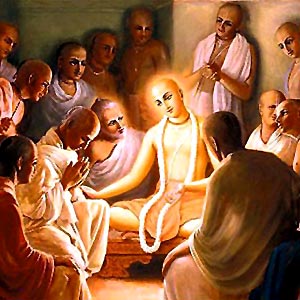 The path of devotion ushered by these mystics would later go on to influence Ramanuja and Madhavacharya philosophy. The Virashaiva Movement was incidental to spread the philosophy of Basavanna. Even the Haridasa Movement circularised from present day Karnataka had presented themselves in two groups - Vyasakuta and Dasakuta. Medieval Indian literature was ultimately pivoted around this Bhakti Movement and its various unusual revolutions. The Bhakti movement also resulted in a proliferation of Kannada poetic works in praise of Vishnu. Eminent poets in this category comprise Purandara Dasa and Kanaka Dasa, whose contrib
utions to Carnatic music were invaluable and still irreplaceable.
The path of devotion ushered by these mystics would later go on to influence Ramanuja and Madhavacharya philosophy. The Virashaiva Movement was incidental to spread the philosophy of Basavanna. Even the Haridasa Movement circularised from present day Karnataka had presented themselves in two groups - Vyasakuta and Dasakuta. Medieval Indian literature was ultimately pivoted around this Bhakti Movement and its various unusual revolutions. The Bhakti movement also resulted in a proliferation of Kannada poetic works in praise of Vishnu. Eminent poets in this category comprise Purandara Dasa and Kanaka Dasa, whose contrib
utions to Carnatic music were invaluable and still irreplaceable.
The spread of Bhakti Movement in North India was spontaneous and centred around Lords Rama and Krishna. However, all forms of Bhakti Movement, both for the Muslims and Hindus, peacefully coexisted and were immeasurably popular with the masses. The period within 14th - 17th century A.D. witnessed the wave of Bhakti Movement sweeping across North India and teachers of this movement were saints like Vallabhacharya, Mira Bai, Kabir, Tulsidas, Tukaram and various others. All of these personas were substantial to amplify the scope of medieval Indian literature, who penned in vernacular prose and poetry in the ethnic language of the state.
During the same period, the path breaking Bhakti Movement founded in South India was led by 63 Nayanars (devotees of Shiva) and 12 Alvars (devotees of Vishnu). The most famous Shaiva Bhakta cults were the 4 Nalvar, namely - Sundarar, Appar, Sambandar and Manikkavasagar. Their devotional hymns, intrinsically linked with medieval Indian literature, are known to be doused in complete ecstasy and lyrics. The hymns of the 12 Alvars are held together as the Nalayira Divya Prabandham and chanted in temple rituals. Chief amongst them however is Andal, the only female Vaishnava saint and her hymns express the bridal mysticism in Hindu religion.
The path of devotion ushered by these mystics would later go on to influence Ramanuja and Madhavacharya philosophy. The Virashaiva Movement was incidental to spread the philosophy of Basavanna. Even the Haridasa Movement circularised from present day Karnataka had presented themselves in two groups - Vyasakuta and Dasakuta. Medieval Indian literature was ultimately pivoted around this Bhakti Movement and its various unusual revolutions. The Bhakti movement also resulted in a proliferation of Kannada poetic works in praise of Vishnu. Eminent poets in this category comprise Purandara Dasa and Kanaka Dasa, whose contrib
utions to Carnatic music were invaluable and still irreplaceable.
The spread of Bhakti Movement in North India was spontaneous and centred around Lords Rama and Krishna. However, all forms of Bhakti Movement, both for the Muslims and Hindus, peacefully coexisted and were immeasurably popular with the masses. The period within 14th - 17th century A.D. witnessed the wave of Bhakti Movement sweeping across North India and teachers of this movement were saints like Vallabhacharya, Mira Bai, Kabir, Tulsidas, Tukaram and various others. All of these personas were substantial to amplify the scope of medieval Indian literature, who penned in vernacular prose and poetry in the ethnic language of the state.
Medieval Bengali Literature
Even seminal works in the regional languages on the theme of Bhakti are explored in Shyama Sangeet in Bengal, which were composed by Ram Prasad Sen and are still considered an integral part of Bengali culture. Dedicated to Goddess Kali, the medieval Indian literary outbursts are defined as allegorical mediums of spontaneous expressions. It is alleged that Ram Prasad Sen personally communicated with Goddess Kali through his poetry. Another Bengali leader in Bhakti movement was Chaitanya Mahaprabhu, who defined his system of philosophy as Achintya Bheda Bhed, which meant inconceivable and simultaneous oneness and difference.
Medieval South Indian Literature
 Vijayanagar rulers were patrons of learning. They encouraged and rewarded scholars and made no distinction on grounds of caste or creed. Be it a Jain writer or any other writer from other community, every scholar was rewarded.
Sanskrit Literature
Sanskrit studies received a great impetus under the patronage of the Vijayanagar rulers. The great scholar Sayanacharya during the 14th century wrote bhasyas (commentaries) on Rig Veda Samhita, Kanva Samhita, Taittiriya Brahmana, Satapatha Brahmana, and Aitareya-ranyaka. Sayana will be remembered by posterity for his interpretation of the Vedic texts. Vyasaraya (1478-1539 A.D.) was another great Sanskrit scholar who flourished under the patronage of Krishnadeva Raya. Most of his works were devoted to Dvaita philosophy Bhatta Akalankedva, a Jain pandit wrote a grammar of Kannada in Sanskrit along with a commentary. Vedanta Desika (1268-1369 A.D.), a versatile scholar, wrote a number of works in Sanskrit. Most important of them are Yadavabhyudayam, a long poem on the life of Lord Krishna, Hamsa Sandesa on the model of Kalidasa`s Meghaduta, Sankalpa Suryodaya and Subhasita Nivi.
Madhvacharya was a well-known Sanskrit scholar who was intimately connected with the Vijayanagar royal family He was also minister at the court of Bukka I. He was author of a large number of works including Parasarasmriti - Vyakhya, Jivan-muktiviveka (on Advaita Vedanta) and JaUniniyanya Tamalavistara. Harihara IPs minister, Irugappa Dandanatha, was a scholar of repute. His lexicon Nanaratharatnamala is well known. Gangadevi, wife of Kampana, son of Bukka, deserves a pre-eminent place among the writers of the age. In her famous work Maduravijayam, she describes in mahakavya style the conquest of Madura by her husband. Deva Raya II is credited with the writing of Ratiratnadipika and Brahmasutravritti. Saluva Narasimha was the author of Ramabhyudayam. Krishnadeva Raya`s Sanskrit works include Madalasacharitra, Satyavaduprenanam, Sakalakanthasara Sangraharn, and Rasmanjari. The Prime Minister Saluva Timma, was the author of Bala Bharata Vyakhya. Lolla Lakshmidhara was the author of several works including an encyclopedia Divajnavilasa.
Rajanatha Dindima was the court poet during the reign of Achyutaraya. Mohanangi also identified with the wife of Rama Raja composed the love poem Marchhiparinayam. The most important scholar at the court of Venkata I, the later Vijayanagara ruler was Tatacharya. His famous works were Pandurangamahatmya and Satvika Brahma Vidya Vilasa. Appayya Dikshita wTote 101 works. His celebrated work Sivarkamanidipika shows his mastery over whole of Sanskrit literature. Vadiraja who flourished during 16th century is credited with 20 works including Vivarnavranam and Pasandakhandanam. Raghunatha Nayaka wrote Parijatapaharanam, which deals with the life of Lord Krishna. Religious literature also flowed from the monasteries of Sringeri, Melkote and Udipi.
A rare work on polity Akasabhairavakalpa, probably written by some politician or a minister of Vijayanagar, throwing light on the daily life of the rulers of Vijayanagar, the ministers as well as the life in the capital has survived vicissitudes of times. It is an anonymous work. Lakshmidhara`s Bharatasastrasangraha and Lakshminarayana`s Sangita Suryodaya are works on music produced during 16th century. Rajanatha II composed a historical poem in praise of Saluva Narasimha. Rajanatha III wrote another historical poem Achyutarayabhyuda-yam. Krishnadeva Raya wrote a drama called Ushaparinaya.
Telugu Literature
Nachana Somanatha composed Harivamsamu on Lord Krishna. Pillamawi Pina Virabhadra Kavi a great poet produced Telugu version of Kalidasa`s Sakuntala. The devotional music of Tallapaka Annamacharya occupies a unique place. Srinatha translated Naisadhiya Charita of Sri Harsha and wrote Kasikkandam and Vidhmatakam. Celebrated poets in the court of Devaraya include Jakkanna and Pinna Veerabhadra. Sarada a gifted poetess wrote 18 dramas. Krishnadeva Raya is famous for his Amuktamalyada the theme being marriage of Ranganatha and Goda Devi. Among his Ashta Diggajamulu or eight great poets Allasani Peddanna, Pingali Suranna and Tenali Rama-krishna were well known. Ramaraja Bhusana wrote Vasucharitramu and Harishchandra.
Kannada Literature
A large number of Kannada works were produced. Bhima Kavi translated Basava Purana into Kannada. Harihara II earned the title of promoter of Kannada learning. Mahalingadeva wrote Ekkottara Satsthala. Kumara Vyasa and Chamarasa wrote Bharata. The latter is also credited with the authorship of Prabhulingabilas. Bommarasa wrote Sundara Purana while Tontade Siddhesvara compiled Satsithalajna-masaramrta. Timmana Kavi wrote the closing chapters of Bharata. Kumara Valmiki composed Harishchandra (Kannada version) of Ramayana. Sridharadeva completed a work on medicine Vaidyamrita. Virupaksa Pandita wrote Channa Basava Purana. Bhattakalam Kedeva wrote a highly valuable work on grammar entitled Karnatakasabdanusasana.
Tamil Literature
There was comparative peace and prosperity in Tamil country after its conquest by Kampana. It led to the development of Tamil literature. Krishnadeva Raya patronized Tamil scholars. Tirumalainatha and his son Paranjotiyar were well-known scholars of the period. Sewaichch-buduvar translated Bhagavata Puranam into Tamil. Vadamalavi Annagalayyam was the author of Irusamaya Vilakkam a work on Vaisnavism. Jnanaprakasa Desikar was the author of two works Manjarippa and Kachchi Kalambakam. There were other poets such as Virakavirasar, Vadamalayar and Perumal Kaviraya.
Maraijananasambanadar was a well-known Tamil scholar who wrote a number of works such as Patipasupasappanuval, Sankarapanira-karananiy Sakalajyamasaran, etc. Kamalani Jnanaprakasa Pandit and Gurujananasambandar were authors of large number of works.
Revanasiddhar who flourished at the close of the 16th century wrote a lexicon Akarathi Nikandu. The great Tamil poet Tayumanavar (died A.D. 1662) wrote a number of works.
Recently updated articles in Indian Literature
Gadyakarnamrita
Gadyakarnamrita is a 13th-century Sanskrit literary work written mainly in prose. It describes the ninety-day battle at Srirangam between the Hoysala...
Women Writers in Malayalam Literature
Women writers in Malayalam literature have worked incessantly to make a place for their literary works. In the earlier periods, they were completely o...
Comrade Kirillov, Novel by Raja Rao
Comrade Kirillov, a distinctive creation of Raja Rao, is presented as a brief yet incisive novelette that offers an ironic portrayal of the self-contr...
The Foreigner, Novel by Arun Joshi
“The Foreigner” is a book authored by Arun Joshi and published by Vision. It is an illustrious creation in the entire career of Arun Joshi, the famous...
Short Story in Telugu Literature
Short Story in twentieth century Telugu Literature was extremely popular and growing in and developing in a major way. Their popularity was greatly fa...
Related articles in Indian Literature
Mythological Themes in Indian Literature
Mythological themes in Indian literature have been integral to every ancient and contemporary writer and their path to f
Literature During Gupta Age
It is during the Gupta Age literature in the form of poetry, epos and drama gained a colossal importance.
Literature of Aravidu Dynasty
Sanskrit and Telugu were the popular literary medium of communication during Aravidu dynasty.
Munshi Premchand
Munshi Premchand was a legendary Indian writer notable for his modern Hindustani literature. A writer of a very high caliber, Premchand`s writings hav...
Sanskrit Poets
The names of some of the Sanskrit Poets are Bharavi, Devarshi Ramanath Shastri, Jayadeva and Srinivas Rath.