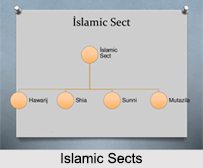
 Islam consists of a number of religious sects that are essentially similar in belief, but which have significant theological and legal differences. With changing times different categories of Islamic sects and communities have developed. Sunni and Shia comprise the two main sects within Islam. These sects follow different schools of Islamic law and theology. The members of the various Islamic sects can easily change over from one set of beliefs to another. For instance, a Sunni can become a Shia and vice versa and intermarriages among them are not uncommon. However, over the centuries, many sects have become hereditary. There are also regional groups that follow one or the other of the various sects.
Major Sects of Islam
There are 72 Muslim sects in all that are not strictly hereditary and there is no hierarchy among them. Primarily there are two major sects of Islam, the Shia and the Sunni. Besides these two Islamic sects there is the Ahmadiyya Sect.
Shia Sect: The Shia Sect is one of the popular sects of Islam. In India, people belonging to this sect are easily found. They firmly believe in the Hashmite section of the Prophet Muhammad"s survivors. It is believed that between the Shia and Sunni Muslims, the former is more liberal. Their beliefs are also diametrically opposite to that of the Sunnis.
Sunni Sect: On the other hand the orthodoxy of the Sunni Muslims is well known too. This group of Islamic people adheres to the doctrines that tradition has established. The Sunnis in India constitute of a conservative group. Most of them are of the view that the Hanafi code which is the absolute expression of the Shafiah.
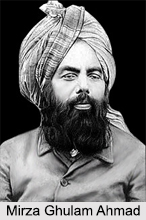
Ahmadiyya Sect: The founder of the sect was Mirza Ghulam Ahmad of Qadian. He declared himself the chosen messiah who was entitled to carry forward Prophet Muhammad"s unfinished task. In India, people related to this sect are mostly settled in Punjab. They had also originated from this very place.
 Islamic Communities in India
In India, there are many Islamic communities as well. These are not recognised as separate sects but they command huge popularity amidst the masses. The Dawoodi Bohra Community, for instance, is a close-knit trade community of the Muslims. More popularly it is known as the Shia Ismaili Tayabji Dawoodi community and it practises Islam shaded with Hinduism. The Bohras believe in a cryptic interpretation of the Quran. According to historical data their place of origin is Gujarat. However, their trade gradually took them to Mumbai and they settled there too.
Apart from these there are the Ismaili Khoja Community, Kashmiri Muslim Community, Memon Community, Moplah Community, Sulaimani Bohra Community and others.
Islamic Silsilas in India
The advent of Islam in India led to the rise of various religious movements as well which either tried to bring the two major communities, Hindus and Muslims, nearer each other or tried to reform Islam which had deviated considerably from the tenets of Shariat due to the conversion of a large number of lower class people in India, who brought with them their own customs and superstitions and continued to practise them. Sufism was one such movement. In this connection a number of silsilas emerged. Abul Fazl has referred to 14 such silsilas in Ain-i-Akbari. But most of them were mystic groups and even sub-branches of the silsilas.
The most important of these orders were as follows:
 1.Chishti Order: The founder of this sect was Khwaja Muinuddin Chisti. He is also known Garib Nawaz. The order that he developed were based on his principles of love and acceptance. In India, even today, thousands of Chishti followers throng Ajmer to pay homage to their seer. This particular Islamic order was popular in Delhi, Rajasthan, Gujarat and Malwa.
2.Suhrawardi Order: The origin of this community is rooted in medieval India.
3. Qadiri Silsila: This silsila was introduced in India by Sayyid Muhammad Gilani (died 1517) who migrated to India and settled in Uchch near Multan in 1482. He was succeeded by his son Abdul Qadir (1459-1533). They were able to attract a number of Hindu followers, some of whom were even converted to Islam.
4. Shattari Silsila: It was popularized during the Sultanate period and was revived once again under the Lodhis. The saints of this order were believed to have direct connection with the Almighty.
5. Naqshabandi Order: This Sufi order gained impetus during the last days of Akbar. Khwaja Baqi Billah (1563-1603) from Kabul was its important leader. It was he who popularized the order in India.
These Sufi mystics were responsible for the spread of Muslim culture among the masses in the various parts of the country. The Islamic concept of equality and brotherhood of man greatly attracted the lower classes of the Hindus who had no access to temples and were even forbidden to read the scriptures. There was no discrimination between the high and the low. All worked together and dined and slept together. The mystics laid emphasis on the brotherhood and equality of mankind. Many of the mystics particularly of the Chishti order showed a spirit of toleration towards other religions and creeds.
The Islamic sects, along with the communities and orders, demonstrate the historical, political and economic consequences besides the fundamental theological principles.