





 Considered as one of the tradition of Indian culture, theatre since ages depicted the abundant tradition of the land. Right from the earliest days till the modern times, theatre happens to be one of the celebrated art forms in India. Although, the history of Indian theatre goes back to the mythological or the Vedic era yet it is during and after the medieval period theatre in India that gained its redefined structure. Considered as one of the tradition of Indian culture, theatre since ages depicted the abundant tradition of the land. Right from the earliest days till the modern times, theatre happens to be one of the celebrated art forms in India. Although, the history of Indian theatre goes back to the mythological or the Vedic era yet it is during and after the medieval period theatre in India that gained its redefined structure.
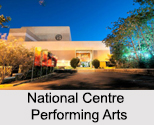
History of Indian Theatre Stages The Indian theatre has a belief going back to at least 5000 years. The first book on drama in the world was written in India. It was called ‘Natya Shastra’, the grammar or the sacred book of theatre by Bharat Muni. Its era has been placed between 2000 B.C. to 4th Century A.D. A long duration of time and performance is required for any art or movement to form its rules and notifications. Theatre with its appeal and art has always been the most important element in mouthing the unspoken. Theatre in India started as a storyline form, like reciting, singing and dancing becoming essential fundamentals of the theatre. This importance on narrative elements made theatre fundamentally theatrical right from the beginning. That is why the theatre in India has included all the other forms of literature and fine arts into its physical presentation: Literature, Mime, Music, Dance, Movement, Painting, Sculpture and Architecture - all mixed into one and being called ‘Natya’ or Theatre in English. Indian theatre stages did not form in a day. The deep seated relation with folk drama forms like Kabigan, Kirtan and Baul songs, Chhau, Gajan, Jatra and Paalaagaan, which were then mainly performed in open grounds, paved the way of setting up Indian theatre stages. The sound of the orchestra, the rich-red-ruddy illumination of those footlights offered that contour to theatre whilst making it lot more contemporary. The famous Indian theatre stages amidst its pits, galleries and dais thus murmurs the tale of a changing tradition. Indian theatre stages slowly became the platform to illustrate the unspoken whilst manifesting the realisms. Theatre which was once an artistic illustration of the varied aspects those were larger than life, gradually became more contemporary. Natya then broke the barriers of eposes and raslila and became the weapon to free the world from the clutches of absolute corruption and exploitation. Some of the Indian Theatre Stages are as follows: These stages have played a vital role in the evolution and popularity of Indian theatre since its inception. Rabindra Sadan, Kolkata Rabindra Sadan is a prominent theatre stage situated in Kolkata, West Bengal. Established in October 1967, it has a large stage and serves as an important hub of Indian theatres. 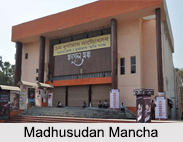 National Centre Performing Arts, Mumbai National Centre Performing Arts, Mumbai
The National Centre for the Performing Arts (NCPA), Mumbai, is India's leading cultural organization which was inaugurated in 1969. The initial multi-venue, multi-purpose cultural centre to be built in South Asia, it has been committed since its beginning to preserving and promoting the country's wealthy and lively heritage of Indian and international music, dance, theatre, film, literature and photography as well as presenting new and innovative work in the field of the performing arts. Playing host to over 600 performances yearly, the NCPA has the difference of being India's largest, most holistic performing arts centre. More than 200 theatre shows are presented every year at the NCPA. Star Theatre, Kolkata Star Theatre is another famed theatre stage located in Kolkata, West Bengal. It is a heritage building constructed during British era. Star Theatre has played an important role in promoting the tradition of theatre in India and supporting talented artists. Prithvi Theatre, Mumbai Prithvi Theatre is situated in Mumbai, Maharashtra. The theatre stage belongs to the renowned 'Kapoor family' and is dedicated to Prithviraj Kapoor, the legendary Bollywood actor. It helps in the promotion of Hindi theatre and provides workshops for the aspiring artists. Kohinoor Theatre, Assam Kohinoor Theatre is a mobile theatre group of the North-Eastern Indian state of Assam, founded by Sri Ratan Lahkar in 1976. Ratan Lahkar has done important job by performing actual drama based on Indian, Assamese culture and some well-known drama of Shakespeare. Kohinoor Theatre is the only Assamese mobile theatre group that has performed outside of Assam. Sangeet Natak Academy, Kolkata Sangeet Natak Academy is a premiere institution for performing arts, including theatre. It was established by the Government of India in the year 1952. Stray Factory A south Indian Theatre Company shaped in 2010 by Mathivanan Rajendran and based in Chennai, India. The company is an entertainment joint with a network of actors, writers, musicians and artists. The main focus of the joint is to travel internationally with original, local content. Stray Factory has performed over 20 pieces in five countries, including Australia, Dubai and Malaysia. Girish Mancha, Kolkata Girish Mancha is also located in Kolkata, West Bengal. It was established on 1st July 1986 and since then is extensively used by different theatre groups. The stage was named after Girish Chandra Ghosh, a well known playwright, theatre director, actor, poet, novelist and musician. Madhusudan Mancha, Kolkata Madhusudan Mancha is another famed theatre stage of India situated in Kolkata, West Bengal. The stage has been named after Michael Madhusudan Dutt, an acclaimed Bengali poet. Established in 1995, the stage is maintained by the Information and Cultural Affairs Department, Government of West Bengal. 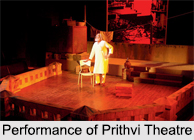
LTG Auditorium, Delhi Situated in Mandi House, Copernicus Marg, opposite Doordarshan Bhavan is located the Little Theatre Group (LTG) Auditorium which is six decades old making it the oldest auditorium in Delhi. Many artistic activities like shows, plays, annual days and award ceremonies have been staged here. Dramanon, Manipal, Bangalore and Hyderabad It is an English theatre group that operates out of three cities in India namely Manipal, Bengaluru and Hyderabad. The three chapters of Dramanon are well included and like a strong joint bond apart from a general origin. Today, Dramanon has produced over 50 plays and performed over 250 shows all over the country. Established in 2000, the group was called ‘Dramatist Anonymous ‘(Dramanon for short) and was founded by Ramakrishna Shenoy and late Mr Chandan Shatapathy. Surabhi Theatre, Hyderabad This is a family theatre group based in Hyderabad, Andhra Pradesh, India. The group performs plays based on stories from Hindu mythology and the Puranas. Evam, Bangalore Founded in 2003 by Sunil Vishnu K. and Karthik Kumar, 'evam' today is a commercial young booming arts organization making people think in the power of the Arts. Evam is one of India's leading Performing Arts Organizations with the mission of 'making a positive impact' in the lives of people through the medium of arts, particularly theatre. Evam has 4 core areas of operation- Performing Arts Creation, Arts Management, Arts Education & Behavioral Training using the Arts. Evam has two companies under it - Evam entertainment and Training Sideways, operating across India and Singapore. Identity of Indian Theatre Stages When the theatre was being performed in one single language like Sanskrit, it had a national identity of its own. But, today the picture has totally changed. India is a huge country with 22 languages and has a lot of different cultures. Indian theatre during the British rule gained a novel face amidst the redefined structure of the Indian theatre stages during the independence of India. Stages then became lot more up to date to befit the requirement of the mass. Gone are the days of palagan and ramlila. The presence of the Indian theatre stages brings forth the memories of the days long gone, the memorabilia of the success of theatre, as an art form. |
| ||||||||||||||||||||||||||||

