


 The advancement of science and technology has been major instruments for India’s growth and welfare as an independent, democratic nation. The development of science centres and museums encourage the excitement of discovery. The advancement of science and technology has been major instruments for India’s growth and welfare as an independent, democratic nation. The development of science centres and museums encourage the excitement of discovery.
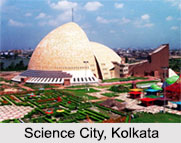
List of Science Museums in India Museums are an integral and dynamic part of the learning environment, promoting exploration. They offer a wide range of subject matters with many interactive exhibits. In India, there are a number of famous science museums which are dedicated to providing information to the people regarding the latest scientific and industrial developments. Birla Industrial & Technological Museum (BITM): It is situated in Kolkata and was founded under the initiative of the then Chief Minister, Bidhan Chandra Roy. The Birla Industrial & Technological Museum was set up with a motto of stimulating a scientific consciousness. It is a unit under the NCSM. The galleries of the museum offer different exhibits on electricity, nuclear physics, optics, motive power, iron and steel, communication and mining. It also showcases several live snakes, rabbits, reptiles along with aviary and aquariums. The mining gallery gives a feel of going down a coal mine. The museum conducts mobile science exhibitions in villages. Science City, Kolkata: The Science City in Kolkata has a maritime centre which depicts the maritime history of India, artefacts, dioramas and interactive exhibits on shipping and navigation systems. The Dynamotion Hall provides hands-on interactive exhibits on science encouraging visitors to experience with props to understand scientific principles. 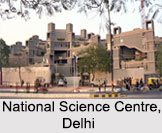 B. M. Birla Science Museum: Located in Hyderabad the B.M. Birla Science Museum was constructed by civil engineer Mr. P. A. Singaravelu. The museum comprises of a planetarium, museum, science centre, an art gallery as well as a dinosaurium. The Dinosaurium created in the year 2000 exhibits a 160-million-year-old mounted Kotasaurus Yamanpalliensis. This fossil was excavated at Adilabad district in Telangana and presented by the Geological Survey of India. B. M. Birla Science Museum: Located in Hyderabad the B.M. Birla Science Museum was constructed by civil engineer Mr. P. A. Singaravelu. The museum comprises of a planetarium, museum, science centre, an art gallery as well as a dinosaurium. The Dinosaurium created in the year 2000 exhibits a 160-million-year-old mounted Kotasaurus Yamanpalliensis. This fossil was excavated at Adilabad district in Telangana and presented by the Geological Survey of India.
Gujarat Science City: Located in Hebatpur, Ahmedabad, the Gujarat Science City centre hosts an IMAX 3D theatre, an energy park, a hall of science, Planet Earth, an amphitheatre, Life Science Park etc. A program called Vacation Training Program on Bio-resources for school children is organised by Science city with the help of government funds to encourage students regarding Bio-resources. It is a month-long program for students from every district of the state. B. M. Birla Planetarium: Located in Chennai, the B.M. Birla Planetarium provides a virtual tour of the night sky by holding cosmic shows on a specially perforated hemispherical aluminium inner dome. It has 8 galleries with over 500 exhibits. The planetarium also offers courses in astronomy and night-sky observations. Hakim Karam Hussain Museum on History of Medicine and Sciences: The Centre is an academic unit of the Ibn Sina Academy of Medieval Medicine and Sciences (IAMMS). The main theme is the history of health and disease from a cultural perspective, with focus on the material and iconographic culture of medieval medicine and sciences. The museum has categorical illustrations and busts of physicians belonging to various civilizations. Medical manuscripts, catalogues, philately, souvenirs, memoirs of physicians including Nobel laureates are preserved and exhibited here. Kerala Science and Technology Museum: A self-governing Government institution, Kerala Science and Technology Museum was set up as a centre for popularisation of science and scientific temper among the young generation. The museum has 10 galleries exhibiting more than 300 items. In addition to the planetarium, the museum offers facilities for night sky observation with a fully automatic 11-inch telescope. 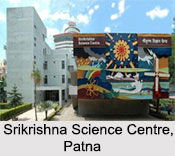 National Council of Science Museums (NCSM): It is an autonomous organisation under the Indian Ministry of Culture located in different states of India. The headquarters of NCSM are situated in Kolkata. There are 24 own science centres or museums and one R&D laboratory and Training centre of NCSM. It is the largest chain of science centres or museums in the world. National Council of Science Museums (NCSM): It is an autonomous organisation under the Indian Ministry of Culture located in different states of India. The headquarters of NCSM are situated in Kolkata. There are 24 own science centres or museums and one R&D laboratory and Training centre of NCSM. It is the largest chain of science centres or museums in the world.
National Science Centre: Located in Delhi the National Science Centre is a self governing organisation under India’s Ministry of Culture. This centre houses one of the largest exhibits in the world called the Energy Balls. The Centre has an excellent library and an inflatable planetarium along with the efficiency-sharpening Cyber School. The Cyber School conducts many short-duration courses for both the students and the teachers. Nehru Museum of Science and Technology: Situated in Kharagpur, West Bengal, the Nehru Museum of Science and Technology has many indoor exhibits which include technical models collected from various institutes across India. The park outside the museum contains 14 open-air demonstrations and outdoor exhibits including a hunter plane, and a steam engine. The museum has an archive room showcasing documents relating to history of the institute. Nehru Science Centre: Located in Worli, Mumbai, the Nehru Science Centre is the largest interactive science centre in India. Above 50 direct participatory programmes, science-discourses and demonstrations on energy, sound, kinematics, mechanics, transport, etc. exist in the science park. The science park provides opportunity to experiments on display items, like press levers, turn wheels, roll balls, pull strings and distant vision-favouring periscopes and telescopes.  Regional Science Centre, Bhopal (RSCB): Situated in Bhopal, the Regional Science Centre has over 266 science exhibits spanning across a wide range of scientific disciplines. The 5 acre campus includes a Science Park, which contains over 60 exhibits such as pulley demonstrations, a windmill and solar-powered devices. The campus houses Dinosaur Park and zoo. The Centre has a Mobile Science Exhibition bus which visits remote villages creating scientific awareness through demonstrations. Regional Science Centre, Bhopal (RSCB): Situated in Bhopal, the Regional Science Centre has over 266 science exhibits spanning across a wide range of scientific disciplines. The 5 acre campus includes a Science Park, which contains over 60 exhibits such as pulley demonstrations, a windmill and solar-powered devices. The campus houses Dinosaur Park and zoo. The Centre has a Mobile Science Exhibition bus which visits remote villages creating scientific awareness through demonstrations.
Regional Science Centre and Science Park: Located in Jaipur, the Science Park propagates scientific and technical awareness through Khel Khel Mein Vigyan. The Centre houses models on optics, sound, electromagnetism, static electricity etc. It has a portable planetarium, sections on geology, meteorological equipments etc. The Science Park provides workshops on repair of household items, computer awareness, low cost teaching etc. They also provide health and environmental camps with live theme exhibitions on evolution of life, IT, biotechnology, earthquake, remote sensing etc. Srikrishna Science Centre: Located in Patna, Bihar, the Srikrishna Science Centre promotes critical thinking through scientific activities. The Centre has galleries like Fun Science Gallery demonstrating physics and maths with 50 hands-on exhibits; Evolution Gallery with 60 interactive exhibits; then there are the Mirrors and Images Gallery, the Jurassic park, the 3D show and the Science Park with 40 exhibits. Visvesvaraya Industrial and Technological Museum (VITM): Located in Bangalore, the VITM has Engine Hall exhibiting engines of various cars, machines used in industry, a jet aircraft engine etc. The predictability and precision of mechanics is demonstrated by the rolling balls. The Wright Brothers exhibit includes a 1:1 scale model of Wright Brother’s Flyer. The Electro Technic Gallery boasts interactive electrical exhibits that work on electricity, electronics and communication. There is a Fun Science Gallery displaying the sciences of sound, optics, fluids and perception. The centre has Space Gallery showing history of space exploration. There are other displays on Electronics housed in the Bharat Electronics Ltd (BEL) Hall of Electronics. Shows on 3D films and 'Taramandal' are projected on regular basis. The Indian science museums are created to emphasize on a hands-on approach, featuring interactive exhibits that encourage visitors to experiment and explore. |
| |||



Indian Science Museums
| Science and technology have always been an integral part of Indian culture. The science museums preserve India’s scientific heritage while showcasing it to the common people. |
| ||||||||||||||||||||||||||||

