 In the Mughal period, the Indian natural history saw the patronage of the emperors for gardening and art. The Indian natural history in Mughal period also saw the emperors going for excessive hunting of the animals in the forests. Among all the Mughal emperors, Babur (1483 - 1530) and Jahangir (1569 - 1627) have to be mentioned specially, as they made huge contributions in the Indian natural history. The Mughal emperors used to lead a leisurely life and they used to decorate their gardens with their private zoos. They also hired artists to paint many subjects including plants and animals. They used to practice hunting and falconry, quite extensively and they also employed scribes.
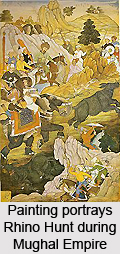
The most important thing in the Indian natural history in Mughal period was that, the Mughal emperors were the first one to document their observations of nature in India. Babur wrote some wonderful notes that indicate the former distribution of the Rhinoceros as far west as the Indus. According to the notes of Babur, the Lesser Rhinoceros was found in the Bengal Sunderbuns, and a very few individuals were stated to occur in the forest tract along the Mahanuddy river, and extending northwards towards Midnapore. They were also found on the northern edge of the Rajmahal hills near the Ganges. Apart from that, the Lesser Rhinoceros used to occur more abundantly in Burmah and through the Malayan peninsula to Java and Borneo, as well.
Apart from Babur, Jahangir also made some significant contributions in the Indian natural history in Mughal period, as well. He used to keep detailed records of his hunts and it is found from the records that, he himself hunted about 17,167, from the age of twelve to forty-eight. The hunted animals include Tigers, Lions, Bears, Leopards, Foxes, Otters (ubdilao), Hyaenas, Blue bulls (Nilgai), and also Mhaka. Jahangir`s records also have detailed description about some of his memorable hunts. Jahangir appointed Ustad Mansur, as a court artist in the 17th century to make paintings of various animals. Hence, documentation of observations of nature in India is considered to be the most important contributions made by the Mughal emperors in the Indian natural history.