Indian Natural History in British Period
|
Establishment of museums was the most significant thing in the Indian natural history in British period.
|
|
|
 The British period is considered to be one of the most significant periods in the Indian natural history. During the initial period, the British rulers quickly noted the interest of Indian people in natural curiosities and set up the first museum in India. Several British naturalists came to India, due to the Indian Civil Services, in the British period. They contributed vastly in the Indian natural history. Some of them collected species on behalf of the British and other European naturalists and museums, and the others carried out their studies entirely on their own. The birth of museums in India and colonialism has often been inter-linked by the historians. The British period is considered to be one of the most significant periods in the Indian natural history. During the initial period, the British rulers quickly noted the interest of Indian people in natural curiosities and set up the first museum in India. Several British naturalists came to India, due to the Indian Civil Services, in the British period. They contributed vastly in the Indian natural history. Some of them collected species on behalf of the British and other European naturalists and museums, and the others carried out their studies entirely on their own. The birth of museums in India and colonialism has often been inter-linked by the historians.
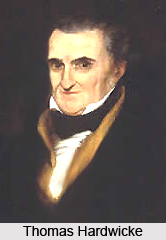
The earliest effort to document the fauna of India, in the Indian natural history in British period, was perhaps that of Thomas Hardwicke (1755 - 1835). Hardwicke was a military officer in India and was a nature enthusiast. He hired local artists to produce a huge collection of illustrations of Indian animals and his work was studied by John Edward Gray (1800 - 1875). All these led to the publication of 'Illustrations of Indian Zoology' that was chiefly selected from the collection of Major-General Hardwicke. The publication consisted of 202 colour plates.
The Indian natural history in British period also saw a large and growing number of naturalists having an interest in sharing observations, to establish the Bombay Natural History Society in 1883. Apart from the British rulers, many Indian princes also took to large scale hunting and together with the British hunters; they hunted many species of wildlife to near extinction.
This article is a stub. You can enrich by adding more information to it. Send your Write Up to content@indianetzone.com
|
|
|
|





