 The Indian natural history after Independence has seen several naturalists with different specialisations, making their own contributions. The Ornithologists, the Entomologists, the Ichthyologists, the Herpetologists, etc have contributed vastly to the Indian natural history after Independence. They travelled throughout the country and collected valuable information about the Indian natural history and they also preserved their collections through various publications.
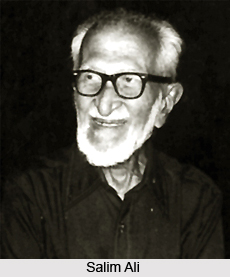
The most prominent Ornithologists in the Indian natural history after Independence were the famous naturalists, Salim Ali and his cousin Humayun Abdulali. Both of them used to work with the Bombay Natural History Society. Salim Ali also worked with the American collaborators like Sidney Dillon Ripley and Walter Norman Koelz and produced the most comprehensive handbook of Indian ornithology, till now. The introduction of field Ornithology was another major contribution during this period and the pioneers in this field included Horace Alexander. Apart from those naturalists, the Zoological Survey of India also conducted its own collection surveys, led by Biswamoy Biswas.
 M. S. Mani and B. K. Tikader are counted among the most notable Entomologists in the Indian natural history after Independence. The tradition of entomology started in the colonial era and numerous Entomologists continued the tradition, after independence. Several Entomologists specialised especially on economically important insects (mostly pests) and they have made a huge contribution to the Indian natural history. Apart from the Entomologists, there were the famous Ichthyologists like Sunderlal Hora. Hora was mainly famous for his Satpura hypothesis, which is actually a bio-geographical hypothesis based on his observations on the adaptations of hill stream fishes. Some of the other prominent Ichthyologists in the Indian natural history in after Independence include C. V. Kulkarni and S. B. Setna.
The Herpetologists also made their own contributions to the Indian natural history after Independence and C. R. Narayan Rao was one of the most notables, amongst them. He worked on the frogs of southern India and apart from him; Romulus Whitaker and J. C. Daniel also studied various aspects of the reptile fauna of India. A large number of scientists from various other fields also contributed to the study of Indian natural history after Independence. Some of them worked in interdisciplinary areas and J. B. S. Haldane was foremost amongst them. Haldane was a British scientist who encouraged field biology in India on the basis that it was useful while at the same time requiring low investment unlike other branches of science. He was also among the first few people, who popularised quantitative approaches to biology in India.
The Indian natural history after Independence has contributions made by several popularisers. The mass media was definitely one of the most notable among them. The Indian natural history was made more popular through publications in the mass media. The pioneering black-and-white wildlife photographer and artist, M. Krishnan wrote articles on various aspects of natural history in Tamil and English, and popularised study of natural history in southern India. His articles were also well illustrated with his photographs and artwork. Apart from him, Professor K. K. Neelakantan was another writer who popularized the study of birds in Kerala by writing books and articles in Malayalam. Some of the others prominent popularisers include Harry Miller, Ruskin Bond etc, who wrote about the wilderness, the hills and the wildlife in India, in English medium.
Apart from the popularisers, there were also the wildlife photographers who played an important role in popularising the study of Indian natural history after Independence. Numerous wildlife photographers like made their own contributions and the people like Loke Wan Tho, E. Hanumantha Rao, M. Krishnan and T. N. A. Perumal, are among the most popular amongst them. They actually followed in the footsteps of the early pioneers of photography like E. H. N. Lowther, O. C. Edwards and F. W. Champion. There were also a large number of conservationists, who played a vital role in the Indian natural history after Independence. The urgent need to preserve the little remaining wildlife was realized by these conservationists and E. P. Gee (1904-1968), was one of the most eminent among them. Apart from him, a large number of people also got involved in conservation of Indian natural history, in later times.