 Indian literary movements integrally belong to the category of spontaneous outbursts both prior to and after Indian independence. However, before delving deep into this phenomenon, it is first necessary to grasp that background which had given rise to such historical and almost uncountable freedom movements in the Indian context. India has essentially served as a country which has remained a forever witness to umpteen incursions, encroachments and unlawful invasions and capturing. As is known and acknowledged from Indian history, India, since ancient times has served as a country that is exceedingly advanced and flourishing in literature. Beginning with ancient languages like Sanskrit, `Pali` or `Prakrit`, the country has continuously produced host of writers who has composed masterpieces in Urdu, Hindi or much later, in several of the regional languages.
This cultural synthesis and exchange of ideas was perhaps only possible with India playing a common ground to various dynasties ruling for significant period of time. The Islamic rule was perhaps the most that had made its permanent impact upon Indian literature, which was carried forth to the colonial rule, with English entering into the Indian scenario in a quite all-encompassing manner. And it was precisely during the advent of British Empire to India that Indians had begun to revolt against many literary issues, paving way for the Indian literary movements.
Modern Literary Movements
During pre-independent India, when British were trying to take over virtually every aspect of native population and their classified life, any literary section of native India and their endeavour to rise forth was always mercilessly quashed by British forces, trying to propagate their point of view. The English were in fact always in the lookout for suitable situations to throttle Indian viewpoints and behave in a sadistic manner. In this context of Indian literary movements, the rise of local printing press and newspaper propagation was indeed assayed to restrain down every action that might lead to public incitement and sedition against the ruling government.
Amongst the noted literary movements of this era was the Progressive Writers` Movement which was established in Kolkata during 1936, prior to the Partition of India. The writers of this group promoted the theories of anti-imperialism, voicing concerns against rampant unlawfulness and social evils of that time. It was also referred to as the `Anjuman Tarraqi Mussanafin-e-Hind`.
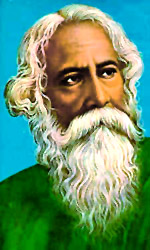
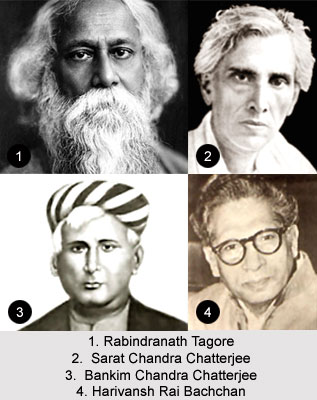
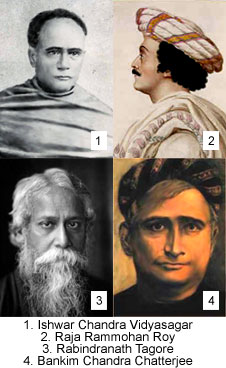
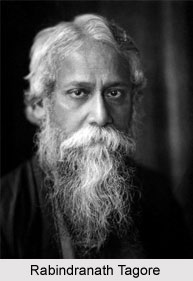
Likewise, Indian literary movements also gave rise to luminary writers creating a respected position of their own by placing their illustrations in a rather hidden manner, stating the crux subtly. Men like Rabindranath Tagore, Sarat Chandra Chattopadhay, Ishwar Chandra Vidyasagar and even Raja Ram Mohan Roy were capable enough to silence the ruling Britishers and earn veneration in turn. The rise of Urdu or the overwhelming rise of the Little Magazine in the hands of native revolutionists had won pan-Indian acceptance, at times even making the rulers reluctant to go against the ruled. Such was the magnificence and contagiousness of these thousands of young Indian nationals, that various Indians had indeed had taken up the pen to display anti-British protests through literary movements and employing the local language.
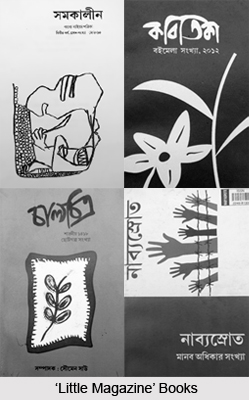
The Little Magazine Movement commenced during the 1950`s and 1960`s in numerous languages including Bengali, Hindi, Marathi, Gujarati, Malayalam and Tamil. The literary works of unrecognised poets and writers are published under the banner of Little Magazines or `small magazines`, marketed in a non-commercial process. Their publication is, however, quite irregular.
Contemporary Literary Movements
The post-independent scenario is still witness to a few of such literary movements in India, which have been successful enough to make their mark and make the Indian government turn restless in their chair. However, some of them like the Dalit Literary Movement were doused in communal disharmony and quarrel amongst backward and prestigious class in contemporary Indian times. Present day Indian literary movements are more often than not inclined towards going the religious or casteist direction, deviating a bit from their original course of literature and writing. The present social and economic scenario has been integrally linked with literary sections, which are wholly mirrored by these authorships.
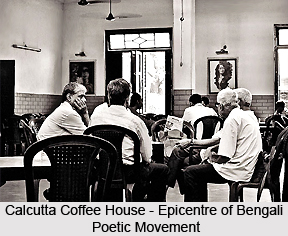
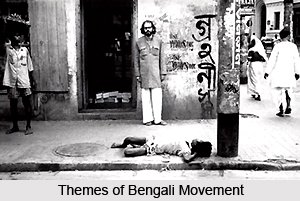
Another significant literary movement is the Hungry Generation Movement launched in Bengali language strengthened by writers consisting of Samir Rorychoudhury, Shakti Chattopadhyay, Malay Roy Choudhury and Debi Roy. It developed during the 1960`s in Kolkata, West Bengal. Other influential Hungryalist writers involve Tridib Mitra, Falguni Roy, Binoy Majumdar, Basudeb Dasgupta, Alo Mitra, Anil Karanjai, Karunanidhan Mukhopadhyay and so on.
Modern Bengali literature, till this time, was compelled to stay under the yolk of the redundant colonial styles, complete with the idealisms of surrealism, blank verse, free verse, the Beat Generation and other literary concepts. Therefore, the Prakalpana Movement was started in 1969 aimed at propagating a fresh and innovative genre of literature. Vattacharja Chandan and Asish Deb had established the movement with the aide of Dilip Gupta.
Two of the significant literary movements in India which were successful to create an everlasting impression upon the natives was the fuelling of the Progressive Writers` Movement and the Little Magazine Movement. The later is known to have been still continuing in its prolonged path to triumphant existence. Indian literary movements signify to those pressure group movements which are capable enough to accumulate hoard of men who are united to a common cause to witness their literature being accepted by the common mass as a whole.