





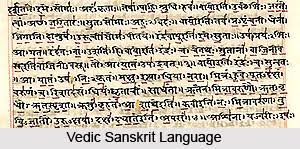
 A language family is an assemblage of languages interlinked by bloodline from a mutual ancestor, identified as the proto-language of that family. Similar to biological families, the substantiation of relationship is discernible through shared characteristics. In a likewise manner, the languages of India may be aggrouped by major language families. The biggest of these Indian language families in terms of speakers is represented by the Indo-European family. Indo-Europeans are largely exemplified by its Indo-Aryan language family branch (accounting for approximately 700 million speakers), but also encompassing minority languages like Persian, Portuguese or French and English as colloquial lingo. A language family is an assemblage of languages interlinked by bloodline from a mutual ancestor, identified as the proto-language of that family. Similar to biological families, the substantiation of relationship is discernible through shared characteristics. In a likewise manner, the languages of India may be aggrouped by major language families. The biggest of these Indian language families in terms of speakers is represented by the Indo-European family. Indo-Europeans are largely exemplified by its Indo-Aryan language family branch (accounting for approximately 700 million speakers), but also encompassing minority languages like Persian, Portuguese or French and English as colloquial lingo.
The second largest is counted as the Dravidian language family, accounting for approximately 200 million speakers. Other minor linguistic families comprise the Austro-Asiatic and Tibeto-Burman language families (with approximately 10 and 6 million speakers, respectively). Kashmiri is considered as a Dardic language, possessing roughly 4.6 million speakers in India. A completely isolated language, the Nihali language, is also included within the Indian language family bunch. Indo-Pacific language family is a comparatively later invention and research, still under the process of maturation and sophistication. Features of Indian Languages Families One striking fact that can be noticed in the context of Indian language families and their germination into prosperity is that the majority bunch have been derived from outside and foreign sources. Ancient India had remained witness to several Persian and European invasions, leading to a synthesis of literature and language, post the Indus Valley Civilization. As such, leaving aside the Dravidian literature and language and syntax structure, all the language families in India and their descend into the contemporary world owe their originations to overseas hands and minds. Indo-Aryan Language Family The Indo-Aryan language family stands as the largest among the language families present in India, both in terms of speaker population and geographical spread. It is a branch of the broader Indo-Iranian family, itself situated as the easternmost extant subfamily within the vast Indo-European language family. As of a 2018 estimate, this linguistic group encompasses approximately 1035 million speakers, constituting over 76.5% of the country's population. Among the Indo-Aryan languages, notable representatives include Hindi, Bengali, Marathi, Urdu, Gujarati, Punjabi, Kashmiri, Marwari, Sindhi, Assamese (Asamiya), Maithili, and Odia. These languages enjoy significant usage and influence across various regions of the Indian subcontinent, reflecting the diverse cultural and historical tapestry of the region. In addition to the Indo-Aryan languages, India also hosts other Indo-European languages, with English being the most prominent among them. English serves as a lingua franca, facilitating communication and interaction across diverse linguistic and cultural boundaries within the nation. Dravidian Language Family The Dravidian language family constitutes the second largest linguistic grouping in India, encompassing approximately 277 million speakers, which accounts for approximately 20.5% of the population according to a 2018 estimate. These languages are primarily spoken in southern India, extending into parts of eastern and central India, as well as in certain regions of northeastern Sri Lanka, Pakistan, Nepal, and Bangladesh. Prominent Dravidian languages include Telugu, Tamil, Kannada, and Malayalam, which boast significant speaker populations and cultural influence. In addition to the mainstream population, Dravidian languages are also spoken by smaller scheduled tribe communities, such as the Oraon and Gond tribes. Dravidian languages exhibit a rich diversity, comprising a total of 26 recognized languages, with 25 spoken in India and one, namely Brahui, spoken in Baluchistan on the Pakistan-Afghanistan border. The antiquity of Dravidian languages is notable, attributed largely to their rich grammatical and linguistico-literary tradition, particularly evident in Classical Tamil. Major Dravidian languages such as Malayalam, Kannada, and Telugu possess distinct scripts and literary histories that date back to the pre-Christian era. Among the smaller Dravidian languages are Kolami-Naiki, Parji-Gadaba, Gondi, Konda, Manda-Kui, Kodagu, Toda-Kota, and Tulu, each contributing to the linguistic mosaic of the region. The Dravidian language family further divides into three main groups: the Northern Group, consisting of Brahui, Malto, and Kudukh; the Central Group, characterized by widespread languages like Gondi, Konda, Kui, Manda, Parji, Gadaba, Kolami, Pengo, Naiki, Kuvi, and Telugu; and the Southern Group, which encompasses Tulu, Kannada, Kodagu, Toda, Kota, Malayalam, and Tamil. This linguistic diversity reflects the intricate cultural heritage and geographical distribution of the Dravidian-speaking populations. Austroasiatic Language Family The Austroasiatic family of languages includes the Santal and Munda languages in eastern India, together with the Mon-Khmer languages spoken by the Khasi and Nicobarese within the country. The Austroasiatic languages under the Indian language families are believed to have been mouthed all through the Indian subcontinent by hunter-gatherers, who were later absorbed first by the agriculturalist Dravidian settlers and later by the Indo-Europeans from Central Asia. The Austroasiatic family is also conceived to be the first to be spoken in ancient India. Some are also of the faith that the family was a division of an Austric super-stock of languages, together with the Austronesian language family. 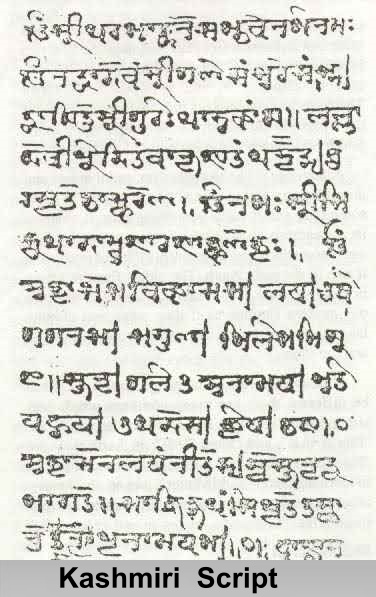
Indo-Pacific Language Family Joseph Greenberg (a prominent and disputed linguist and Africanist anthropologist, acknowledged for his work in both typology and language classification), had first traced the Indo-Pacific language family line in 1971. The languages comprise the Andamanese languages of the Andaman Islands and the Nihali language of central India. These mentioned languages grouped under minor languages in Indian language families, are believed to be Indo-Pacific languages related to the Papuan languages of New Guinea, Timor, Halmahera, New Britain, etc. Nihali has been demonstrated to bear associations with Kusunda of central Nepal. However, the projected Indo-Pacific relationship has not been established through the comparative method and has been highly disregarded as presumption by most comparative linguists. Nihali and Kusunda are spoken by hunting populace, residing amidst forests. Both languages have accepted several loan words from other languages, Nihali having loans from Munda (Korku), Dravidian and Indic languages. Tibeto-Burman Language Family The Tibeto-Burman language family constitutes a significant subset of the broader Sino-Tibetan language group, spanning a vast geographical area from Tibet in the north to Burma in the south, and from the Ladakh region of Jammu & Kashmir in the west to the Chinese provinces of Sichuan and Yunnan in the east. Among the well-known Tibeto-Burman languages are Lepcha, Sikkimese, Garo, Bodo, Manipuri, and Naga. While some languages within this family bear close resemblance to Tibetan, others, particularly the South Himalayan languages spoken from Lahul in the west (Himachal Pradesh) to Bhutan in the east, exhibit distinct linguistic characteristics. Sub-groups such as Bodo and Tipra have gained recognition, along with the Naga languages. Additionally, languages like Kuki-Chin, Lushai, and Manipuri occupy intermediary positions between these distinct sub-families. In India, Tibeto-Burman languages are spoken across the Himalayan regions, including Arunachal Pradesh, Assam (in hill areas and autonomous councils), Himachal Pradesh, Ladakh, Manipur, Meghalaya, Mizoram, Nagaland, Sikkim, Tripura, and West Bengal. Within India, Sino-Tibetan languages include two officially recognized constitutional languages, Meitei or Manipuri and Bodo, as well as non-scheduled languages like Karbi, Lepcha, and various dialects belonging to Tibetic, West Himalayish, Tani, Brahmaputran, Angami–Pochuri, Tangkhul, Zeme, and Kukish sub-linguistic branches, among others. Tai-Kadai Language Family The Tai-Kadai language family encompasses a diverse array of languages spoken across various regions of Southeast Asia, which also includes parts of north-east India. Among these languages is Ahom, classified as a Southwestern Tai language, which historically served as the dominant language of the Ahom Kingdom in what is now modern-day Assam. Over time, however, Ahom was supplanted by Assamese, also known as Kamrupi in ancient times, which evolved into the Kamrupi dialect prevalent today. Despite the linguistic transition, remnants of Tai communities and their languages persist in Assam and Arunachal Pradesh, coexisting alongside Sino-Tibetan languages. Examples include Tai Phake, Tai Aiton, and Tai Khamti, each contributing to the linguistic mosaic of the region. Andamanese Language Family The linguistic landscape of the Andaman Islands presents a unique grouping of languages, distinct from those found on the Indian mainland. This linguistic diversity is primarily classified into three main families, namely Great Andamanese languages, Ongan family of languages, and Sentinelese languages. The Great Andamanese languages: This group includes several languages, many of which are now extinct, with only one, namely Aka-Jeru, classified as highly endangered. The Ongan family: Predominantly found in the southern Andaman Islands, this family consists of two extant languages, Onge and Jarawa, alongside one extinct language, Jangil. Sentinelese: While not conclusively classified within a specific family, the Sentinelese language is believed to share linguistic ties with the Great Andamanese and Ongan languages due to geographical proximity and historical connections. |
| ||||||||||||||||||||||||||||

