





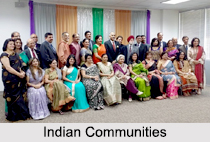
 Indian Communities refer to a group of people, belonging to a certain religion and believing in one single united cause. The term Indian communities perhaps cannot be credited to any single individual. An omnipresent and unseen demarcation line had existed amongst the various Indian communities. Indian Communities refer to a group of people, belonging to a certain religion and believing in one single united cause. The term Indian communities perhaps cannot be credited to any single individual. An omnipresent and unseen demarcation line had existed amongst the various Indian communities.
History of Indian Communities In fact, ancient history in India does lend considerable and credible information regarding primeval communities, or organisations that had cropped up since the times of pre-Christian era. Since the eras of Indus Valley Civilization and Harappa, the concept of organising communities had been well assimilated within both uneducated and educated classes. Religious, economic, administrational, and even, societal classed communities had existed during ancient Indian evolvement. Indian Communities under Hinduism Caste system and class consciousness was one such idealistic concept that had driven these ancient Indian communities to behave the way they did. The gigantic awareness of belonging to a higher caste or higher religious order paved way for first ever establishment of Hindu religious community, divided into Brahmins, Kshatriyas, Vaishyas and Shudras. These four cardinal Hindu caste systems were further sub-divided into their own specific community, a concept that is very much retained in present-day Indian society. 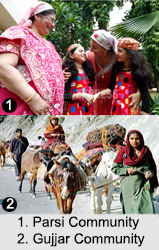 Some of the Hindu communities are; Maratha Community, Rajput Community, Nayar Community, Bunt Community, Lingayat Community, Mahar Community, Reddy Community, Yadava Community, Ahir Community, Agrawal Community, Bania Community, Maheshwari Community, Kayastha Community, Dogra Community, Kumaonis Community, Baidya Community, Bhatia Community, Madhava Community, Maithil Community, Mohyal Community, Nagar Community, Saraswat Community, Anavil Community, Andhra Brahmin Community, Ayyangar Brahmin Community, Deshastha Community, Karhada Community, Kashmiri Brahmin Community and Ardha Brahmans Community. Some of the Hindu communities are; Maratha Community, Rajput Community, Nayar Community, Bunt Community, Lingayat Community, Mahar Community, Reddy Community, Yadava Community, Ahir Community, Agrawal Community, Bania Community, Maheshwari Community, Kayastha Community, Dogra Community, Kumaonis Community, Baidya Community, Bhatia Community, Madhava Community, Maithil Community, Mohyal Community, Nagar Community, Saraswat Community, Anavil Community, Andhra Brahmin Community, Ayyangar Brahmin Community, Deshastha Community, Karhada Community, Kashmiri Brahmin Community and Ardha Brahmans Community.
Indian Communities under Islam Islamic invasion and subsequent extensive Muslim rule in India, wholly changed the concept of communities in India. The Khiljis, Tughlaqs, Lodis and finally the Mughals had entirely altered the graph of Islamic communities in India, with an overwhelming mass of the erstwhile populace joining in the various causes to form organisational communities. Emperors, army generals and high profile men had contributed whole-heartedly and honestly to each meticulous cause to make these Indian communities as well grounded as mountainous rocks. Some of the Islamic communities are; Sindhi Community, Moplah Community, Dawoodi Community, Bohra Community, Kashmiri Muslim Community, Sulaimani Community, Memon Community, Ezhava Community and Gujjar Community. Indian Communities under Sikhism Sikhism began around 1500 CE, when Guru Nanak began teaching a faith that was quite distinct from Hinduism and Islam. The Sikhs are the 4th largest religious community in India next to Hindus. Some of the Sikh communities are; Khatri Community, Jat Sikh Community, Namdhari Community, Pothohar Community and Ramgarhia Community, 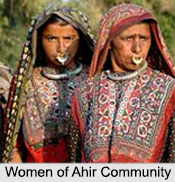
Indian Communities under Christianity With passage of time and advancement in Indian ruling and sovereign administration, arrived the concept of Christian communities in India that ushered in by the Dutch, Portuguese, French and British, accompanied by the former Jewish and Armenian settlers in the country. Till this period of time, Christianity and Christians was not a thing much heard of in India, with Hindus and Muslims dominating the entire topography. The historic and long-drawn British Empire and its western outlook paved way for establishing innovative communities based upon creed and caste that were divided upon religious basics. Some of the Christian communities are; Armenian Community, Jewish Community, Kannada Catholic Community, Parsi Community, Anglo-Indian Community and Syrian Christian Community. The concept of Indian communities has become much more panoptic and international in conscience, almost lapping up everything coming to its way. Matrimonial alliance amongst the aboriginal Indian communities is another striking factor that is assisting in betterment of Indian citizens. |
| ||||||||||||||||||||||||||||

