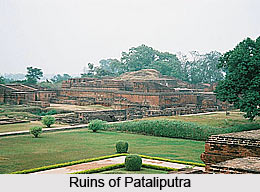
 History of Patna in Bihar dates back in the Indian history when the town was called Pataliputra and later on it was also called Kusumpura. Patna was visited by Gautama Buddha in the 6th century B.C. Patliputra, in the time of Ashoka became the center from where messengers of peace and international understanding travelled all over India and beyond. The glories of the city revitalised with the rise of the Gupta Empire in the early 4th century A.D. and Chandragupta, who was the first emperor of the Gupta dynasty, had his capital here. Fahian, Chinese pilgrim visited this city in early 5th century A.D and had left behind a very rich description of the place.
Patna is presently the capital of Bihar state and is one of the oldest continuously populated places in the world and the history of Patna spans at least three millennia. Patna has the characteristic of being connected with the two most ancient religions of the world, namely, Buddhism and Jainism, and has witnessed the rise and fall of might empires of the Maurya Empires and the Guptas. It has been a part of the Delhi Sultanate and the Mughal Empire, and has experienced the rule of the Nawabs of Bengal, the British East India Company and the British Raj. With a glorious history of Patna, the city is considered as one of the nerve centers of First War of Independence, participated actively in India`s Independence movement, and emerged in the post-independent India as the most populous city of East India after Kolkata.
Early History of Patna
In the ancient history of Patna, this ancient city was not known by its present name and also finds no mention in the ancient Indian texts like the Vedas and the Puranas, or the Ramayana and the Mahabharata.
 The first references to the ancient region of Patna are observed about 2500 years ago in Jain and Buddhist scriptures. Recorded history of Patna begins in the year 490 BC when Ajatasatru, the king of Magadha, wanted to shift his capital from the hilly Rajgriha to a more convenient location in order to combat the Lichivis of Vaishali. He selected a site on the bank of Ganga River and fortified the area, which developed into Patna. From that time, history of Patna has been a legacy. During the history of Patna and existence of more than two millennia, the city has been known by different names, such as Pataligram, Azimabad, Kusumpur, Palibothra, Pushpapura, Pataliputra, and the present day Patna.
Medieval History of Patna
During the 12th century, Muhammad of Ghori`s advancing forces captured Ghazni, Multan, Sindh, Lahore, and Delhi, and one of his generals Qutb-ud-din Aybak declared himself as the Sultan of Delhi and established the first dynasty of the Delhi Sultanate. By the mid-12th century, Ikhtiar Uddin Muhammad bin Bakhtiar Khilji, one of the generals of Qutb-ud-din Aybak, conquered Bihar and Bengal, and Patna was included as a part of the Delhi Sultanate. He destroyed many ancient seats of learning, the most prominent being the Nalanda University near Rajgrih. Sher Shah Suri hailed from Sasaram, about 160 km southwest of Patna and played a major role in the history of Patna in the 16th century. Mughal Emperor Aurangzeb later acceded to the request of his favourite grandson Prince Muhammad Azim to rename Patna as Azimabad, in 1704 while Azim was in Patna as the subedar. However, the name Azimabad is almost obsolete in the present days.
Modern History of Patna
Patna was taken over by the Nawabs of Bengal, who levied a heavy tax on the populace but allowed it to flourish as a commercial center. During 17th century, Patna became a center of international trade.
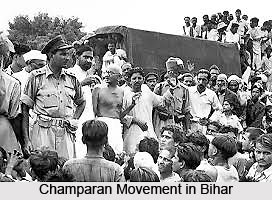 The British inaugurated a factory in Patna in the year 1620 for the purchase and storage of calico and silk. Soon it became a trading centre for saltpeter and others. Under the British Raj, the history of Patna gradually started to attain its lost glory and emerged as an important and strategic centre of learning and trade in India. The British built several educational institutions in Patna like Patna College, Bihar College of Engineering, Patna Science College, Prince of Wales Medical College and the Patna Veterinary College. After the creation of Odisha as a separate province in 1935, Patna continued as the capital of Bihar province under the British East India Company. The history of Patna is an important episode in the Indian independence struggle. Most prominent are the Champaran movement against the Indigo plantation and the Quit India Movement of 1942.