|
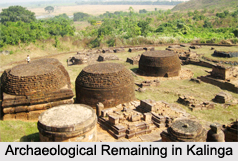 History of Odisha from the earliest written records can be traced all the way back to 3rd century B.C. Ashoka fought the famous Kalinga war and brought it under Maurya rule. The Chedi emperor Kharvela of Kalinga came to power in second century B.C. He defeated the Mauryas and extended his empire as far as Mathura. The famous Hathigumpha inscription in Udaigiri near Bhubaneshwar describes in detail the war adventures of Kharvela as well as his administration. He was succeeded by the dynasties of Magharas (4th-5th century), Sailodbhavas (6th-8th century), Bhoumakaras and Somavamsis (8th-llth century). Later, Gangas emerged as a major power in Southern Odisha in the eleventh century. In this period remarkable development in Odisha's economy, society and culture took place. The contribution to Oriya art especially, to the development of Odissi dance and Odissi music was disproportionately great compared to the contribution of other dynasties. Turko-Afghans conquered Odisha in 1590. According to historians the political decline started in Odisha from the time of the Muslim rule. British finally conquered Odisha in 1803. History of Odisha from the earliest written records can be traced all the way back to 3rd century B.C. Ashoka fought the famous Kalinga war and brought it under Maurya rule. The Chedi emperor Kharvela of Kalinga came to power in second century B.C. He defeated the Mauryas and extended his empire as far as Mathura. The famous Hathigumpha inscription in Udaigiri near Bhubaneshwar describes in detail the war adventures of Kharvela as well as his administration. He was succeeded by the dynasties of Magharas (4th-5th century), Sailodbhavas (6th-8th century), Bhoumakaras and Somavamsis (8th-llth century). Later, Gangas emerged as a major power in Southern Odisha in the eleventh century. In this period remarkable development in Odisha's economy, society and culture took place. The contribution to Oriya art especially, to the development of Odissi dance and Odissi music was disproportionately great compared to the contribution of other dynasties. Turko-Afghans conquered Odisha in 1590. According to historians the political decline started in Odisha from the time of the Muslim rule. British finally conquered Odisha in 1803.
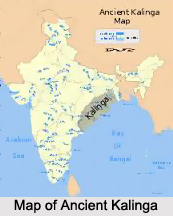 Ancient History of Odisha Ancient History of Odisha
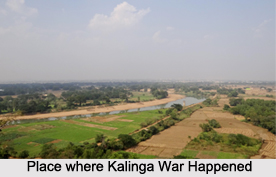
The state of Odisha was also known as Utkal and Odra in the ancient India. In fact during the rule of the Aryans the kingdom of Kalinga was a name to reckon with. The reference to this kingdom is quite frequent in Mahabharata as well. The ancient political history begins with the rulers of the Nanda dynasty. It was Chandragupta Maurya who captured the Nanda kings throne and thus the Mauryan reign commenced. However it is the Kalinga War that has been immortalised in the history of India. The sudden transformation of Ashoka from a power-hungry emperor to a Buddhist monk is an unforgettable tale. Post-Ashoka, the history of Odisha mentions a number of ruling dynasties, such as, the Kharavelas, Guptas, Satavahanas, Eastern Gangas, Nalas, Parvatadvarakas, Durjayas, Sailodbhavas and others. During the medieval times, the Marathas and the Mughals ruled over the kingdom of Odisha.
Medieval History of Odisha
The Muslim rulers after came to Delhi occupied Bengal and Odisha in 1576. It was not before 1751 that the Maratha rule was established in Odisha. As far as religion is considered a major change was noticed post Kalinga War. Ashoka adopted Buddhism and inspired others to do the same. After the Kharavela kings were Jains. Hence even Jainism had an impact on the religious faith of the masses. However there are several temples in Odisha dedicated to Hindu deities that had been built by Hindu kings. Of these the most popular temple is the Jagannath Temple, Puri.
Modern History of Odisha
 In 1803, with the beginning of modern era, Odisha once again witnessed transfer of powers when the British captured it from the Marathas in the Second Anglo-Maratha war. The British East India Company then divided the state of Odisha into three districts: Cuttack, Puri and Balasore. Initially the coastal area of Odisha was separated from Bengal and later in 1936 it was separated from Bihar. Time and again the people of Odisha had revolted against the British imperialism. The Paik Rebellion of 1817 was a revolt against the British land revenue system. The great famine broke out in 1866 and its effects were felt across the state. The modern history of Odisha and the subsequent Freedom Movement links Odisha to the general history of India. Like the rest of the country there had been a mass participation in the Swadeshi Movement, Non Cooperation Movement, Civil Disobedience Movement and others. The freedom fighters, such as, Utkalmani Pandit Gopabandhu Das, Harekrushna Mahtab, Nabakrushna Choudhury, Bagirathi Mahapatra, Gopabandhu Choudhury, Lingaraj Misra, Surendra Nath Das and others were instrumental in Odisha's freedom struggle against the British Imperialism. The several socio-political reforms were undertaken by people, like, Utkal Gourab Madhusudan Das to improve the condition of the people. After a long period of struggle the state of Odisha finally gained its liberty when India was declared independence on 15th August, 1947. Post-Independence several attempts were made to reorganise the state as several areas were independently ruled by tribal chiefs. Many regions of Odisha were lying in different neighbouring states. Most of those regions were amalgamated with Odisha and a separate state of Odisha was born on 1st April 1936. It may be mentioned that Odisha was the first Indian state formed on linguistic basis. In 1803, with the beginning of modern era, Odisha once again witnessed transfer of powers when the British captured it from the Marathas in the Second Anglo-Maratha war. The British East India Company then divided the state of Odisha into three districts: Cuttack, Puri and Balasore. Initially the coastal area of Odisha was separated from Bengal and later in 1936 it was separated from Bihar. Time and again the people of Odisha had revolted against the British imperialism. The Paik Rebellion of 1817 was a revolt against the British land revenue system. The great famine broke out in 1866 and its effects were felt across the state. The modern history of Odisha and the subsequent Freedom Movement links Odisha to the general history of India. Like the rest of the country there had been a mass participation in the Swadeshi Movement, Non Cooperation Movement, Civil Disobedience Movement and others. The freedom fighters, such as, Utkalmani Pandit Gopabandhu Das, Harekrushna Mahtab, Nabakrushna Choudhury, Bagirathi Mahapatra, Gopabandhu Choudhury, Lingaraj Misra, Surendra Nath Das and others were instrumental in Odisha's freedom struggle against the British Imperialism. The several socio-political reforms were undertaken by people, like, Utkal Gourab Madhusudan Das to improve the condition of the people. After a long period of struggle the state of Odisha finally gained its liberty when India was declared independence on 15th August, 1947. Post-Independence several attempts were made to reorganise the state as several areas were independently ruled by tribal chiefs. Many regions of Odisha were lying in different neighbouring states. Most of those regions were amalgamated with Odisha and a separate state of Odisha was born on 1st April 1936. It may be mentioned that Odisha was the first Indian state formed on linguistic basis.
|





