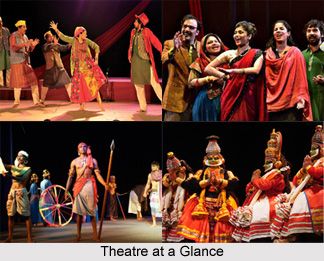
 Indian theatre and drama initiated as a narrative form. The art of reciting, dancing and singing gradually came through the national and uniform language of Hindi. The Hindi theatre personalities introduced an integral element of Indian theatre, boasting its copious tradition. The Hindi theatre personalities emphasized on narrative elements that made Indian theatre theatrical right from the distant past of the glory days of Sanskrit theatre.
Indian theatre soon very well encompassed all the popular expression of literature and fine arts into its physical demonstration through the unmatched works of the Hindi theatre personalities. Indian theatre, weighty with its rich past has therefore combined the richness of literature, mime, dance, music, painting, architecture and sculpture and provided the Hindi theatre personalities to carve a niche for themselves in the arena of entertainment.
History of Hindi Theatre
The History of Indian Theatre dates back to more than 5000 years and the Hindi theatre personalities are closely associated with all the achievements. Bharat Muni wrote Natyashastra and was probably the first mentionable Hindi theatre personality. The Hindi theatre personalities gradually developed theatre as an independent form of expression. The development of Indian theatre can be divided in three parts namely; Theatre in ancient India, Theatre in medieval India and Contemporary Indian Theatre and the Hindi theatre personalities had their massive contribution in each of them. The Hindi theatre personalities marked change in the socio political scenario helped in the development of modern Indian theatre. The history of Indian theatre is therefore the chronicle of changing traditions by the Hindi theatre personalities. 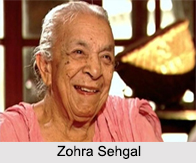
Hindi Theatre Personalities
Some of the well known Hindi theatre personalities are –
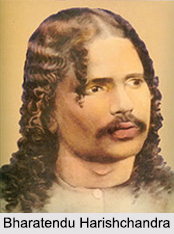
Bharatendu Harishchandra: Bhartendu Harishchandra (9 September 1850 – 6 January 1885) is known as the "Father of modern Hindi literature" as well as "Hindi theatre". He is considered as one of the utmost Hindi writers of modern India. His pen name was "Rasa". Some of his works are - Vaidiki himsa hitnsa na bhavati, Jabbalpur, Bharat durdasha, Bharat Sarvagya, Prem Maduri, Varsha Vinod, Chandravali and Krishan Charitra, Bharatendu Grnthaaolly etc.
Lakshmi Narayan Lal: Another well known personality of Hindi Theatre is Lakshmi Narayan Lal. Some of his works are - "Badi Champa Choti Champa", and "Man Vrindyavan".
Jaishankar Prasad: Jaishankar Prasad (30 January 1890 - 15 November 1937) is one of the famous figures in modern Hindi theatre who is a lyric poet, a dramatist, a story writer, and essayist. Some of his major works are - "Ghulam", "Taansen", "Kanan Kusum", "Kamayani", "Maharana ka mahatv", "Lahar", "Ek ghunt", "Chandragupta", "Rajyashri", "Pratidhvani", "Andhi", "Kankal", "Titli" etc.
Mohan Rakesh: He (8 January 1925 - 3 December 1972) was one of the pioneers of the "Nai Kahani" literary movement of the Hindi literature in the 1950s. He wrote the first modern Hindi play, "Ashadh Ka Ek Din" which won a competition organized by the Sangeet Natak Akademi. He made major contribution to novel, short story, travelogue, criticism, memoirs and drama. He was awarded the Sangeet Natak Akademi Award in 1968. Some of his works are - "Andhere Band Kamre", "Na Aanewala Kal", "Aadhe Adhure", "Ashadh Ka Ek Din", "Rat ki Bahon Mein"etc.
Prithviraj Kapoor: Prithviraj Kapoor (3 November 1906 - 29 May 1972) was a pioneer of the Hindi film industry and theatre, who started his career as an actor in the silent era of Hindi cinema, he was related with IPTA as one of its founding members and who founded the Prithvi Theatres, a travelling theatre company based in Mumbai. Government of India honored him with Padma Bhushan in 1969 and the Dadasaheb Phalke Award. Some of his films are - "Alam Ara", "Seeta", "President", "Vidyapati", "Dahej", "Mughal-e-Azam", "Daku Mangal Singh", "Heer Raanjha", "Kal Aaj Aur Kal" etc.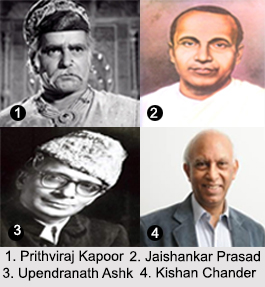
Upendranath Ashk: He was (14 December 1910 - 19 January 1996) an Indian novelist, short story writer and playwright. He switched to Hindi on the advice of Munshi Premchand and joined All India Radio in 194. He was the first Hindi dramatist to receive the Sangeet Natak Akademi Award in 1965. His major works are - "Sitaron Ke khel", "Garm Rakh", "Swarg Ki Jhalak", "Qaid", "Anjo Didi", "Deep Jalega" etc.
Zohra Sehgal: Zohra Sehgal (27 April 1912 - 10 July 2014) was an Indian actress, dancer, and choreographer. Some of her films include Neecha Nagar, Afsar, Bhaji on the Beach, The Mystic Masseur, Bend It Like Beckham, Dil Se.., Saawariya and Chalo Ishq Ladaaye, Cheeni Kum; and the TV series like The Jewel in the Crown, Tandoori Nights, Amma and Family. She acted with Indian People`s Theatre Association (IPTA) and Prithviraj Kapoor`s Prithvi Theatre for 14 years.
She was awarded the Padma Shri, Kalidas Samman and the Sangeet Natak Akademi award. India`s National Academy for Music, Dance and Drama presented her with its highest award, the Sangeet Natak Akademi Fellowship for lifetime achievement. She received the Padma Vibhushan.
Kishan Chander: Krishan Chander (23 November 1914 - 8 March 1977) was an Urdu/ Hindi writer of short stories and novels. He also worked on English. Krishan Chander`s novels include Ek Gadhe Ki Sarguzasht, Annadata, Shikast, Aasmaan Roushan Hai, Borban Club, Footpath Ke Farishtay, Uska Badan Mera Chaman, Chanbal Ki Chanbeli, London Ke Saat Rang etc.