|
East India is very often inimitably described as the 'accident of geography', with its states West Bengal, Bihar, Sikkim, Jharkhand and Orissa holding within themselves unique topographical measurements and features. Indeed, east Indian terrain quite marvelously and 'accidentally' present to its visitors and admirers the geographical assimilation of mountains, rivers, ocean, sand and of course plain lands. In no other Indian regions can such wondrous assemblage be witnessed, that too with such divine intervention that it appears each feature has been envisioned upon canvas. The extreme vision of the Himalayas, coupled with the serene flow of Ganga, or the sands by the side of Bay of Bengal, stand in ideal compliment with the plains or minor ruggedness in West Bengal or Bihar. Then again, leaving aside this geographical phenomenon, east India also represents its unity in diversity through its cultural, ritualistic, ceremonial or daily way of lifestyle. The mud-laden huts and the aboriginal tribal population stand in supreme difference with the city and upscale population in aristocratic residencies. Quite evidently, such daily discrepancy brings forth the difference in language and linguistic structure in east Indian scenario. For instance, a city resident from Kolkata or Bhubaneshwar can never speak the same lingo of a villager from Sikkim or Jharkhand. As such, languages in east India though they bear much similarity, yet differ grossly in mode of verbalising.
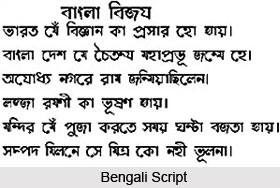 East Indian languages comprise the likes of Bihari languages encompassing Bhojpuri, Magadhi and Maithili, umpteen dialects of Bengali, Sikkimese (including Pahari) and Oriya. Bengali is the most overriding language of this part of the Indo-Gangetic Plain, being mouthed by well over 80 million people in West Bengal, including the adjacent states. Hindi occupies the largest number of speakers at over 90 million, but owns trivial ethnic influence beyond Bihar. Other languages like Oriya and Sikkimese or Bihari follow soon after. East Indian languages comprise the likes of Bihari languages encompassing Bhojpuri, Magadhi and Maithili, umpteen dialects of Bengali, Sikkimese (including Pahari) and Oriya. Bengali is the most overriding language of this part of the Indo-Gangetic Plain, being mouthed by well over 80 million people in West Bengal, including the adjacent states. Hindi occupies the largest number of speakers at over 90 million, but owns trivial ethnic influence beyond Bihar. Other languages like Oriya and Sikkimese or Bihari follow soon after.
East Indian languages owe their lineage to the Indo-Aryan language family. The Indo-Aryan languages spoken in this region are known to have descended from the Magadhi Prakrits, spoken in the prehistoric kingdom of Magadha. Amongst these, Magadhi and Oriya, which remain almost unaffected for over a thousand years, are deemed the most direct descendants. Bengali and Assamese (though belonging to the north-eastern region, this is counted together in its historical evolvement) had emerged as separate languages from Magadhi Prakrit approximately around 9th or 10th century A.D.
Several of the minority adivasis (indigenous tribal people, conceived under the minority section by Government of India) of East India belong to the Munda branch of the Austro-Asiatic language family. As such East Indian languages also take in the major tribal representatives of this group, encompassing the Munda, Santal and Ho peoples.
|





