





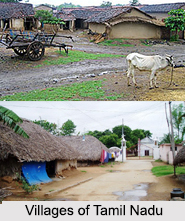
 Villages of Tamil Nadu are special and prominent for their own specific reasons. Some yield massive amount of food crops, while some are vital transaction points and some feature distinguished cultural integrity. The religious traditions and festivals of the Tamil Nadu villages are still widely followed all across the state. Villages of Tamil Nadu are special and prominent for their own specific reasons. Some yield massive amount of food crops, while some are vital transaction points and some feature distinguished cultural integrity. The religious traditions and festivals of the Tamil Nadu villages are still widely followed all across the state.
The villages of Tamil Nadu can be distinguished into particular divisions, namely villages in Coimbatore District, villages in Dindigul District, villages in Nilgiris District, villages in Salem District and villages in Sivaganga District. Education in Villages of Tamil Nadu Tamil Nadu is one of the most literate states in India. Several government primary schools have been established in the rural areas to provide primary education to the children. There are also many colleges and universities established in the urban areas to provide higher education to the students. Tamil Nadu has performed reasonably well in terms of literacy growth during the decade. Occupation in Villages of Tamil Nadu 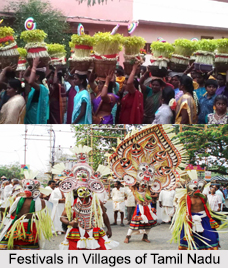 Agriculture is the principal occupation of a majority of people in the villages of Tamil Nadu. Most of the people who live in villages are farmers, other works as potters, carpenters and blacksmiths. Women work planting the rice and paddy, while the men work pulling bullock carts, tilling new soil, etc. Agriculture is the principal occupation of a majority of people in the villages of Tamil Nadu. Most of the people who live in villages are farmers, other works as potters, carpenters and blacksmiths. Women work planting the rice and paddy, while the men work pulling bullock carts, tilling new soil, etc.
Art and Culture in Villages of Tamil Nadu The traditional "Theru Koothu" and "Villu Pattu" dance dramas are famous street shows in villages of Tamil Nadu. Since the earlier days, these were the only means of entertainment that conveyed social messages to the village people. The villages of Tamil Nadu are prominent for their cultural facets that not only reflect the integrity of the state but also India, as a whole. The village deities of Tamil Nadu are not into the traditional patterns of Hindu Gods and Goddesses. Several legends are related to the villages of Tamil Nadu that are associated to social suppression. Administration in Villages of Tamil Nadu The conflicts within the villages of Tamil Nadu are solved by the village Panchayat with occasional choices of the interference of police or the court system. Festivals in Villages of Tamil Nadu During the Tamil Months of Karthikai, the villages of Tamil Nadu are decorated lavishly for the celebration of their regional festivals in Masi, Panguni, Aadi and Vaigasi temples. The commencement of any Tamil Nadu village festival starts with that of a hoisting of the flag and tying ‘Kappu’. Mayana Pujai is mostly practiced in midnight during the worship of Irulappasamy or Sadalaisamy. Villages of Tamil Nadu can easily be identified as one the richest in diverse culture in the village society. |
| ||||||||||||||||||||||||||||

