Varahikanda, Indian Medicinal Plant - Informative & researched article on Varahikanda, Indian Medicinal Plant
  Indianetzone: Largest Free Encyclopedia of India with thousand of articles Flora & Fauna


in  
Art & Culture | Entertainment | Health | Reference | Sports | Society | Travel
Forum  | Free E-magazine
Flora & Fauna : Indian Birds l Indian Animals l Indian Flowers l Indian Reptiles l Indian National Parks l Indian Shrubs l Indian Tress l Bird Sanctuaries in India l Indian Herbs l Indian Plants l Indian Medicinal Plants l Indian Flora and Fauna l Indian Biosphere Reserves l Indian Wildlife Sanctuaries l Indian Fruits l Indian Wildlife
Home > Reference > Flora & Fauna > Indian Medicinal Plants > Varahikanda Plant
Varahikanda, Indian Medicinal Plant
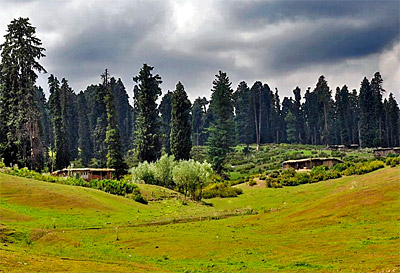
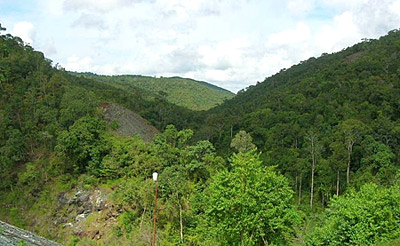
The Indian medicinal plant Varahikanda is commonly found in the Himalayas.

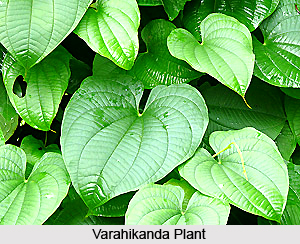
Varahikanda, Indian Medicinal PlantVarahikanda, is an Indian Medicinal Plant, which bears the botanical name Dioscoreaceae Dioscorea bulbifera. Varahikanda is commonly found in the Himalayas, at an altitude of 1850 metres. Varahikanda is known by several names across Indian sub-continent. In Bengali, Varahikanda is known as Banalu, Chamalu.Gaichaalu, kuku-ralu and suralu. In English, this medicinal plant is known as bulb-bearing yam. In Gujarati, Varahikanda is known as salvinavelya, suariya, varahikanda; in Hindi it is agitha, karukanda, pitaalu, Ratalu Suaralu while in Kannada it is known as heggenasu. Varahikanda is also called karando in Konkani and kattukachil in Malayalam. In Maharashtra Varahikanda is known as dukarakanda, gathalu, karukarinda, mataru. In Oriya it is called pita alu. The Punjabi name of Varahikanda is zaminkhand. In Tamil, this plant is called kat-tukkilangu. kodikilangu, pannukilangu and chedupaddudumpa, malakakaya-pendalamu in Telugu. Varahikanda is known as zaminekand in Urdu.

Varahikanda is an annual climber having smooth stems that spins clockwise to the left. The solitary tube of Varahikanda varies in shapes and sizes which ranges from globose to pyriform and can be small and rounded. Varahikanda have purplish-black or earth-coloured skin that is covered with small feeding roots and its sticky flesh is white to lemon yellow coloured. The leaves of Varahikanda are alternatively arranged and are oval-shaped. The apex of the leaves narrows to the slender point. The lobes are rounded which are joined by parallel cross-nerve at the base. There are numerous bulb-shaped growths arising from the leaf axil, known as the Bulbils. These Bulbils are brown colored that vary in shape. The flowers Varahikanda plants are greenish or purplish colored bearing axillary clusters. The fruits of these medicinal plants are oblong shaped and are fleshy. The seeds of Varahikanda, an Indian medicinal plant, are winged at the base. In Central India flowering of Varahikanda occurs between July and September and the fruiting takes place from October to December.

According to the Ayurveda, the tuber of Varahikanda is considered bitter, pungent, tonic, alterative, aphrodisiac, stomachic and anthelmintic. These tubers are reckoned for treatment of diseases like dyspepsia, urinary discharges, leucoderma, bronchitis, biliousness, tumours and strangury. In Unani medicinal traditions too this Indian medicinal plant is of great use. The tubers of Varahikanda are considered as expectorant and astringent to the bowels. The Varahikanda tubers also treat asthma, bronchitis and abdominal pains. The dried and powdered tubers of Varahikanda also possess medicinal applications as they can be used to heal ulcers, piles and dysentery. The bulbils of Varahikanda are used externally to promote healing of sores.
(Last Updated on : 7/02/2012)
  More Articles in Indian Medicinal Plants
 
Hastyaluka Plant Varahikanda Plant Mustaka Plant
Cyperaceae Plant Trikosaki Plant Shankrapushpi Plant
Gabdi Plant Tamala Plant Bhadrabala Plant
Ajantri Plant Purple Convolvulus Plant Baghanulla Plant
Kanchata Plant Kharboj Plant Canda Plant
Triputa Plants Akhukarni Plant Michai Plant
Kamalata Plant Vyaghranakhi Plant Ipomoea coccinea L Plant
Railway Creeper Plant Akasavalli Plant Sankhapushpi Plants
Bahupraja Plant Danti Plant Sala Plant
Karela Plant Dhamargava Plant Jhingaka Plant
Sarahattika Plant Spilanthes Calva Plant Mundi Plant
Sigesbeckia Oriental Plant Senecio tenuifolius Plant Cottonweed Plant
Pentanema Indicum Plant Asvakarnah Plant Haritaki Plant
Badam Plant Bahira Plant Kakubha Plants
Amlavetasa Plant Vrksamlah Plant Nagakesar Plant
Swetachilli Plant Thorny staff tree Plant Jyotismati Plant
Ksharadala Plant Arjuna Asana Plant Rangoonkibel Plant
Combretum decandrum Roxb Plant Dhavah Plant Commiphora caudata Plant
Indian Cadaba Plant Kanthari Plant Acanthospermum hispidum Plant
Adhakpuspi Plant Aditya Plant Ajashrangi Plant
Akola Plant Alarka Plant Antrapachaka Plant
Arkamula Plant Ashvaghna Plant Australian pine Plant
Avighna Plant Barachandrika Plant Bhadra Plants
Bhringaraja plant Bhukharjuri Plant Bhut phal Plant
Biskandri Plant Bulb plants in India Campanilla Plant
Chakrani Plant Chironji plant Cordia macleodii Plant
Cyathocline purpurea Plant Dhania Plant Candrasura Plant
Chaskaman Hydro Power Plant Dhoajavriksha Plant Dhumapatra Plant
Ehretia laevis Roxb Plant Ervatamia heyneana Plants Glossogyne bidens Plant
Yugaphala Plant Golika Plant White Champa Plant
Gulsham Plant Harachampaka Plant Visamustih Plant
Heracleum rigens Wallichis Plant Iksvakuh Plant Trikantaka Plant
Tecoma stans Plants Indian Cherry Plants Indrayava Plant
Syamalata Plant Suryamukhi Plant Jingini Plant
Supari Plants Sugandhi Plant Kajutaka plant
Sudrabilo plant Kakadani Plant Spanish needle plant
Kaliziri Plant Soumya Plant Sinduri Plants
Silkweed Plant Kandali Plant Kantaphala Plant
Karabi Plant Seetaphal plant Karamardika Plant
Secamone emetica Plant Karambha Plant Satamuli Plant
Sasasruti Plant Kath-Semul Plants Sarvabajin Plant
Sarpagandha Kharjuri Plants Sariba Plant
Krishnasariva Plant Sangkhaphuli Plant Kunduru Plants
Laghukacchu Plant Safed Sarson Plant Lingini Plant
Rugtoora Plants Manjirika Plant Raladhupa Plant
Moca Plants Musali plant Prickly Pear Plant
Pothos scandens Plants Pithari Plant Nityakalyani Plant
Parpatakah Plant Parthenium hysterophorus Plant Patoli Plants
Patala Plants Oriental Cashew Tree Matchstick Tree
Jasmine Tree Malayan Custard Apple Amrataka Plant
Vitunna Plant Sabu Plant Khetki Plant
Jungli Anarash Plant Hamsapadi Plant Pindi Plant
Amaranthus spinosus L Plant Alternanthera Sessilis Plant Alternanthera pungens H.B.K Plant
Aerva lanata Plant Amaranthaceae Plant Aloe Barbadensis Mill or Indian Aloe
Ganderi Plant Dra-Vanti Plant Bhumyamalaki Plant
Bherenda Bhadradanti Plant Krishna-Kamboji Plant
Macaranga indica Weight Plant Kampilla Plant Svetakanchana
Orchid Tree Kandla Mahul
Kuberakshi Dividivi Plant Karanjika Plant
Guletura Plant Nelaponna Plant Sarmal Plant
Amaltas Plant Tarwar Plant Chaksu Plant
Gabur Plant Brahmani Khair Plant White Babul Plant
Babla Plant Biswul Plant Shami Plant
Aila Plant Kunchandana Plant Krishnasirish Plant
Sirisa Chakavat Plant Gulmohur Plant
Yellow Goldmohur Plant Ashoka Tree Balapatra Plant
Red Kutch Plant Kariyartharani Muria
Shivari Dhamani Pharsia
Kukurbicha Charati Panibel
Amalbel Vajravalli Benokra
Chikun Karanji Patera
Badhara Benjuen Bharangi
Gambhari Massandari Pulikampa
Tirutali Atmora Barhanta
Buli Dhunsuli Gokhru
Gothbegun Kakmachi Poduthalai
Sundri Tutturubenda Asheta
Bakul Banaganjei Brahmi
Dipya Hingon Kumarika
Mahanimb Parpoti Tobacco
Musket Tree Indravalli Aliar
Mahua Kapittha Curry Leaf
Kamini Arjaka Ramatulsi
Haldi Ginger Plant Nasinda
Ratanpurus Dokarbel Tobacco Plant
Koshta Poison Berry  
Recently Updated Articles in Flora & Fauna
  • Gabdi Plant
    Gabdi or Torch wood tree is a plant of dry climate and is recognised as an Indian medicinal plant.
  •  
  • Parsley
    Parsley is a green coloured and bright biennial herb which is used as spice. Parsley grows well in moist with well drained soil and proper sunlight.
  •  
     
  • Red Bell Bush
    The flowers and leaves of the Red Bell Bush make the most common tan in India.
  •  
  • Coconut Palm Tree
    Coconut Palm Tree is known for its diverse uses and properties. Coconut Palm Tree is also known for its huge economic and commercial values.
  •  
  • Drumstick Tree
    Drumstick Tree, a popular tree of India, has a delicate tracery of its divided leaves and also appears in a fresh, elegant manner. Drumstick tree can be used as a boundary fence and also contains a lot of edible qualities; it is very common in towns and village gardens.
  •  
    E-mail this Article | Post a Comment
    RSS Feeds
    Forum
    Forum on Flora & Fauna

    Free E-magazine
    Subscribe to Free
    E-Magazine on Indian Crafts
     
     
    Varahikanda, Indian Medicinal Plant - Informative & researched article on Varahikanda, Indian Medicinal Plant
    Sitemap
    Contact Us   |   RSS Feeds
    Copyright © 2008 Jupiter Infomedia Pvt. Ltd. All rights reserved including the right to reproduce the contents in whole or in part in any form or medium without the express written permission of Jupiter Infomedia Pvt. Ltd.