Jnana Mudra is familiar among the Mudras, practised by various religions. It is a good process for increasing concentration and ensures that the person who practices it achieves organized thoughts. The word Jnana is synonymous to wisdom. Jnana Mudra is the gesture of knowledge and it is sometimes referred to as the Mudra of Wisdom. In Jnana Mudra the index finger is used and in Hindu belief, index finger is regarded representing the ego. The index finger is held down and subjugated by the power of the thumb representing the Universal spirit. According to popular yogic thoughts Jnana Mudra is used to burn the ego invoking the power of the fire of Agni, the deity associated with the thumb.
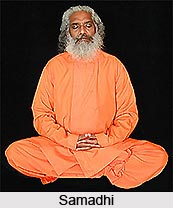
Jnana Mudra is performed during meditation sitting in a meditative pose, closing the eyes and placing the hands on the knees, the hands in this Mudra should stand facing the ground. The fingers are considered to have higher importance in Mudra. The little finger is considered to be the "body" of a human being. The "mind" is the ring finger and the biggest finger of all was the middle finger representing "soul" which reaches towards the sky and heaven.
There are different ways of practicing Jnana Mudra. One process involves placing the tip of the thumb on the tip of the index finger while the other fingers remain relaxed and extended. It can be done with both hands and placed them on the thigh in a relaxed position. There are two methods of doing the Jnana Mudra. In the first method the tips of the thumb and the index finger touch each other and it is the passive receiving position. In the second method the tip of the index finger touches the first thumb joint with light pressure and this one is an actively giving position.
Benefits of Jnana Mudra
•It is a yogic tranquilizer
•Its practice ensures mental peace
•Concentration of the mind and Sharp Memory is developed
•Spiritual enhancement develops creativity