


 Indian Space Research Organisation or the ‘Bharatiya Antariksh Anusandhan Sangha’ is abbreviated as ISRO. It is India's national space agency, headquartered at Bengaluru. The directive of ISRO is to develop the space related technologies and their application to the nation's development. Besides domestic payloads, ISRO also offers international launch services as well. Indian Space Research Organisation or the ‘Bharatiya Antariksh Anusandhan Sangha’ is abbreviated as ISRO. It is India's national space agency, headquartered at Bengaluru. The directive of ISRO is to develop the space related technologies and their application to the nation's development. Besides domestic payloads, ISRO also offers international launch services as well.
History of Indian Space Research Organisation The history of space research in India has its roots in the ancient era. After India gained independence from British occupation in 1947, Indian scientists and politiciansrecognized the prospective of rocket technology in both defence applications and for research and development. Dr. Vikram Sarabhai founded the Indian space program and Jawaharlal Nehru placed space research under the jurisdiction of the Department of Atomic Energy(DAE) in 1961. ISRO was created on August 15, 1969 from the INCOSPAR programme under the DAE and continued to work under the Space Commission and finally the Department of Space, shaped in June 1972. ISRO built India's first satellite, ‘Aryabhata’, which was launched by the Soviet Union on 19th April 1975. It was named after the Mathematician Aryabhata. In 1980, ‘Rohini’ became the first satellite to be placed in orbit by an Indian-made launch vehicle, SLV-3. Objectives of Indian Space Research Organisation The major objective of ISRO is to use space technology and its application to a variety of national tasks. The Indian space programme was driven by the vision of Vikram Sarabhai, considered the father of the Indian Space Programme. Organisational Structure and Facilities of Indian Space Research Organisation ISRO is managed by the Department of Space (DoS) of the Government of India. DoS itself falls under the authority of the Prime Minister's Office and the Space Commission. It manages the following agencies and institutes: Research Facilities Centres of Indian Space Research Organisation Following are the different research centres of ISRO: For test related facilities Indian Space Research Organisation, ISRO Propulsion Complex of Mahendragiri is there. For construction and launch facilities, ISRO has the centres of ISRO Satellite Centre at Bengaluru, Laboratory for Electro-Optics Systems at Bengaluru, Satish Dhawan Space Centre at Sriharikota and Thumba Equatorial Rocket Launching Station at Thiruvananthapuram. Tracking and Control Facilities Centres of Indian Space Research Organisation For tracking and control facilities, ISRO has the following different research centres: 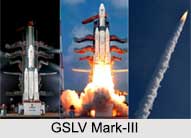 Human Resource Development Centres of Indian Space Research Organisation
Following different Human Resource Development research centres of ISRO: Apart from all these facilities the other facilities of ISRO are as follows: Satellite Launches of Indian Space Research Organisation 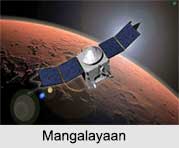 As of June 2017, ISRO has launched 278 satellites, including 209 overseas ones using the developed launch vehicles like SLV, ASLV, PSLV and GSLV. ISRO has developed its Geosynchronous Satellite Launch Vehicle for launching heavier satellites. ISRO also holds the world record for launching the most number of satellites, 104, in a single launch. The Satellite Launch Vehicle is generally known by its short form ‘SLV’ or SLV-3 was a 4-stage solid-propellant light launcher. Its first launch took place in 1979 with 2 more in each following year and the last launch was in 1983. Only two of its four test flights were successful. The Augmented Satellite Launch Vehicle, usually known by its abbreviation ASLV project was started by the ISRO during the early 1980s. The first launch test was held in 1987 and after that 3 others followed in 1988, 1992 and 1994 out of which only 2 were successful. As of June 2017, ISRO has launched 278 satellites, including 209 overseas ones using the developed launch vehicles like SLV, ASLV, PSLV and GSLV. ISRO has developed its Geosynchronous Satellite Launch Vehicle for launching heavier satellites. ISRO also holds the world record for launching the most number of satellites, 104, in a single launch. The Satellite Launch Vehicle is generally known by its short form ‘SLV’ or SLV-3 was a 4-stage solid-propellant light launcher. Its first launch took place in 1979 with 2 more in each following year and the last launch was in 1983. Only two of its four test flights were successful. The Augmented Satellite Launch Vehicle, usually known by its abbreviation ASLV project was started by the ISRO during the early 1980s. The first launch test was held in 1987 and after that 3 others followed in 1988, 1992 and 1994 out of which only 2 were successful.
The Polar Satellite Launch Vehicle is usually known by its abbreviation ‘PSLV’ which is a replaceable launch system developed by ISRO. The highest number of satellites launched by the PSLV in a single launch is 104, in the PSLV-C37 launch on 15th February 2017. The Geosynchronous Satellite Launch Vehicle is usually known by its abbreviation ‘GSLV’. Now it is ISRO's second-heaviest satellite launch vehicle and is able in putting a total load of up to 5 tons to Low Earth Orbit. GSLV-Mk III is a launch vehicle which will let India to become less reliant on foreign rockets for heavy lifting. On 18th December 2014, ISRO effectively conducted a trial test-flight of GSLV MK III carrying a crew component. Satellite Programmes of Indian Space Research Organisation Following are the different satellite programmes of ISRO: Missions of Indian Space Research Organisation Chandrayaan-1 was India's first mission to the moon. ISRO launched the spacecraft using a modified version of the PSLV on 22nd October 2008 from Satish Dhawan Space Centre, Sriharikota. The Chandrayaan-166 team was awarded the American Institute of Aeronautics and Astronautics SPACE 2009 award. The Mars Orbiter Mission (MOM), informally known as ‘Mangalayaan’, was launched into Earth orbit on 5 November 2013 by the ISRO and has entered Mars orbit on 24 September 2014 and India became the first country to enter Mars orbit on its first attempt. |
| |||



Home > Reference > Indian Administration > Indian Government Departments > Indian Space Research Organisation
Indian Space Research Organisation
| Indian Space Research Organisation is the national space agency of India. It is the space agency of the Government of India headquartered in the city of Bengaluru. |
| ||||||||||||||||||||||||||||

