Indian Philosophers are the connoisseurs who are experts with the system of Indian philosophy. The dealing subject of Indian Philosophers may refer to any of several traditions of philosophical thought that originated in the Indian subcontinent, such as the Hindu philosophy, Buddhist philosophy and Jain philosophy. All the branches of Indian philosophies have a common underlying theme of Dharma and similarly attempt to explain the attainment of liberation having the same or rather intertwined origins. Indian Philosophers first formalized darshanas and promulgated mainly between 1,000 BC to a few centuries A.D, with residual commentaries and reformations that continued up to as late as the 20th century by Aurobindo and ISKCON among other Indian Philosophers, who provided stylized interpretations.
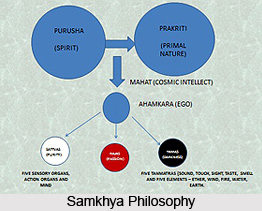
The feature of the schools introduced by the Indian Philosophers is that they may belong to one "masthead" and be dissimilar from each other, or be in agreement while professing loyalty to different banners. An example of the latter trait is the non-Vedic Jain and the Vedic Samkhya schools, both of which possess similar ideas on pluralism; an example of the former would be the Dvaita and the Advaita schools, both of whom belong to the Vedic tradition.
The Indian Philosophers viewed philosophy as a realistic necessity that needed to be cultivated in order to understand how life can be led at its best. Eventually, it became a custom for Indian Philosophers to explain at the beginning of philosophical works how it serves human ends. The experts centered philosophy on an assumption that there is a unitary underlying order, which is all enveloping and omniscient.
The Rig Veda can be considered as the origin of learning of all Indian Philosophers. The philosophers of India, dating back to pre-1500 BC is assumed to learn from the Vedas and Upanishads. However, the Indian Philosophers, who dealt with the Jaina, the Buddha, the Manu Smriti and the Bhagavad Gita probably belongs to the pre-500 BC.
During the pre-300 BC, the Indian Philosophers were responsible for the rise of the orthodox Darshanas and during 200 AD; they saw Nagarjuna and the rise of Mahayana Buddhism. The era of the Indian philosopher, Adi Sankaracharya and the rise of Vedanta occurred during the 600 AD. In post-900 AD, the Indian Philosophers gave rise to other Vedantic schools like VishishtAdvaita, Dvaita and so on.