Background and history of the Mauryan dynasty is one of the most unique and hair-raising in ancient Indian history, with umpteen legends and stories being circulated still. In the first place, Mauryan Empire had to clash with the titanic Greek, Alexander from Macedonia. It was in the year 327 B.C. and Alexander who had just recently endangered the Indian peninsula, had departed ignominiously. The Greek Great was forced to recede back homewards, as his army had become exhausted after incessant wars. The grand kingdom of Magadha, under the Nanda Dynasty, was spared a Grecian assail and life in the outstanding capital city of Pataliputra ( present day Patna, in Bihar) continued much like previous times. There existed little warning of the degradation that had been already instilled into the power structure, which would soon be overthrown into a biting civil war.
The Nanda emperor, Dhanananda had by his dictatorial ways invited numerous enemies. Amongst one of these, there happened to be a proud and feisty man from the high Brahmin society whom Dhanananda had selfishly insulted in court. To nobody`s knowledge, this Brahmin was soon to cause enough ruination to the Nanda emperor and empire. This was the enigmatic Chanakya, who, under the pseudonym Kautilya, later authored the illustrious political treatise `Arthashastra`. In fact, background and history of the Mauryan dynasty precisely was destined to begin from this very phase, when Chanakya entered the dramatic arena. A vindictive opponent, he had vowed not to tie his hair in the customary Brahminical top-knot, until he had retaliated to his insult. This however did not particularly worry Dhanananda; he brushed away the Brahmin that Chanakya could accomplish nothing by his own accord. Consequently, the emperor expatriated Chanakya from Pataliputra and considered it the end of the matter. But, this was only the beginning of the end.
Travelling in exile, traversing the Vindya mountain range, afterwards Chanakya met Chandragupta Maurya, a young man who too had borne profound personal grievances against the Nandas. Chandragupta Maurya`s background is however enshrouded with obscurity. It is only known that he was either the son of a Nanda prince and a maid-servant named Mura, or descended from the Moriya tribe of peacock-tamers. The latter view can answer why the peacock much later became his chief emblem. Whatever was the case, whatever was his origin, Chandragupta`s enlivened personality struck Chanakya deeply and he decided that Chandragupta would make a far better king compared to the oppressive and immoral Dhanananda. Background and history of Mauryan dynasty however goes on to furnish much more legends in line with the competent and unfathomable duo.
Together, Chanakya and Chandragupta Maurya set about enkindling the people of Magadha against Dhanananda. And as there happened to be several amongst the populace that Dhanananda had bruised in some way or other, it did not take the duo much time before they had managed to gather a considerable force. The newly created Mauryan army was still numerically substandard to that of Dhanananda, but, given its exalted leaders, they lacked neither in bravery nor perseverance. And this was not a factor of much worry and disturbance which served just as well, as triumph arrived only after many severe blows. Apparently, there also goes a story that after Chanakya had overheard a mother telling her child to eat his hot meal from the sides inwards, had impressed upon the Brahmin much. Lapping up the hint, the Mauryan army ceased trying to conquer Pataliputra and began attacking first the faraway regions of Magadha instead. The tide turned in their favour absolutely. By 321 B.C. Chandragupta had overwhelmed the Nandas and the background and historical reign of the Mauryan dynasty had begun its saga.
However, the advent of the Mauryas brought them into conflict with the next Greek general, Seleucus I Nicator. Seleucus I had inherited both Alexander`s Asian holdings and his empire-building aspirations. Chandragupta completely grazed and shattered these aspirations in 303 B.C. The resulting treaty handed the loser 500 war-elephants and conceded to the victorious Changragupta the Seleucid provinces of Trans-Indus (Afghanistan), Seleucus`s daughter Helen in marriage and the potential court presence of the Seleucid ambassador Megasthenes. It becomes enormously apparent that background and history of the Mauryan dynasty was not one of mere conquering, but one of mind games and sublime intelligence. Megasthenes` mesmerising account of his term of office, `Indika`, has survived in shards down the centuries.
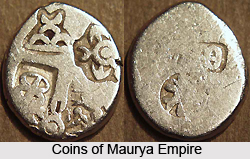
Stretching from Afghanistan to Bengal to Mysore, the Mauryan Empire became the peninsula`s first ever centralised power. The empire was also the most amazingly well-administered one, conducted as it was by the overbearing state-craft philosophy of Chanakya`s `Arthashastra`. The dynasty owned all the farms, forests, mines and industries and upheld a standing army and a professional intelligence service system. Mauryan dynasty followed a reasonable, if a bit rigorous judicial policy and a free religious status and also wielded trade and diplomatic relations with foreign powers like Egypt, Syria, Rome, Greece, and China. Background and history of Mauryan empire also informs that the royals extremely promoted art and culture and patronised the famous universities of Taxila and Pataliputra. The citizens, in general, were affluent and content and remained so for the subsequent 136 years.
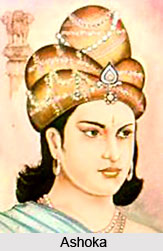
Chandragupta Maurya was succeeded by his son Bindusara, who also proved to be an efficient ruler and vastly expanded the empire`s boundaries. His successor, Ashoka, who, according to legends, ascended the throne after a fratricidal conflict for ascension, seemed initially to be as much of an empire-planner as his predecessors. However, he changed courses after a brutal war with the Kalinga Empire that took an incomparable toll of life and property. Excruciated with remorse, Ashoka renounced war and borrowed the doctrines of Buddhism. The remaining of his reign was spent in taking comprehensive steps towards propagating Buddhism throughout the Indian subcontinent as well as abroad. Ashoka had grounded tree-lined highways, rest-houses, schools, colleges, even veterinary clinics, lent alms to the poor and the sick and accomplished umpteen other things that he thought would do good to his subjects. And for this precise reason, he is considered the greatest of the Mauryan kings. There however existed a snag to all this inexhaustible benevolence though. By preferring Buddhism over warfare and declining the practical Arthashastra policies, he regrettably destabilised the kingdom for his descendants. Ashoka`s successors, far less competent men, were unable to survive the disintegrating forces. In 185 B.C., with the assassination of the last emperor, Brihadratha, the Mauryan Empire ceased to exist. Background and history of the establishment of the Mauryan dynasty perhaps ends here, both in a sad and proud note.