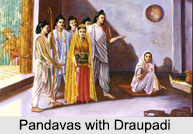
Ashramvasik Parva is the fifteenth Parva of the great epic Mahabharata and it comprises of three sub-parvas. In this Parva, the Pandavas ruled Hastinapur with Dhritarashtra as their head. Later, Dhritarashtra left the kingdom of Hastinapur, and along with Gandhari and Vidura, went to the forest. Kunti, the mother of the Pandavas, also went with them. Vidura is described as a very noble person with all the virtues in this episode of Mahabharata. The meeting of Yudhishthir with Narada is narrated in this Parva. The eldest Pandava came to know from Narada about the ruin of the Vrishnis race. The Ashramvasik Parva possesses forty two sections one thousand five hundred and six slokas written by Vyasa.
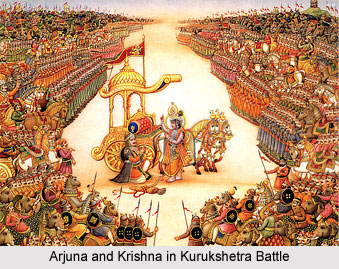
The great epic of Mahabharata is known for the great battle at Kurukshetra and after the end of the battle, the Ashramvasik Parva has also acquired much importance. There is an elaborate narration of Dhritarashtra, Gandhari and Kunti and their state of affairs after the end of the great battle at Kurukshetra is given in the `Book of the Hermitage` or the Ashramvasik Parva. The eventual death of the eldest Kuru along with Kunti and Gandhari in a forest fire is well-described in the Ashramvasik Parva. The eighteen Parvas of Mahabharata are continuation of this grand saga and the entire story of Mahabharata is divided intricately in each section.
It is also known from the Ashramvasik Parva that Dhritarashtra, Gandhari and Kunti went to live in a hermitage in the Himalayas. Vidura died before them while Sanjaya still lived after the death of Dhritarashtra and went to live in the higher Himalayas. There is also the description of the Pandavas, who, after receiving their kingdom, ruled Hastinapur with their leader as Dhritarashtra. There is also the description of the other three sons of Dhritarashtra who were born from his Vaisya wife and they were called Yuyutsu, Vidura and Sanjaya.
This Parva describes the leaving of throne by Dhritarashtra, and his departure to the forest with his wife Gandhari and his sister-in-law Kunti. The wonderful meeting of King Dhritarashtra with the great Vyasa is also described in this Parva. Blessed by Vyasa, Dhritarashtra was able to see all his dead sons once and thus discarded his sorrows and acquired with Gandhari yielded for his meritorious actions. The description of Vidura as a person with multiple virtues and the news of the disintegration of the Vrishnis race from Narada are mentioned in this Parva of Mahabharata.