Arkamula, Indian Medicinal Plant - Informative & researched article on Arkamula, Indian Medicinal Plant
  Indianetzone: Largest Free Encyclopedia of India with thousand of articles Flora & Fauna


in  
Art & Culture | Entertainment | Health | Reference | Sports | Society | Travel
Forum  | RSS Feeds  | Free E-magazine
Flora & Fauna : Indian Birds l Indian Animals l Indian Flowers l Indian Reptiles l Indian National Parks l Indian Shrubs l Indian Trees l Bird Sanctuaries in India l Indian Herbs l Indian Plants l Indian Medicinal Plants l Indian Flora & Fauna l Indian Biosphere Reserves l Indian Wildlife Sanctuaries l Indian Fruits l Indian Wildlife
Home > Reference > Flora & Fauna > Indian Medicinal Plants > Arkamula Plant
Arkamula, Indian Medicinal Plant
Arkamula, an Indian medicinal plant, is a perennial climber found in dry deciduous forests of India.

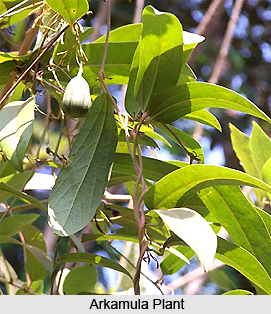
The Indian medicinal plant, Arkamula is widely available in the plains and low hills of the country, usually growing on hedges and bushes of the dry deciduous forests. This plant is biologically known as Aristolochia Indica. Arkamula is called Isarmul, in Bengali, Indian Birthwort in English; Arkamul, Arka-Mula, Nirvel and Ruhimula in Gujarati; Isarmul in Hindi; Gopataputtitoppalu, Ishwarib-alli and Ishwariberu in Kannada. This Indian medicinal plant is also known as Ishwara-Mulli and Karalakam in Malayalam; Kadula, Sampsun and Sapsanda in Marathi, Gopakaroni in Oriya; Garudakkodi, Ichchuramula and Perumkizhangu in Tamil and Dulagooda, Govila, Eswaramuli, Nallaeswari and Thella Usirika in Telugu and Shapesand in Urdu.

This perennial climber has greenish-white, ridged stems and long, warped, slightly tuberous roots. The Arkamula leaves are very variable, from linear-oblong to obovate-oblong or sub-pandurate. The leaves are 4-12 cms long and 1.3-7.5 cms wide. The apex is usually obtusely acuminate, entire with somewhat surged margins and the base is cuneate, rounded, truncate or subcor-date. The petioles of Arkamula tree are up to 1.5 cm long.

Arkamula flowers borne singly or in 2-3-flowered axillary racemes; perianth up to 4 cm long with a glabrous pale green inflated, lobed and trumpet-shaped mouth, lip purplish-brown clothed with purple-tinged hairs. The fruits of this Indian medicinal plant are oblong or globose-oblong capsule that is 3-5 cms long, 6-valved; the seeds are deltoid-ovate, acute, flat and winged. The flowers of Arkamula blossom from July to August in central Indian forests.

Arkamula possesses abundance of medicinal properties. The dried roots and occasionally the leaves together are treated as an important conventional Indian drug, known as Iswari in Ayurveda. Ishwari has the power to destroy the toxic effects of all poisons, especially snake poison; moreover it is also used as a gastric stimulant, bitter tonic and emmenagogue. The roots of Arkamula, an Indian medicinal plant, are used, usually in the form of a mixture for the treatment of acute types of dyspepsia, bowel troubles in children and intermittent fevers. In large doses it also heals local irritant, producing nausea, griping pains in the bowels, and sometimes vomiting and tenesmus.

A mixture of the Arkamula roots is considered as a stimulant and febrifuge. Along with black pepper and ginger, it is also used as a carminative for treating diarrhoea and other bowel complaints. The dried, powdered roots of Arkamula are blended with honey to treat leucorrhoea. The tribal inhabitants of eastern Bihar use the root powder mixed with mustard oil as an external application to ease body pain, the ground root of Arkamula is given as a remedy to snake bites, and the mature leaves are chewed to lessen asthma.

The tribal inhabitants of the Surguja District in eastern Madhya Pradesh, the root of Arkamula is mixed with black pepper to treat rheumatism. The leaf juice of Arkamula is used to treat diarrhoea, cholera and recurring fevers. The seeds of this Indian medicinal plant are useful for treating inflammations, biliousness and dry cough. The powdered stem of Arkamula bark is mixed in water with that of Azadirachta Indica and Cassia Fistula and used orally as an antidote for snakebite by the Gonds of northern Andhra Pradesh.
(Last Updated on : 13/01/2009)
  More on Indian Medicinal Plants...
 
Hastyaluka Plant Varahikanda Plant Mustaka Plant
Cyperaceae Plant Trikosaki Plant Shankrapushpi Plant
Gabdi Plant Tamala Plant Bhadrabala Plant
Ajantri Plant Purple Convolvulus Plant Baghanulla Plant
Kanchata Plant Kharboj Plant Canda Plant
Triputa Plants Akhukarni Plant Michai Plant
Kamalata Plant Vyaghranakhi Plant Ipomoea coccinea L Plant
Railway Creeper Plant Akasavalli Plant Sankhapushpi Plants
Bahupraja Plant Danti Plant Sala Plant
Karela Plant Dhamargava Plant Jhingaka Plant
Sarahattika Plant Spilanthes Calva Plant Mundi Plant
Sigesbeckia Oriental Plant Senecio tenuifolius Plant Cottonweed Plant
Pentanema Indicum Plant Asvakarnah Plant Haritaki Plant
Badam Plant Bahira Plant Kakubha Plants
Amlavetasa Plant Vrksamlah Plant Nagakesar Plant
Swetachilli Plant Thorny staff tree Plant Jyotismati Plant
Ksharadala Plant Arjuna Asana Plant Rangoonkibel Plant
Combretum decandrum Roxb Plant Dhavah Plant Commiphora caudata Plant
Indian Cadaba Plant Kanthari Plant Acanthospermum hispidum Plant
Adhakpuspi Plant Aditya Plant Ajashrangi Plant
Akola Plant Alarka Plant Antrapachaka Plant
Arkamula Plant Ashvaghna Plant Australian pine Plant
Avighna Plant Barachandrika Plant Bhadra Plants
Bhringaraja plant Bhukharjuri Plant Bhut phal Plant
Biskandri Plant Bulb plants in India Campanilla Plant
Chakrani Plant Chironji plant Cordia macleodii Plant
Cyathocline purpurea Plant Dhania Plant Candrasura Plant
Chaskaman Hydro Power Plant Dhoajavriksha Plant Dhumapatra Plant
Ehretia laevis Roxb Plant Ervatamia heyneana Plants Glossogyne bidens Plant
Yugaphala Plant Golika Plant White Champa Plant
Gulsham Plant Harachampaka Plant Visamustih Plant
Heracleum rigens Wallichis Plant Iksvakuh Plant Trikantaka Plant
Tecoma stans Plants Indian Cherry Plants Indrayava Plant
Syamalata Plant Suryamukhi Plant Jingini Plant
Supari Plants Sugandhi Plant Kajutaka plant
Sudrabilo plant Kakadani Plant Spanish needle plant
Kaliziri Plant Soumya Plant Sinduri Plants
Silkweed Plant Kandali Plant Kantaphala Plant
Karabi Plant Seetaphal plant Karamardika Plant
Secamone emetica Plant Karambha Plant Satamuli Plant
Sasasruti Plant Kath-Semul Plants Sarvabajin Plant
Sarpagandha Plant Kharjuri Plants Sariba Plant
Krishnasariva Plant Sangkhaphuli Plant Kunduru Plants
Laghukacchu Plant Safed Sarson Plant Lingini Plant
Rugtoora Plants Manjirika Plant Raladhupa Plant
Moca Plants Musali plant Prickly Pear Plant
Pothos scandens Plants Pithari Plant Nityakalyani Plant
Parpatakah Plant Parthenium hysterophorus Plant Patoli Plants
Patala Plants Oriental Cashew Tree Matchstick Tree
Jasmine Tree Malayan Custard Apple Amrataka Plant
Vitunna Plant Sabu Plant Khetki Plant
Jungli Anarash Plant Hamsapadi Plant Pindi Plant
Amaranthus spinosus L Plant Alternanthera Sessilis Plant Alternanthera pungens H.B.K Plant
Aerva lanata Plant Amaranthaceae Plant Aloe Barbadensis Mill or Indian Aloe
Ganderi Plant Dra-Vanti Plant Bhumyamalaki Plant
Bherenda Bhadradanti Plant Krishna-Kamboji Plant
Macaranga indica Weight Plant Kampilla Plant Svetakanchana
Orchid Tree Kandla Mahul
Kuberakshi Dividivi Plant Karanjika Plant
Guletura Plant Nelaponna Plant Sarmal Plant
Amaltas Plant Tarwar Plant Chaksu Plant
Gabur Plant Brahmani Khair Plant White Babul Plant
Babla Plant Biswul Plant Shami Plant
Aila Plant Kunchandana Plant Krishnasirish Plant
East India Walnut Plant Chakavat Plant Gulmohur Plant
Yellow Goldmohur Plant Ashoka Tree Balapatra Plant
Red Kutch Plant    
Recently Updated Articles in Flora & Fauna
E-mail this Article | Post a Comment
Free E-magazine
Subscribe to Free
E-Magazine on Flora & Fauna

 
Arkamula, Indian Medicinal Plant - Informative & researched article on Arkamula, Indian Medicinal Plant
Sitemap
Contact Us   |   RSS Feeds
Copyright © 2008 Jupiter Infomedia Pvt. Ltd. All rights reserved including the right to reproduce the contents in whole or in part in any form or medium without the express written permission of Jupiter Infomedia Pvt. Ltd.