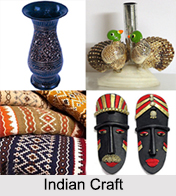
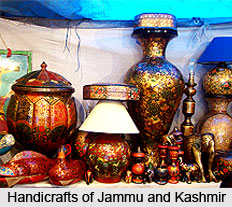
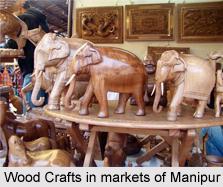
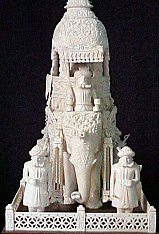
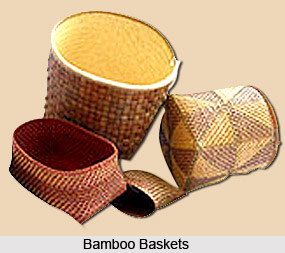
Wood was chosen by the craftsmen because of the durability and potential as a carving medium. The culture of wood art in India was initiated in nineteenth century, and with the time taking its due courses their flexibility to adopt the environment and for their constancy made it a trendy medium. Wood is the intermediate rendering warmth and integrity. Sculptures totems, and figurines, varied wood using cultures have earned their fulfilment making it seem a strangely universal human inclination.
Wood art or Timber work is pervasive in preference among the different communities in India. Houses of Punjab have the distinction of engaging beautiful wooden balconies enclosed by pierced screens and in Kangra (Himachal Pradesh) houses are bedecked with bas-relief carvings. This feature distinctly clarifies that wood art in India have transcended the plain of art and ventured into employed and impressive medium of architecture.
Wood art as an architectural pattern established the reputation for the carpenters in the Rajasthani district of Sakhawati. Doors with carved beams, door-surrounded with little shutters in wood art were introduced. This had set up a new trend of wood art in India which was later followed by the South Indian architects. The villas of rich merchants of Chattinad, north east of Madurai (Tamil Nadu) were embellished with capitals, carved columns, beams, brackets and lintels. Kerala had been ever renowned for the establishments of fabulous sculptured artwork in temples, palaces and great mansions. In Gujarat also wood art gained a whole new facet of popularity. In Gujarati architecture the brackets in wood art were embellished with the projection of balconies while the floors of Gujarati mansions also included the carved emblems of struggling animal forms, intricately interwoven. These rich yet tender, impressive yet intrigue wood art still echoes an orgy of life. The typical design of architectural wood art in India involved the frequent usage of carved screens. The carved screens helped to keep the interior airy. This also involved the embellishment of beams and pillars.
 In wood art, timber then was intensively used as a substitute of stone. The wooden mosques of Kashmir, steep-roofed pine temples of North Himachal Pradesh, churches, high relief alter pieces, screens, statuary for the churches of Goa, and the gilded cherubs around the ceiling and pulpits in the churches of Goa and Daman Diu are exemplary of the excellence of wood work in India.
During the tenth century, the exigency for the woodwork declined. However the demand for the new doors and the door surrounds abundantly in temples, hotels and mansions in India and abroad had never let the craft of wood art perish. A new trend of employing the wood art in contouring temple structure is seen in this time. Southern India was famous for employing large wooden chariot during the celestial occasions. These large chariots are built with carved figures of deities, mythical animals and other decorations related to the god of the temple and occasion. The Jagannath temple of Puri employs such chariot during the festival "Ratha Yatra".
 Later after the arrival of the Portuguese, the amalgamation of the western and the eastern style flooded the prevailing structure of wood art in India. The arrival of French and British later introduced alien form in the wood art. The nineteenth century India offered a novel facet on wood art. Doors opened and heavy furniture of densely carved ebony was introduced. Later the plain wood art in India was given an artistic touch with chiselled work. Tarakashi, another form of inlay, inherited from Manipuri, was introduced as an archetypal form of wood art and is still in practice in Uttar Pradesh. This technique involves the gluing of the "naqsha" on a plain dark surface "sbisham", a little chisel is used to engrave the outline into the wood. "Tarakashi" work was done for the embellishment of the "khadaun" that was a wooden sandal worn by the pious Hindus.
Decorative wooden boxes and chests became an impressive form of wood art in India. Fabulous boxes made of fine timber were often used in marriage purpose. In Kerala there is still a demand for "Malabar box" and "Naturapretty" boxes which are boxes that are usually made of wood from the jackfruit tree, reinforced with brass hinges, brackets and finely painted on a vermilion background. In Raghurajpur , the "Jantaka Pedi" is well known for its value in weddings. This is a dowry box which is covered with pictures from Hindu myths. Chests found in Chamba (Himachal Pradesh) are used for storing grain while in Ladakh they are decorated with brightly painted Tibetan Buddhist motifs. Smallest instance of Indian wood work in chest and box form are the nose-ring boxes and "sindura".
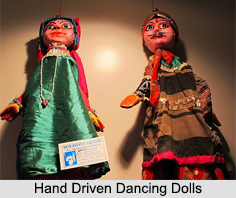
Sandalwood has carved a niche for itself in the world of wood arty crafty zone. Sandalwood with time has included itself in the wood art and is generally used for incising deities. Small puppets are popular in rural areas and are also the parts of wood art of India. Large deities and tiny, painted goods, dolls, animals, fruit and animals are still found in large number in Chennapatna (Karnataka).