The tradition of folk theatre in Haryana is century`s old, dating back to 16th century. Theatre in Haryana is called the Natya Plays, which is the amalgamation of music, dance, poetry and speech. In Hindu mythology, the gods themselves figure as supreme dancers and Haryana theatre based heavily on mythology. Haryana Drama was created not merely for pleasure but for conveying moral truths, but also to strengthen the cultural integrity. Folk theatre in Haryana is divided into two categories. Firstly, temple based religious theatre, depicting Indian Epics and Puranas and the source material for characters and secondly community-based secular theatre, of minor forms and lighter variety.
In reality several themes of Haryana theatre are mixed together with mythological love, popular history and religious themes and different colors of secular values. Haryana Swang follows the old tradition of Haryana, thus being the most popular variety of performance based on the `open stage` technique. The word Sang is the advanced form of Swang, which literally means imitating or disguising. The sang is the rural folk drama in Haryana, which expresses the relationship of love, depicting legendary and modern tales of valor, sacrifice, humor and whatever interests human mind. With a deep-rooted tradition, the Sang in Haryana is based on the open theatre style and in other parts of India, Ramleela and Rasleela are the more popular dramas, based on mythology and religion. It is an all male cultural troupe of Haryana, comprising of twenty to thirty artistes, including the director, producer musicians and actors. Towards the end of the nineteenth century, all women of the Swang troupes performed in western Uttar Pradesh and the adjoining `Khadar `area of Haryana.
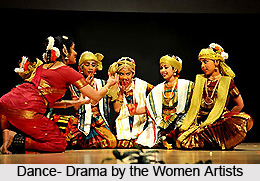
The origin of Swang theatre is traced to one Kishan Lala Bhat, who laid the foundation of the contemporary style of folk theatre in Haryana. The most celebrated name is that of Dip Chand Bahman, hailing from village Shiri Khunda in Sonepat. Dip Chand Bahman was popularly known as Shakespeare or Kalidasa of Haryana. The stage of Swang does not require the complicated arrangements of the modern dramatic performances. In this kind of Swang theatre, no curtains or a greenroom for make-up is needed. There is only a wooden plat form about three and a half metres long and of equal breadth. Any open space can be used for this purpose, be it a field, a courtyard or a balcony of a temple. The rest of the theatre art in Haryana is all a display of skill and stamina of the artistes who perform as long as six hours. The most interesting aspect of theatre in Haryana is that they do not use loudspeakers. The participants of a Sang perform on the platform, getting up and taking their turns at acting. There are prompters for each character who do their job excellently, without being audible to the audience. A number of musical instruments like the ektara, kharta, dholak, sarangi and harmonium are included to bring about the flavor into the dialogues. Sangs are also performed at night, and men dressed as women often play the female characters. Recently, women have replaced the men, and they have their own Sangs in which women play men instead of the other way round. A variation of the Sang is the nautanki in Uttar Pradesh.
 The musicians of the orchestra begin to create the entertaining atmosphere, an hour before the show. The artistes sing some religious, traditional songs or other songs connected with the play. Finally, the Guru appears and the artists touch the feet to bring to mind his blessings. The Swang play opens with a song of bhakti in praise of the Goddess of knowledge (Bhawani).
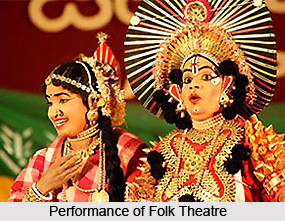
The Haryana theatre starts with a brief introduction about the play and soon the performance starts. The Haryana Swang has enriched it self by using and adopting a variety of themes and abundantly embraces romances like Sorath, Padmawat, Nihalde, Nautanki and others. There are historical and semi-historical themes based on Epics, such as Raja Rissalu, Kichak Badh, Draupadi Chirharan, Amar Sing Rathor, Sarwar Neer, Jaswant Singh etc. Themes of old literature, such as Gopi Chand Bhartari Hari, Raja Bhoj Harischander and others are also adopted. Mythological themes like Prahlad Bhagat and Punjabi romances like Heer Ranjha, Pooran Bhagat have become a part of the immense and wide-ranging themes on which the Haryanvi rural theatre operates. Theatre forms an integral part of the state`s culture and the contemporary theatre form is known as Sang in Haryana. Theatre here is usually performed in rural areas, with actual touch of folklore, music and voice-over from the sidelines.
Folk theatre in Haryana found a solid base since its start and is very popular even today.
Ali Baksh of Rewari is known to be the father of traditional folk theatre in Haryana and has staged the mythological-cum-historical saga Padmavati. Other prominent artists of theSsang were Swami Har Dev, Pandit Bhartu, Dhoom, Qutabi, Pandit Lakshmi Chand and a host of others during the British rule and later. Haryana theatre is performed mainly in the rural areas. The Cultural Festival is organized by the Goverment of India aims at reviving this disintegrating culture of Theatre by promoting artists and their music through festivals and other relevant programmes.