The Battle of Fatehpur was a key episode in the Indian history in 1799. The conflict between the Samma Dynasty of Sindh and the Arghun Dynasty lead to the Battle of Fatehpur. Some Mughals had come to Sind in the reign of Jám Feróz and settled there with the authorization of the Jám. Among them were KÃbak Arghún who had left Sháhbeg`s party due to a murder. Most of these Mughuls, mainly of tribes like Daolatsháh and Núrgáhi tribes had been enlisted in his service by Jám Feróz, who entertained some doubts against Daryá Khánand and wanted to secure some fearless men to work against him, when required. It was at the information and invitation of MÃr Kásim KÃbakÃ, that Sháhbeg marched against Tattá with a large army about the close of 914 A.H. (1508 A.D.).
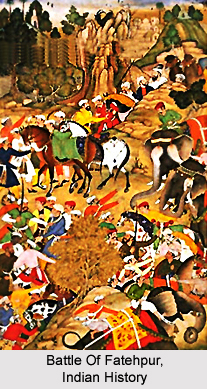 Sháhbeg`s flght with Daryá Khán Sháhbeg arrived at Fatehpur and Ganjábah to make warlike preparations and thus started to collect troops. He left some skilled chiefs in charge of those places, appointed his own brother at SiwÃ, and sent MÃr Fázil Kókaltásh with 240 horses to move forward. The Sammah army of Sind, while passing through the district of Bághbán was joined by Daryá Khán`s sons Mahmúd and Mótan Khán at Talti that is about 6 or 7 miles from Sehwán. On the arrival of Sháhbeg at the village of Bághbán, the chief men of the place hurried to pay their respects to him that encouraged him to advance towards Tattá. He crossed the Lakà hills and came within the 6 miles of Tattá southwards, where he stopped and encamped on the bank of the Khánwáh.
In those days of the Fatehpur battle, the river flowed towards the south of Tatta and so he had to make provisions to cross it. The spies soon found a native nomad, who, on pressure put upon him, pointed out the place where the river was fordable. It was on the 15th of Muharram 926 A.H. (1519 A.D.) that Sháhbeg rode into the river and led his whole force across, having left a party of soldiers to protect the camp at the river. Daryá Khán was the adopted son of Jám Nindó; he left his master Jám Feróz at the capital city and he himself moved forward with a large army and gave battle to the Mughals. After the severe battle of Fatehpur was fought, Sháhbeg came with the triumph victory. When Jám Feróz heard of the defeat of his army, he ran away across the river. Daryá Khán was killed in the battle. Up to the 20th of the same month the Mughals kept on plundering the city. Hundreds of women and children of respectable families were seized. Even those of Jám Feróz remained in the city. It was at the intervention of Kázà Kázan, the most educated man of the time at Tattá, whose family members were also imprisoned, that Sháhbeg stopped to loot by giving an arrow to the Kázà and showing it round to the plundering Mughuls. A declaration was also issued to that effect, and once more there was order and calm posture in the city.
Fight of Jám Feróz Jám Feróz with a few persons was tarrying in the village of Perár, anxious to get some information about his own and his father`s family. However, Sháhbeg had the good sense to arrange a party of his men round their residence. They could not find any aid for it and he was obliged to send messengers to Sháhbeg recognizing him as his superior and asked for mercy. Sháhbeg sent back the envoys with presents and with promise of pardon on the Jám`s surrender.
Accordingly Jám Feróz, taking his brothers and kinsmen along with him issued from Perár to the bank of the river with a sword dangling round his neck as a symbol of surrender. Sháhbeg decreed the Jám`s families to be crossed with due honor, and in the next month, Saffar, Sháhbeg started to camp outside the city, where Jám Feróz came to pay respect to him in person.
Sháhbeg won all the popularity due to the battle of Fatehpur and proved to be kind enough to give the governorship of Tattá to the Jám. After a proper settlement was made and ratified, Sháhbeg left Tattá and marched out on his return journey. Within 3 days, Sháhbeg arranged some boats and crossed the river, with MÃr Fázil Kókaltásh and the Arghún and Tarkhán forces. Rinmal and his brother Jódhó went forward to meet them and suddenly MÃr Fázil and attacked to defeat them. The fort of Taltà was captured and most of the Sammah troops were deceased, some drowned themselves in the river and few fled to Sehwán. Rinmal Sódhó`s brother Jódhó was also one among the slain. The battle of Fatehpur proved to be of a considerable significance in Indian History.