





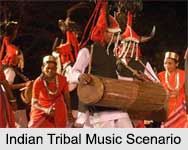
 Indian Tribal Music is a mystical form of experience that best depicts the rich heritage of the country. Indian Tribal Music is considered to be a version of house music. The music is mostly accompanied by drum-beats, with no presence of specific melody. The tribal music beats are based on sophisticated and synchronised drum patterns, establishing a rhythm. The instruments utilised in Tribal Music are not as refined as the ones used in classical music. Indian Tribal Music is a mystical form of experience that best depicts the rich heritage of the country. Indian Tribal Music is considered to be a version of house music. The music is mostly accompanied by drum-beats, with no presence of specific melody. The tribal music beats are based on sophisticated and synchronised drum patterns, establishing a rhythm. The instruments utilised in Tribal Music are not as refined as the ones used in classical music.
Evolution of Indian Tribal Music The tribal music in India witnesses much of lyrical chanting and traditional sounds, comprising contemporary musical variations. The aboriginal, ethnic tribal music is reproduced live with drums, in accompaniment with other musical instruments. Tribal music in India is not taught the same way as classical music. It has a hereditary process of learning. The music is passed down from generations to generations. However, as time and tastes have changed, variations in the current form are foreseeable. Features of Indian Tribal Music 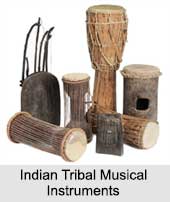 Indian Tribal Music with its closed-group form of ethnicity is remarkable in the sense that it can never be studied in isolation from the social and ritual contexts of the people concerned. Tribal music possesses a well-built community basis. The fact can be comprehended in the domains of musical-socialisation, levels of participation and nature of specialisation. Music amongst the Indian tribes is not conceived as exclusive property of its individual members, but of the community as a whole. Learning music in a typical tribal society forms a cardinal part of the entire process of association of its members. It is learnt together with the umpteen customs and practices by the society. Any given tribal community, initiated its children in learning music, i.e., singing, drumming or dancing, from an early age. Children from the Santhal tribal society are initially supplied with the ‘Katic Murli’ (small sized flutes) of 5 to 6 inches in length with 3 to 4 envoys to blow and the drums of smaller size to beat. Indian Tribal Music with its closed-group form of ethnicity is remarkable in the sense that it can never be studied in isolation from the social and ritual contexts of the people concerned. Tribal music possesses a well-built community basis. The fact can be comprehended in the domains of musical-socialisation, levels of participation and nature of specialisation. Music amongst the Indian tribes is not conceived as exclusive property of its individual members, but of the community as a whole. Learning music in a typical tribal society forms a cardinal part of the entire process of association of its members. It is learnt together with the umpteen customs and practices by the society. Any given tribal community, initiated its children in learning music, i.e., singing, drumming or dancing, from an early age. Children from the Santhal tribal society are initially supplied with the ‘Katic Murli’ (small sized flutes) of 5 to 6 inches in length with 3 to 4 envoys to blow and the drums of smaller size to beat.
Indian Tribal Musical Instruments The Indian Tribal musical instruments are generally manufactured by the musicians themselves, making use of materials like coconut shells, animal skin, pots, etc. The instruments used in Tribal Music include horse hair violin, duduk, bamboo flutes, santoor, sitar, etc. |
| ||||||||||||||||||||||||||||

