





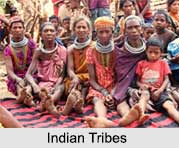
 Indian Tribal Culture speaks about the diversity of the country. ‘Unity in diversity’ is one of the most spectacular features amongst the population of India. Tribal culture of India, their traditions and practices interpenetrate almost all the aspects of Indian culture and civilisation. India has traditionally been the home of different cultures and people. India’s tribal population is as different as the country itself. The different tribes in India if ever counted can move up to a mind boggling number, with all their ethnicities and impressions. Indian Tribal Culture speaks about the diversity of the country. ‘Unity in diversity’ is one of the most spectacular features amongst the population of India. Tribal culture of India, their traditions and practices interpenetrate almost all the aspects of Indian culture and civilisation. India has traditionally been the home of different cultures and people. India’s tribal population is as different as the country itself. The different tribes in India if ever counted can move up to a mind boggling number, with all their ethnicities and impressions.
Customs and Traditions of Indian Tribal People In India, culture and diversification amongst the tribal can also be admired from any land direction. Each of the tribes is a distinctive community, either migrated from a different place or the original denizens of the land. The speciality of the Indian tribes lies in their customs, cultures, beliefs and the harmony in which they survive in unanimity with nature. Tribal living perfectly portrays a well-balanced background. Sentinelese tribe of Andaman is one of the most secret tribes existing in the world. They are fond of buckets, specifically red buckets. Jarawa Tribe of Andaman are still rooted in their tribal customs and traditions. They enjoy fish, pigs and other animals but wouldn't touch a deer as they consider deer sacred and they also change the names of their children post puberty. There is a detailed ritual held to celebrate, in which a boy has to search for a wild pig and present it to everyone in the village and a girl is rubbed in clay and pig oil. Chenchus in Andhra Pradesh speak a dialect of Telugu language known as ‘Chenchu’. Chenchu youths are free to marry whoever they want to and they agree to the divorce, and widows as well are approved to remarry. 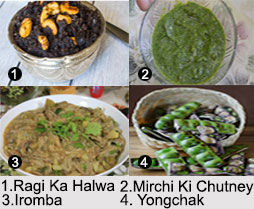 Bhil tribe is one of the biggest tribes of India. There is lot of liberty given to Bhil women and they are treated equally. They practice polygamy where a woman is allowed to remarry and have several partners after her first marriage. Santhals of Eastern India in West Bengal, Odisha, Bihar, Jharkhand, and Assam speak several languages other than ‘Santhali’. Their written script is new and was developed as just as 1925. They have no temples and no idols as they worship the local gods and spirits. Mundas have received success in the fields of sports, politics, literature, etc. Ram Dayal Munda, a member of Munda tribe, has been awarded with the Padma Shri award also. Khasi tribe of Meghalaya speak Khasi language. They are matrilineal clan and children's surnames are based on mother's family. It is the mother who succeeds to the property, not the father. In case of a divorce, the woman has absolute freedom. Her choice cannot be questioned and she possesses the children and properties. Bhil tribe is one of the biggest tribes of India. There is lot of liberty given to Bhil women and they are treated equally. They practice polygamy where a woman is allowed to remarry and have several partners after her first marriage. Santhals of Eastern India in West Bengal, Odisha, Bihar, Jharkhand, and Assam speak several languages other than ‘Santhali’. Their written script is new and was developed as just as 1925. They have no temples and no idols as they worship the local gods and spirits. Mundas have received success in the fields of sports, politics, literature, etc. Ram Dayal Munda, a member of Munda tribe, has been awarded with the Padma Shri award also. Khasi tribe of Meghalaya speak Khasi language. They are matrilineal clan and children's surnames are based on mother's family. It is the mother who succeeds to the property, not the father. In case of a divorce, the woman has absolute freedom. Her choice cannot be questioned and she possesses the children and properties.
Gonds are the tribal community of the central India. They have been influenced by the Hindus and for the long time have been practicing different Hindu rituals. Angami tribe of Nagaland are quite popular for their woodcraft and artwork. Religion of Indian Tribal People There are different religions like Hinduism, Buddhism, Islam and Christianity are under the pressure of cultural merging in India. Indian tribe’s principles are persistent with folk religion and the major tribal religion of India is the Santhal of Odisha. Tribal groups in Himalayas are also affected by both Hinduism and Buddhism in the late 20th century. Food Culture of Indian Tribal People The traditional foods consumed by Indian tribal people are very well connected to almost all the aspects of their socio-cultural, spiritual life and health. Traditional food, wild fruits, roots and tubers, yams, green vegetables, spinach, fishes, crabs, snails, ants, honey, etc. are in the list of food of Indian tribal people. Tribes from Odisha eat ‘ragi ka halwa’, 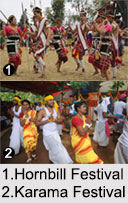 ‘ragi porridge’, ‘organic rice and dalma’ and ‘ragi pakora’. Bhil tribe eat ‘kachra sabji’, ‘chancch’ and ‘mirchi ki chatni’ etc. For food, Indian tribal people are totally reliant on plants and chiefly have a preference on raw fruits. ‘ragi porridge’, ‘organic rice and dalma’ and ‘ragi pakora’. Bhil tribe eat ‘kachra sabji’, ‘chancch’ and ‘mirchi ki chatni’ etc. For food, Indian tribal people are totally reliant on plants and chiefly have a preference on raw fruits.
In North - East India, soybean based fermented food is quite popular like ‘bekang’, ‘aagya’, ‘peron namsing’, ‘yanni perung’, ‘chukchoro’, ‘bari’, ‘kinema’, ‘hawaizaar’, ‘hakhu mata/akhuni’, ‘axoni’ etc. Bamboo based ethnic foods are also quite popular in North - East India like ‘hikhu’, ‘hiring’, ‘hithyi’, ‘ekung’, ‘lungseij’, ‘godhak’, ‘gundruk’ etc. Tree bean based ethnic foods of North - East Indian tribes are ‘yongchak’, ‘iromba’ etc. Festivals of Indian Tribal People Indian tribal festivals have been an element of the structure of tribal India for centuries. Central Indian tribal festivals include ‘Madai festival,’ ‘Bhagoriya festival,’ ‘Tribal Dussehra’ of Bastar, religious festival of Karma, festival of ‘Nagaj’. Northern Indian tribal festivals include ‘Mim kut’, ‘Sekrenyi festival’, ‘Tsukhenyi festival’, ‘Aoling’, ‘Monyu’, ‘Moatsu festival’, ‘Amongmong festival’, Ngada festival’, ‘Hornbill festival,’ ‘Sekrenyi’ etc. Eastern Indian tribal festivals include ‘Bali Jatra’, ‘Karama festival’, ‘Chaitra Parva’, ‘Kedu festival’, ‘Mage Parab’, ‘Bohaggiyo Bishu’, ‘Sarhul’ etc. Southern Indian tribal festivals include ‘Holi’, ‘Samakka’ festival and so on. Tribal people generally cling firmly to their identity, despite external influences that had threatened tribal culture, especially after the post-independence chaotic period. |
| ||||||||||||||||||||||||||||

