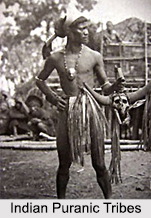
 Indian Puranic tribes were mythological beings. Indian Puranic Tribes did not interact frequently outside their community. As a result little was known about them and this spurred the creation of fables about them. The Indian Puranic age indicates the classic Indian epics such as the Mahabharata, the Ramayana and the Puranas. During those days, there existed some exotic tribes which were often described as super-human or even sub-human. The Puranic tribes could appear and disappear at will; they could also fly in air, with or without the use of an airborne vehicle. These tribes were powerful in various ways, they had the ability to change shape at will and could read the mind of people. These tribes could also influence natural forces. Such assumptions stemmed from the fact that the Puranic tribes were well known for their vigour and their history is steeped in the myths and legends.
Different Indian Puranic Tribes
Narrations about these Puranic tribes are often mixed with mythology and fiction. These tribes include Gandharvas, Rakshasas, Yakshas, Kinnaras, Kimpurushas, Pisachas, Nagas, Suparnas, Vidyadharas, Vanaras, Valikilyas, Devas (within them Vasus, Maruts, Rudras, Adityas) and Asuras (within them Daityas, Danavas, and Kalakeyas.) The tribes` settlement areas ranged from high mountains (Yaksas and Rakshasas) to deep forests (such as the Vanaras).
Some of the Indian Puranic tribes are as follows –
 Gandharvas - They are described as severe warriors who could challenge even the great Kshatriya warriors. This group was also skilled in art, music and dance. Some Gandharva tribes were associated with the Devas and some with Yakshas. They occupied the land to the north of Kailasa, close to the Deva territories. The name Gandharva could have been derivative from the name Gandhara, since they might originally dwelled in the unreachable mountains of the Gandhara Kingdom.
Yakshas - These were a tribe populating the area surrounding the Kailasa range of the Himalayas. Their king, Vaisravana or Kubera, has been a worshipper of Lord Shiva whose abode is considered to be Kailasa. According to Ramayana, Kubera established or rebuilt the kingdom of Lanka and thus the Yaksha people started to live there. Later on Kuber`s stepbrother Ravana took over Sri Lanka, upon their father`s decision and Kuber moved to the region near Kailasa Mountain in Himalayas.
Kinnaras - This tribe is often associated with the Gandharvas and Yakshas. The epic Mahabharata and the Puranas narrates that north Himalayas is the abode of Kinnaras. These tribal people were fierce warriors accomplished in horse riding and horse combat. Some of them were burglar tribes who invaded village settlements, by looting them using their skilled cavalry forces. The legend of Kinnaras probably came from these brutal warrior tribes, who terrorized the Vedic settlements. There is now a district called the Kinnaur in Himachal Pradesh or the domain of the Kinnara tribes. Inhabitants of this district call themselves Kinnaurs.
 Kimpurushas - These tribal groups were described to be lion faced beings. They were often mentioned along with the Kinnaras and the other tribes of the Puranic age.
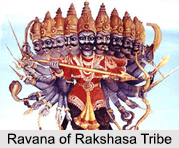
Rakshasas - Rakshasas resided in the high Himalayas and cool mountains of Sri Lanka. Rakshasas were normal humans who followed a certain religious way that opposed to Yakshas. Ravana was the most famous Rakshasa in ancient India. Some of the famous Rakshasa kingdoms in India were Lanka Kingdom, ruled by Rakshasa emperor Ravana, Danda Kingdom was ruled by Khara, Rakshasa Ghatotkacha"s kingdom in the Himalayas and some more minor kingdoms in the Himalayas.
Nagas - They are a group of tribal people spread throughout India during the period of the epic Mahabharata. Naga Ananta, also known as Sesha and Adi-Sesha was the first among all the Nagas. The Nagas had kingdoms in Nagaland and Andhra Pradesh. Arjuna`s wife Ulupi belonged to one of such Naga kingdom in Gangetic Plain. The Naga race was almost exterminated by Janamejaya, the Kuru king in Arjuna"s line, who conducted the massacre of Nagas at Takshashila. Astika stopped this massacre who was a Brahmin and son of a Naga.
Suparnas - The Suparnas, also known as "Garudas" were probably the Falcon worshipping Iranians who conquered the Naga territories of northwest India. Suparnas were arch-rivals of the Nagas. Garuda was a famous Suparna and they possessed the ability to fly in air without using an aircraft. Some literature tells that they had wings like that of Angels, while some believe that they were birds like the hawk or eagle.
Vanaras - They were a tribe who lived within dense forests. During the time of Ramayana, a dense forest covered the central part of India by the name Dandaka Forest. Most of the Vanaras dwelled in this dense forest. Kishkindha was their stronghold that had influence among the whole of the Vanara tribes spread all across the Indian Subcontinent. This kingdom was situated in this forest, located now near the Tungabhadra River in Karnataka state of India. Some literature describes them as monkeys or apes.