





 Indian Hindu Customary Ceremonies are the vital rituals or sanskars of this religion which not only binds the harmony of the sect but also reflects the in-depth culture of the Hindus. The customary ceremonies of the Hindus are some of the resources which depict the rich cultural facet of India. Indian Hindu Customary Ceremonies are the vital rituals or sanskars of this religion which not only binds the harmony of the sect but also reflects the in-depth culture of the Hindus. The customary ceremonies of the Hindus are some of the resources which depict the rich cultural facet of India.
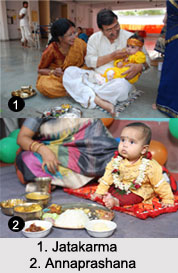
The Indian Hindu customary ceremonies bring about its majestic beliefs and ideas, related to religious concepts to its followers. The Indian Hindu customary ceremonies have become closely associated with the regular routine of the Hindus. The major ceremonies are celebrated amidst festivities, but the customary pujas like Narayan Puja, Ishta Devata Puja and fasting periods of the Hindus like Durgashtami, Saraswati Puja, Ambubachi and Purnima are performed like a regular practice. Sources of Indian Hindu Customary Ceremonies The sources of The Hindu Customary Ceremonies of India are as old as the civilization itself. Vedas, the Upanishads and the Aryans in Indus Valley Civilization are the prime sources for the first time which had followed the Indian Hindu customary ceremonies. It laid them down in the religious scriptures, which are being followed till date. The chief aim of this Indian Hindu customary ceremonies are at manifesting educational and intellectual improvements in the society. Developments of Indian Hindu Customary Ceremonies Hinduism has come down as the most popular religion in India and also the most synonymous with passage of time. Initially the Indian Hindu customary ceremonies were celebrations amongst the highest section of society, with the religious volumes laying down four divisions in caste system: the Brahmans, the Kshatriyas, the Vaishyas and the Shudras. Hinduism had flourished much, even since its beginning in India. This religion opens its wings to one and all. The Hindu Brahmans or the pandits were the ones who knew details of Indian Hindu customary ceremonies and thus performed the Yajnas. The Indian Hindu customary ceremonies commenced from the very birth, ending in death of an individual. Different types of Indian Hindu Customary Ceremonies The Indian Hindu customary ceremonies began from the very birth and ends in death of a human being. Following are the different Indian Hindu customary ceremonies: Jatakarma: It is the first customary Hindu ceremony in India to usher in the child into a family. Simantonnayana is a ritualistic Hindu ceremony, dedicated to the mother in her fourth month of pregnancy, to protect her and her child from evil spirits. 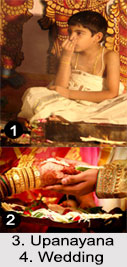 Annaprashana: It is one of the Indian Hindu customary ceremonies that introduce a cereal diet in the child's life. Annaprashana: It is one of the Indian Hindu customary ceremonies that introduce a cereal diet in the child's life.
Chudakarma: This is a ceremony or shaving of the hair of a child is also known by several other names like Mundan, Thread Ceremony and soon. Karnavedha: It is the ritualistic Hindu ceremony of piercing the nose or ear lobe of a child in third or fifth year, before growth of a child's teeth. Nishkraman: It is one if the Indian Hindu customary ceremonies, which necessitates the child to be taken out into the basking sun and fresh air and flora. Upanayana: It is one of the major Indian Hindu customary ceremonies that initiate the Brahman boy into the Brahmacharya Ashrama, where his guru teaches him the essentials of weaponry, Vedas and Upanishads. Vedrambha is a similar ritual introducing the child to the world of four Vedic scriptures. Samavartana is a significant stage in a child's life, where he is ending his Brahmacharya stage, to entering into married life. Wedding: The matrimonial stage forms an integral episode in Indian Hindu customary ceremonies. The wedding ritual of the Hindus further possesses umpteen rituals prior and post-marriage. The wife concerned and her husband are required to go through several religious phases. Funeral: Hindus consider that life and death are part of the perception of samsara or rebirth. Once death occurs, those assembled will stay away from unnecessary touching of the body, as it is seen as tainted. The funeral should take place as soon as possible. Traditionally, the body is washed by the family members and close friends. Hindus usually hold a short wake before burial. Upon returning home, all family members will bathe and change into fresh clothes. Then the family will get together for a meal. |
| ||||||||||||||||||||||||||||

