


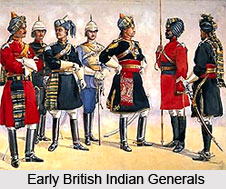
 Evolution of Indian Army came by drawing the reservoir of manpower with newly raised units and formations that were hurled into battle. Indian Army during British Rule was extensively modernised and was very professional. The Indian Army of that period was essentially led by the British and manpower-oriented. The British East India Company has played probably the most significant role in modernising the Indian Army to a great extent during its reign in India. Before the arrival of the East India Company in India, the Indian Army was a bit in a messy and undisciplined condition, though there were some efforts to modernise it. Later on, with the creation of army and naval units along with the manufacture of advanced weapons played a vital role in its growth. The Indian troops got an opportunity to fight first-class armies in different theatres of war. The units and formations were led by young Indian officers who as the operations developed and grew up with responsibility. Evolution of Indian Army came by drawing the reservoir of manpower with newly raised units and formations that were hurled into battle. Indian Army during British Rule was extensively modernised and was very professional. The Indian Army of that period was essentially led by the British and manpower-oriented. The British East India Company has played probably the most significant role in modernising the Indian Army to a great extent during its reign in India. Before the arrival of the East India Company in India, the Indian Army was a bit in a messy and undisciplined condition, though there were some efforts to modernise it. Later on, with the creation of army and naval units along with the manufacture of advanced weapons played a vital role in its growth. The Indian troops got an opportunity to fight first-class armies in different theatres of war. The units and formations were led by young Indian officers who as the operations developed and grew up with responsibility.
British Policy of Military Training The tactical concepts of the Indian Army of World War Il conformed to the British requirements of the time. The military success of the Indian Army during British rule was actually the result of two great innovations. The first one was within the military and it was the professionalization of logistics. In fact the mobility of the British army, along with the development of militarily powerful infantry units, helped the British to defeat any other regular army in India. In battle, the British believed in a step-by-step deliberate approach with local superiority which was followed by the Indian Army. Surprise and audacity in battle were ignored both in planning and execution, and success solely relied upon the superiority of the blow dealt to the enemy. The British rulers did another thing, once it captured the entire India and they actually merged the Indian Army of their captured areas and the combined Army was huge. Scholars also claim that Indian Army during British rule was also capable of defeating the irregular and guerrilla forces that continued to fight the British after the regular armies had been defeated. The British rulers actually imported a new and more powerful mode of military organization. They started to pay their soldiers on a regular basis and that gave the soldiers interest to stay for a long term in this profession. The professionalization of the British Army actually meant more attention to military discipline and performance of military functions. 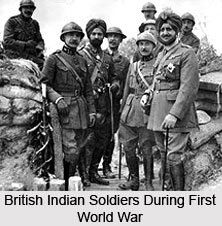 Indian Government during Partition Indian Government during Partition
At the time of Independence, India inherited a military that had been created, equipped, trained and used to mainly protect and consolidate British power in India. Jawaharlal Nehru’s interim government took office, but before it could take stock of future requirements, it got entangled in internal conflicts which eventually led to the partition of India in 1947. The government, committed to the Gandhian Philosophy of Non-Violence, did not take long to spell out the trend of its foreign policy. Jawaharlal Nehru made it clear to the British that India intended to live in peace with its neighbours and firmly believed that political issues should not be settled by military means. He advocated mutual understanding and co-operation, and preferred negotiations as the main instrument of settlement. This resulted in some misgivings among the rank and file that the army would be drastically cut and that its role would be mainly ceremonial. Stages of Evolution of Indian Military After merging of the British Army and the Indian Army, the British rulers gave their attention in modernising and improving the skills and techniques of the Army. A number of steps were taken to improve the qualities of the Indian army during the British rule. 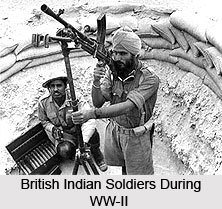 Major Stringer Lawrence, the ‘Father of the Indian Army’, was appointed Commander-in-Chief of the East India Company’s field forces in India. The war with France, which had temporarily ended in 1748, had brought about a substantial increase in the local enrolment of Indian troops, since neither France nor Britain could spare regular troops for India. Major Stringer Lawrence, the ‘Father of the Indian Army’, was appointed Commander-in-Chief of the East India Company’s field forces in India. The war with France, which had temporarily ended in 1748, had brought about a substantial increase in the local enrolment of Indian troops, since neither France nor Britain could spare regular troops for India.
The Nizam of Hyderabad managed a large army during the British period and there were considerable number of foreign officials involved with his army. He used the American, Irish, and particularly French officers for training his soldiers and the number of European-trained troops of Nizam was increased from 1500 men in 1792 to 11,000 in 1795. The number was eventually increased to 14,000. The Nizam was also training his army according to the modern European military techniques. Tipu Sultan of Mysore was another great emperor, who possessed a powerful army and he made a lot of complications for the British Army. Apart from the Nizam of Hyderabad and Tipu Sultan, the Sikhs in the province of Punjab also modernised their armies during 1830s and they became able to defeat the British army at the Battle of Mudki in 1845, as well. A brief study of the Jammu and Kashmir Operations reveals the strategical evolution of the Indian Military. It was an overall strategy for trapping and destroying the intruders or to block the routes of entry and exit along the state border or even to restore the integrity of these borders. These moves appear to have been expedients to cope with situations. The entire Indian Army field force, excluding the minimal holding force, was by now committed in Jammu and Kashmir. Induction of regular Pakistani troops all along the front stiffened resistance, and operations generally stabilised. But at that time, international pressures forced a ceasefire and as a result both armies settled down in penny packets to man the ceasefire line in an uneasy eyeball-to-eyeball confrontation under the supervision of the United Nations Military Observer Group for India and Pakistan (UNMOGIP). The Indian Army emerged from these operations as a cohesive fighting force. But it was still infantry-oriented, lacking the balance of supporting arms and administrative services, and equipped with World War II weaponry. It had fought for the first time under Indian commanders and acquitted well. |
| |||



Home > Reference > Indian Administration > Indian Armed Forces > Indian Army > History of Indian Army > Evolution of Indian Army
Evolution of Indian Army
| Evolution of Indian Army took place with the creation of army and naval units. The East India Company brought some great European military techniques to India, along with highly improved weapons. |
| ||||||||||||||||||||||||||||

