


 Jaipur festivals are the vibrant occasions that add to the colour to life. The royal city of Jaipur celebrates each and every festival with full passion and zeal. The colourful city appears even brighter during the celebration of special festivals. There are numerous festivals, which is celebrated in Jaipur like any other part of the country. But Jaipur in particular is famous for some unusual and interesting celebrations through fairs and festivals in their own style. Jaipur festivals are the vibrant occasions that add to the colour to life. The royal city of Jaipur celebrates each and every festival with full passion and zeal. The colourful city appears even brighter during the celebration of special festivals. There are numerous festivals, which is celebrated in Jaipur like any other part of the country. But Jaipur in particular is famous for some unusual and interesting celebrations through fairs and festivals in their own style.
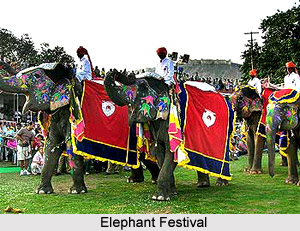
All region of Rajasthan has its own form of folk activity, songs, traditions, dressing sense, etc. which shows the true Indian multiplicity. Also, the people of Rajasthan are well known for their warm welcome, delicacies, conventional attires, rituals, traditions, etc. Irrespective of caste and belief, people come jointly and enjoy the festivals and fairs held in the state. Some of the well known festivals of Jaipur are as follows: Elephant Festival: Elephant Festival is one of the most popular festivals of Jaipur, Rajasthan. This festival is celebrated every year in March on the occasion of Holi that is the festival of colours. The elephant festival revolves around the unique concept of its own kind. The colourful festival of Holi is celebrated throughout India, but in Jaipur, the festival gets some more spice added to it, when the elephants become the major attraction of this festival in their classy and colourful attires. This elephant festival is held in the famous Chaugan ground of Jaipur and makes the perfect venue for the thousands of viewers. Elephant Festival starts with a parade of decorated elephants marching towards the ground and different competitions are organized to enjoy the festival at its fullest. 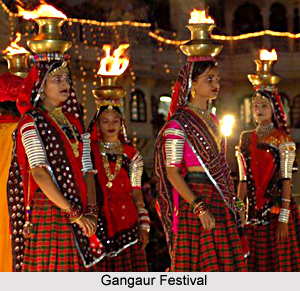
The elephants often participate in races; polo-matches and tug-of-war with men make the spectators spellbound. Here one can enjoy the elephants at their best. The elephant keepers or the mahouts decorate their elephants from head to toe with an exceptional care and unique elegance. The ‘Best Decorated Elephant’ contest is the best feature of this cultural celebration. The audience often enjoys the festivity by dancing and playing. Folk dances and music programs are also held for the overall entertainment of people. This festival of elephants brings back the essence of royalty of Jaipur. After the contests, the people enjoy the magnificent elephant ride in the ground. The festival is most visited by tourists and photographers to take some rare pictures of the elephants beautifully decked with floral motifs. Sitla Mata Fair: In the village seel-ki-dungri of Jaipur, this fair is celebrated with large joy and cheerfulness dedicated to the Sitla goddess when people in Jaipur take blessing from the supreme and performs many art forms to amaze the goddess and complete their wishes. This festival is celebrated in the month of March-April. Sitla mata let all the troubles to shoot on her and bless the people for cheerful life. Gangaur Festival: Gangaur is the most important and rich celebration which is celebrated with great enthusiasm all over the Rajasthan and in some parts of Gujarat and Madhya Pradesh. However, it is mainly rejoiced by the women and girls. During this propitious occasion, they worship Lord Shiva and Goddess Parvati or Gauri by making clay idols of them. Married women pray for the well being, long life and happiness of their husbands and unmarried girls worship for a handsome and bright life partner. This festival is celebrated in the Hindu month of Chaitra, between the months of March and April, according to the Gregorian calendar. 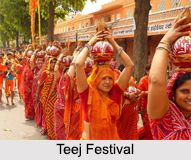 Teej Festival: Teej is one more key festival which is rejoiced in Jaipur. On this day, women and girls wear new clothes, jewelleries and make designs on their palms and feet with mehndi (henna). They meet in group in a temple and perform special puja, aarti and offer prasad to Goddess Parvati. Women pray for their husbands while girls pray for their future husband. Women and girls do folk dance, sing traditional teej songs and enjoy swinging. These three are the exceptional features of this festival. Teej Festival: Teej is one more key festival which is rejoiced in Jaipur. On this day, women and girls wear new clothes, jewelleries and make designs on their palms and feet with mehndi (henna). They meet in group in a temple and perform special puja, aarti and offer prasad to Goddess Parvati. Women pray for their husbands while girls pray for their future husband. Women and girls do folk dance, sing traditional teej songs and enjoy swinging. These three are the exceptional features of this festival.
Kite Festival: Kite Festival is a popular festival because of the admired hobby of Kite flying in Jaipur by people of all age groups. The day of Makar Sankranti or 14 January marks the official day for flying kites in Jaipur and people enjoy the festival by flying kites for the whole day. The sky above Jaipur city becomes next to invisible due to the innumerable kites covering it. People form groups and fly kites thus enjoying the event to its full. Everyone is an opponent in this game and each kite is a competitor for the other. Absorbed in Kite flying, people enjoy loud music and spicy food on the terrace itself. In Jaipur, the sky during this festival looks like a huge collage with all kites of all shapes and designs. In every five years, the Government of Rajasthan organizes the Desert Kite Festival, where expert Kite makers display their kites. Sometimes, these kites measure as big as 1.5 km and are designed in different shapes. Some kites often carry social messages; depict social issues or even caricatures of politicians. This festival has become popular among the tourists, who too participate in the kite flying competitions. Donkey Festival: This festival is an exciting moment of joy and happiness where the donkeys are gathered at one place with their pet parents and many types of fair are performed which includes decorating donkey, donkey racing and lots of more. This festival is one exciting festival that is only celebrated in the region of Jaipur. Chaksu Fair: During this fair, people from all over Jaipur flocks that looks really very colourful. Makar Sankranti: It is celebrated on 14th February where the devotees take a dip into the holy water of Galtaji tank. On this day, colourful kites are flown in Jaipur. Jaipur Literature Festival: The Jaipur Literature Festival which began in 2006 has now become the main literary celebration conducted in the Asia Pacific. This five-day festival is attended by lakhs of people from both national as well as international boundaries. This fair usually takes place in the month of January each year. Both national as well as foreign authors indulge in reading and conversation sessions. Jaipur International Film Festival: The Jaipur International Film Festival was launched in 2009. Of all the festivals of Jaipur, this film festival marks a new era in the history of cinema in India. It usually takes place from January 27 to 31 each year. This five-day festival sees participation from directors as well as actors from across the globe. The festivals of Jaipur, which are worth mentioning, include other common festivals like Diwali, Holi, Dussehra etc. |
| |||



Home > Art & Culture > Indian Festivals > Indian Regional Festivals > Festivals of Rajasthan > Festivals of Jaipur
Festivals of Jaipur
| The festivals of Jaipur are inseparable constituent of the cultural identity of the `pink` city of India. |
| ||||||||||||||||||||||||||||

