 The Central Bureau of Investigation or CBI is India`s foremost investigating agency, responsible for an extensive variety of criminal and national defence matters. It was established on 1 April 1963 and originated from the Special Police Establishment founded in 1941.
Founder of CBI
DP Kohli was the founder Director of CBI who held office from 1 April 1963 to 31 May 1968. Formerly, he was Inspector-General of Police of the Special Police Establishment from 1955 to 1963. Later, Kohli was awarded `Padma Bhushan` in 1967 for his distinguished services. Kohli designed the Special Police Establishment into the national investigative agency, nurtured the organization during his long stint as Inspector General and as Director, laid the solid foundation of Central Bureau of Investigation.
Training Centre for CBI
Central Bureau of Investigation, CBI, and Indian Administration the Central Bureau of Investigation Academy is located at Ghaziabad, Uttar Pradesh since 1996. It is a training centre that caters to the training needs of all ranks of Central Bureau of Investigation. Training facilities for certain specialized courses are also made available to the officials of the Central Police Organisations (CPO), State Police, Vigilance organizations of public sector undertakings, banks and government departments and Indian Armed Forces.
The Department of Personnel and Training in the Ministry of Personnel controls the Central Bureau of Investigation. A Minister of State who reports directly to the Prime Minister heads the Public Grievances and Pension of the Union Government. While equivalent in structure to the FBI, the Central Bureau of Investigation`s powers and function are strictly limited to specific crimes based on Acts, primarily in the Delhi Special Police Establishment Act of 1946. The Central Bureau of Investigation is the official Interpol unit for India.
The Special Police Establishment that was set up in 1941 by the Government of India founded the Central Bureau of Investigation. The functions of the SPE then were to examine cases of enticement and corruption in dealings with the War and Supply Department of India during World War II. Superintendent of the SPE was responsible to control the War Department, even after the end of the War. Eventually, the need for a Central Government agency to investigate cases of bribery and corruption by Central Government employees was urgently felt. The Delhi Special Police Establishment Act was therefore implemented in 1946. The jurisdiction of the SPE extended to all the Union Territories and had the access to extend also to the States with the consent of the State Government concerned.
Role of CBI
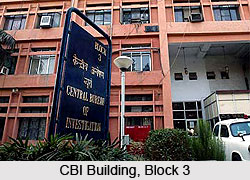 The Central Bureau of Investigation has adequate resources to deal with complicated cases and takes up investigation of more cases of conventional crime such as murder, kidnapping, terrorism and others. Apart from this, the Supreme Court and even the various High Courts of the country often entrust cases for investigation to the Central Bureau of Investigation on petitions filed by distressed parties. In 1987 two investigation divisions in the Central Bureau of Investigation, namely, Anti-Corruption Division and Special Crimes Division were instituted. The latter one deals with the cases of conventional crime, besides economic offences. The Central Bureau of Investigation is a central subject under the Constitution of India and it reports to the Indian Government.
The Central Bureau of Investigation plays a major role in preservation of values in public life and in ensures the health of the national economy. Central Bureau of Investigation generates a major impact on the political and economic life of the nation.
The CBI handles the following broad categories of criminal cases:
Cases of corruption and fraud committed by public servants of all Central Public Sector Undertakings, Indian Government Departments and Central Financial
Institutions.
Special Crimes, such as cases of bomb blasts, terrorism, kidnapping for ransom sensational homicides and crimes committed by the mafia or the underworld.
Posts and Ranks of CBI
Central Bureau of Investigation, CBI, Indian Administration A Director controls the Central Bureau of Investigation. The other important ranks in the Central Bureau of Investigation are Special Director, Joint Director, Additional Director, Deputy Inspector General of Police, Senior Superintendent of Police, Superintendent of Police, Additional Superintendent of Police, Inspector, Assistant Sub-Inspector, Sub-Inspector, Head Constable and Constable.
Constitutional Power of CBI
The legal powers of investigation of Central Bureau of Investigation are obtained from the DSPE Act 1946. This Act confers simultaneous and coextensive powers, duties, rights and liabilities on the members of Delhi Special Police Establishment (CBI) with Police Officers of the Union Territories. However, the Central Bureau of Investigation cases do have a limitation. The CBI officials cannot take up cases, which are essentially against Central Govt. employees or concerning affairs of the Central Govt. and the employees of the Central Public Sector; cases in which the financial interests of the Central Government are involved and the cases related to the breaches of Central Laws.
Directors of CBI (1963- Present)
| Name | Period |
| D.P. Kohli | 1963-68 |
| F. V. Arul | 1968-71 |
| D Sen | 1971-77 |
| S N Mathur | 1977 |
| C V Narsimhan | 1977 |
| John Lobo | 1977-79 |
| R D Singh | 1979-80 |
| J S Bajwa | 1980-85 |
| M G Katre | 1985-89 |
| A P Mukherjee | 1989-90 |
| R Sekhar | 1990 |
| Vijay Karan | 1990-92 |
| S K Datta | 1992-93 |
| K V R Rao | 1993-96 |
| J Singh | 1996-97 |
| R C Sharma | 1997-98 |
| D. R. Karthikeyan | 1998 |
| T N Mishra | 1998-99 |
| R K Raghavan | 1999-2001 |
| P C Sharma | 2001-2003 |
| U S Misra | 2003-2005 |
| V S Tiwari | 2005-2008 |
| W Ashwini Kumar | 2008-2010 |
| Amar Pratap Singh | 2010-Present |