Bappa Rawal, Ruler of Mewar - Informative & researched article on Bappa Rawal, Ruler of Mewar
  Indianetzone: Largest Free Encyclopedia of India with thousand of articles States of India


in  
Art & Culture | Entertainment | Health | Reference | Sports | Society | Travel
Forum  | Free E-magazine
States of India : Indian States l Orissa l Kerala l Gujarat l Rajasthan l Punjab l Bihar l Tamil Nadu l West Bengal l Jharkhand l Assam l Manipur l Tripura l Sikkim l Nagaland l Meghalaya l Mizoram l Jammu and Kashmir l Maharashtra l Madhya Pradesh l Karnataka l Andhra Pradesh l Uttar Pradesh l Uttarakhand l Himachal Pradesh l Arunachal Pradesh l Chhattisgarh l Goa l Haryana l Indian Union Territories
Home > Travel > States of India > Rajasthan > History of Rajasthan > Bappa Rawal
Bappa Rawal, Ruler of Mewar
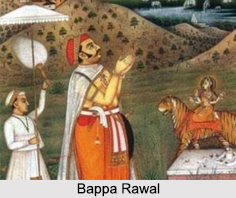
Bappa Rawal is the founder of the Mewar Dynasty and also was the ruler of the Guhilot Dynasty.

Bappa Rawal, also known as Prince Kalbhoj was the eighth ruler of the Guhilot Dynasty and was the founder of the Mewar Dynasty. It is said by experts that Bappa Rawal is the 80th in descent from Lord Rama. Eventually, around the age of 21, he succeeded his father Rawal Mahendra II. Bappa Rawal is one of the most powerful and eminent rulers of the Mewar Dynasty. Although Bappa Rawal`s original name was Kalbhoj yet he never used this name.

Bappa Rawal, Ruler of Mewar Bappa Rawal`s father, Rawal Mahendra II had married a woman of the Paramara Rajput clan, from Mt. Abu. Bappa Rawal`s mother was also the sister of Maan Mori, the Paramara king who ruled much of the State of Mewar. King Mahendra ruled from the town of Nagda in the southwestern sector of Mewar. However he was impious and inactive in his kingdom`s affairs and unfortunately in 716, he was assassinated. His son, Prince kalbhoj, was only three years old and it is from then the stories about Bappa Rawal began.

One account of Bappa Rawal`s early childhood suggested that his existence had to be kept a secret from either Maan Mori, his Paramara uncle or quite possibly from his father`s assassin-there is a report that the ruler of Nagda had tried to kill the young successor to the Guhilot throne, but two of his close Bhil friends (local tribals) did not let the attempt be a success. Later, for better security, he returned to the wild and precipitous countryside around Nagda, his father`s previous capital. This was also the abode of Brahmans, who worshipped Eklingji, a local idol of Lord Shiva. The boy being far too young to rule the kingdom, the rule started in his name until the child came of age, and before committing sati, Mahendra`s widow offered her young son into the affectionate care of a Kul Purohitan, the wife of a local Brahman priest.

Bappa Rawal spent his childhood in a religious retreat in the foothills below Nagda and moved about with the Brahmans` sacred cattle, an honorary and honorable occupation, even for children of the sun. Bappa Rawal developed a close association with the local Bhils. Since childhood, Bappa Rawal became proficient as horsemen and in the use of the sword. His guru was an introspective and perceptive sage and hermit named Harit Rashi, he taught the young boy about morality, was initiated into the mysterious rites of Shiva, and came to recognize Eklingji as the supreme lord of the state of Mewar. Bappa Rawal eventually became Harit Rashi`s disciple, and the sage quickly recognized in his young pupil`s unique intelligence and sympathy. Delighted with the boy`s adoration of Eklingji, Harit Rashi predicted that Bappa Rawal, then about 16 years of age, would come to rule Mewar, not in the conventional manner but as the Diwan (Prime Minister or Vice-Regent) of the supreme ruler, Eklingji. He then bestowed Bappa Rawal a special blessing, and a specific code of conduct to follow.

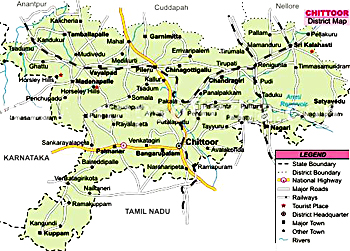
When Bappa Rawal learned of his royal ancestry, he despised a shepherd`s slothful life and decided to claim the entire Mewar kingdom, including the provinces of his Guhilot ancestors annexed by the Paramaras. Though young, he accepted his destiny, and the massive responsibility that Harit Rashi had placed upon him. Accompanied by some of his Bhil companions, including Baliya and Dev, Bappa Rawal quit Nagda and emerged into the eastern plains towards Chittor. Thus began the significant journey towards the formation of a most unique dynasty.

Some ancient chroniclers suggested the year was 734, and that Bappa Rawal captured the capital immediately. However, there is evidence that he was 21 when he became the king, and quite a lot occurred before that. Thus it is more than likely the year was 731 when he went to Chittor, when he was only 18 years old. It is said that he arrived in the town below the fort when a fair was in progress, and there he performed a fight that awed Maan Mori and the Paramara nobles

Haldi ghati The Paramara king gave his nephew a good reception, enrolled him amongst the fort`s savants and offered a suitable estate to Bappa Rawal. Shortly, Mohammed Bin Kasim, an Arab, attacked Chittor. Maan Mori called upon his subjects to provide an attack force, but instead of obeying the summons they relinquished their grants, and teasingly wanted Maan Mori to call on his favorite. So the Paramara king appointed Bappa Rawal as the commander-in-chief of his army. The youth took the responsibility of the campaign against the Arabs. The chiefs, though expelled of their estates, went along with him from a feeling of shame. The Arabs were defeated and driven out of the country.

Bappa Rawal proclaimed that his new dynasty would be called as Mewar-which suitably appropriated the entire kingdom-and made the fortress his capital. By general consent, he took the additional titles of Preceptor (Raj Guru, teacher and mentor) of Princes, Sun of the Hindus (Hindua Suraj) and Universal Lord (Chakravarti). At the Chittor coronation, two of the Bhil tribesmen had accompanied Bappa Rawal to the fort and were given the opportunity of renewing their special allegiance to Kalbhoj and his new dynasty, by applying the Raj Tilak to his forehead. From that very day, every ruler of Mewar has received the similar kind of honor by the descendants of these two tribesmen.

Eventually, when Bappa Rawal proved himself to be a staunch supporter of India`s culture and a virtual father figure, his devoted subjects started to call him with their adorable name `Bappa Rawal`. This name of endearment, where bappu meaning father, in this case founding father, and Rawal being the traditional Rajput title for a king, brought him more close to his subjects. Having already won the loyalty of the Paramara nobles, Bappa Rawal further gained their support and also appointed many of them to trusted positions, including guardians of the royal treasury. To honour his true sovereign, Bappa Rawal built a temple on the site where he first met his guru, Harit Rashi, and where he received the sage`s final blessing on the Mewar family`s god Eklingji.

The town that developed under Bappa Rawal was called, appropriately, Eklingji. The town was later renamed as Kailashpuri. Throughout the centuries, and even to this day, the ruling Bappa Rawal made a regular pilgrimage to the temple. In the present day, the temple is reconstructed and each Monday is a big day for Shiva`s worship. When Bappa Rawal visited the city of Deeg he married a princess of the ruling clan. While returning with his wife to Chittor, it is said he also brought a statue of the god Banmata. He built a temple on the fort`s western side and installed the statue that still exists.

Bappa Rawal is eternally remembered historically and in legend as a great warrior. Bappa Rawal combined his army, including Paramara vassals, with those of the rulers of Jaisalmer, Ajmer, and other smaller Rajput kingdoms. It is said that, to celebrate the victories of Bappa Rawal, he married several Persian princesses and sired a large family of warriors. Bappa Rawal had over one hundred children. Bappa Rawal`s was always blessed with legends.

(Last Updated on : 1/02/2010)
  More Articles in History of Rajasthan
 
Sawai Man Singh II Raja Bhagawant Das Maharani Gayatri Devi
Kachwaha Kings Churaman Maharana Sangram Singh
Mirza Raja Jai Singh Rathores of Marwar Maharajah Ajit Singh
Badan Singh Maharana Pratap Singh Maharaja Sawai Ishwari Singh
Rana Hammir Bappa Rawal Raja Ram Jat
Maharana Udai Singh Rawal Ratan Singh Rani Padmini
Rana Bhagwant Singh Battle of Malpura Battle of Patan
Battle Of Fatehpur Battle Of Tunga Chahamanas
Rajputs Sindhi-Muslims Sawai Madho Singh
Rana Kumbha    
Recently Updated Articles in States of India
  • Rajput Policy of Aurangzeb
    Rajput policies of Mughal Emperor Aurangzeb were stern and he attempted to destroy the power of the Rajputs and annex their kingdoms.
  •  
  • Diamond Harbour
    Diamond Harbour is located in the south of Kolkata at the meeting point of Ganga River and the Bay of Bengal. It is a popular tourist destination.
  •  
     
  • Jaydev Kenduli
    Jaydev Kenduli is a popular village in the Ilambazar community. For a long time now, Jaydev Kenduli has been considered as a possible birthplace of poet Jayadeva, who had composed Gita Govinda in Sanskrit.
  •  
  • Ballal Dhipi
    Ballal Dhipi is a heritage spot located in the district of Nadia in Indian state of West Bengal. The place is historically important.
  •  
  • Shantipur
    Shantipur is situated in the Nadia District in the state of West Bengal and is known for its Shantipuri Saris.
  •  
    E-mail this Article | Post a Comment
    RSS Feeds
    Forum
    Forum on States of India

    Free E-magazine
    Subscribe to Free
    E-Magazine on Indian Crafts
     
     
    Bappa Rawal, Ruler of Mewar - Informative & researched article on Bappa Rawal, Ruler of Mewar
    Sitemap
    Contact Us   |   RSS Feeds
    Copyright © 2008 Jupiter Infomedia Pvt. Ltd. All rights reserved including the right to reproduce the contents in whole or in part in any form or medium without the express written permission of Jupiter Infomedia Pvt. Ltd.