 Tripurantakesvara Temple was built in 1070 AD. Elegant friezes, erotic figures and foliage motifs are some of the few elements that sum up the sculpture of Tripurantakesvara Temple, Balligavi (modern Shimoga district in Karnataka).
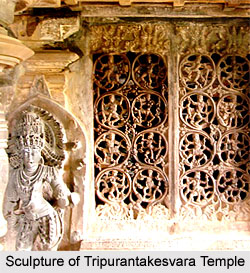
Tripurantakesvara Temple distinguishes itself with its perforated windows. The designs of the window screens have been intricately done on stone. Window panels have been used to decorate the either side of the temple doorway. Each of the panels displays the sculpted figures of nagas or snakes. The long entwined figures of the snakes fill up the entire window panels. These are good replacement for the thick foliage sculptures.
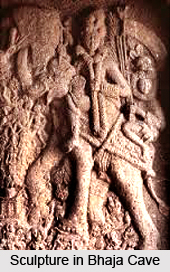
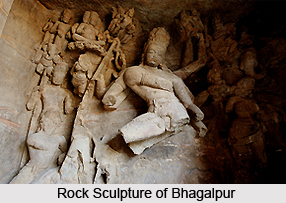
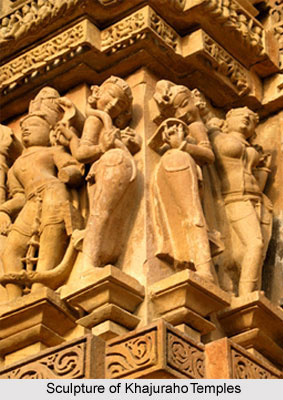
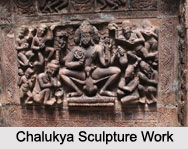
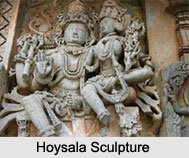
The outer walls are adorned with several erotic figures on its friezes. Just above the temple entrance there are sculptures of Brahma, Shiva and Vishnu. Here Lord Shiva is depicted in the Bhairava form. The stone sculptures of the `dikpalas` stand at the doorway to guard the deity. There are certain interesting sculptures belonging to the Hoysala era still exist within the temple premises. One such example is the carved figure of a Hoysala ruler killing a lion. Above the temple`s entrance there are sculptures of Shiva in the centre dancing as Gajasuramardhana. To the left there are beautiful sculptures of Keshava, Garuda and others.
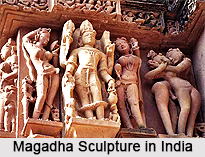
The temple entrance has sculptures like lion pinning down two elephants with its fore legs. The eight-petal flower is worth mentioning here. There are female and male forms in various dance positions. Between the mesh window and the door stands there is an image that is decked in all kinds of jewellery from head to toes accompanied by a five headed serpent near his right foot. Board games of recent times have also been sculpted. The temple exteriors have a series of panels with stories from Ramayana, Panchatantra and Mithunasastra. One can also see a sculpture of a baby being adopted into a royal family. To the extreme right is a couple who are lamenting separation from her child. To the left inside the mandapa a couple holds the adopted child. Lord Rama is shown aiming an arrow at Vali`s back. Vali is engaged in a fight with his brother Sugreeva. He shoots an arrow through seven Saal trees to prove his power to Sugreeva. Panchatantra stories of a tortoise and geese, monkey and a crocodile have been beautifully sculpted. Thereafter the theme of sculpture shifts to Mithunashilpa or erotic images.