Sculpture of Ishvara Temple
|
Sculpture of Ishvara Temple Arasikere dates back to 1220 AD. It is a Shaiva temple that is known for its modest figure sculptures.
|
|
|
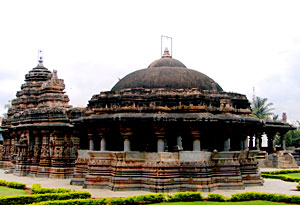 Its complex architecture is unique in the history of Hoysala architecture and sculpture. Moreover it has a 16-pointed star shaped mandapa and a star shaped shrine. All these are typical features of Hoysala sculpture and architecture. The vestibule connects the shrine to the closed mandapa. It has its own tower or sukanasi. Apart from this the outer walls display fine sculptures. The central ceiling of the closed mandapa is also profusely decorated with elegant and detailed sculptures. Its complex architecture is unique in the history of Hoysala architecture and sculpture. Moreover it has a 16-pointed star shaped mandapa and a star shaped shrine. All these are typical features of Hoysala sculpture and architecture. The vestibule connects the shrine to the closed mandapa. It has its own tower or sukanasi. Apart from this the outer walls display fine sculptures. The central ceiling of the closed mandapa is also profusely decorated with elegant and detailed sculptures.
The temple panels have around 120 carved figures. The dwarpalakas and the well carved dome shaped ceiling of the open mandapa add to the beauty of the sculpture of the temple. The decorated ceilings, the domical ceiling of the open mantapa, the sculptures of Dwarapalakas in the closed mantapa and the carvings on the outer walls are noteworthy. The figure sculptures are extremely breathtaking and beautiful. The temple shrine has been intricately and elaborately designed with stone carvings.
This article is a stub. You can enrich by adding more information to it. Send your Write Up to content@indianetzone.com
|
|
|
|





