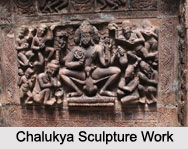
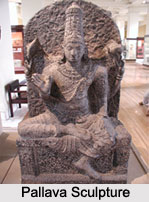
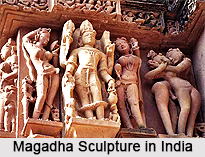
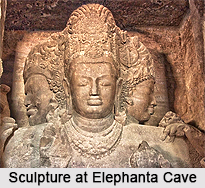
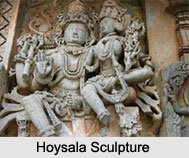
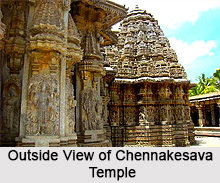
 Sculpture of Chennakesava temple at Somnathpura is intricate in nature. Hoysalas introduced the innovatory ground plan: one big doorway and a shrine with three deities. Most of them are dedicated to Lord Vishnu though in some there are images of both Lord Shiva and Vishnu.
Reflection of Politics in Chennakesava Temple
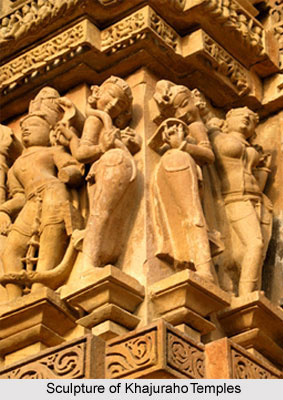
This sculptural design reflects the open spirit of the Hoysala Empire. The female consorts stand on an equal level with the male gods. The spire above the shrine may have been of wood and brickwork. On either side of the entrance to the shrine there are small star-shaped spires. The fresco on the base of the outer wall has a line of elephants in different postures. Above that there are female figures and panels with scenes from the Mahabharata and the Ramayana epics. Below the `gutter` of the roof there are thirty eight attractive female figures that are dancing or engaged in some decorative activity.
Sculpture of Mohini
Mohini is shown looking in a mirror and puts a tika on her forehead. In between the first and second panel a king with his court and queen are depicted. In the frieze again the episode of Arjuna saving the cows from Mahabharata has been portrayed. The following sculptures are also seen: Girl with parrot, a girl sprinkling her beloved with coloured water during Holi, Girl with monkey, Hunting, Girl, Girl with drum, Durga, Krishna with flute. In between the tenth and eleventh frieze the story of Prahlada has been depicted. Then a singer, a dancer, girl with curly hair, Girl with fruit, hunting and a girl with drum are displayed.
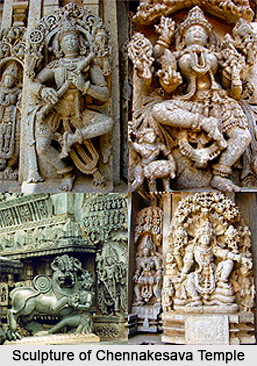 Sculptures of Western Wall in Chennakesava Temple
Some of the interesting sculptures on the south western, western and north western walls are: Harihara; Shiva with the demon Jalandhar on his trident; a dancing Kali; Vishnu in Vamana avatar; the demon Ravana shaking Mount Kailash; Daksha with the head of a goat; Durga Mahish-asur-mardini; Vishnu as Varaha (the Boar); Vishnu as Gadadhar (`with the mace`, a rare sculpture); Vishnu as Narasimha; a mother with child; the Sun God with his seven horses on a chariot; Kama deva and his wife.
Mahabharata in Chennakesava Temple
In a panel on the north-western side there are episodes of Arjuna who has to look in a reflection in oil to aim at the eye of a fish on top of a pillar. The other standing figures are: Dancer, Singer, Dancing Durga, Hunting, Girl with drum, Dancing Mohini and Girl and scorpion. On the right side of the northern entrance there is Panchatantra episode of the swans flying away with a tortoise, gesturing, Girl, Dancer, Dancer with lute, Girl with ring, Flute, Girl with drum, Girl with monkey and a ring.
Indian Mythology in Chennakesava Temple
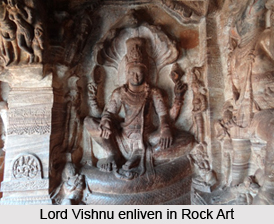
In a panel on the north-eastern wall there are episodes of the cycle of destruction, with a boar, a python, an elephant, a lion, a Sharabh monster and a terrible bird. There is also a panel with Lord Vishnu on the cosmic snake Ananta. Further figures include Singer, Dancer keeping the beat by tapping her toe, while on top there is a bee sucking nectar. The entrance to the east is `guarded` by two doormen and by Manmath and his consort. On top the Eagle flies between two monsters. Even more higher there are fine sculptures of Vishnu as Narasimha, with Hiranyakasha.
Royal Sculpture in Chennakesava Temple
Other sculptures of Chennakesava Temple are the images of the royal family riding opulently decorated chariots, camel drawn chariots, soldiers and subjects riding horses, dancers, musicians and hunters heading for hunt with bows, arrows and their dogs. There are sculptures of palaces of kings looked after by armed guards; sculpted images of jewellery like pendants, necklaces, waistbands and rings and women with different hair styles.