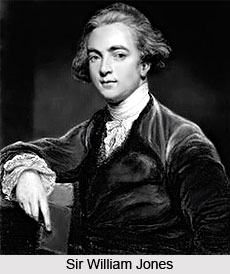
 With the colossal development in science and technology Scientific associations in British India became a common occurrence in the passing years of 19th century. India was by then a changed country, with numerous western aspects making their presence felt still free from resistance. On 15 January 1784, Sir William Jones founded the Asiatic Society of Bengal in Calcutta with approximately thirty other Europeans. In 1804, the Society formed a separate committee for the study and promotion of India`s natural history.
In 1804, at the instigation of Lord Richard Colly Wellesley, Governor-General of India, (1754-1826), an "Institute for Promoting the Natural History of India" was established in Barrackpore (Barrackpur). The "Menagerie and Aviary" held a collection of quadrupeds and birds sent from all parts of India. Here, they were painted and described by Francis Buchanan, John Fleming (1770-1829) and others. Scientific associations were by now a mandatory affair which needed to be established in British India, with discoveries and other illustrious works coming up every single day. These scientific associations did lend a kind of sophisticated touch to people involved in exhaustive work for betterment of classes.
On 26 November 1804, Sir James Mackintosh (1765-1832) started the Bombay Literary Society which took on many of the same interests as the Asiatic Society of Bengal and then later became the Bombay Branch of the Royal Asiatic Society. The Society opened a library in 1805 and a museum and observatory in 1815.
In 1818, John Newbolt established the Literary and Scientific Society in Madras. In March 1823, the Calcutta Medical and Physical Society came into being. In 1823, the Royal Asiatic Society in London was founded and provided a forum for Indian science within a metropolitan milieu.
In 1826, Reverend William Carey founded the Agricultural Society of India. It was later renamed the Agricultural and Horticultural Society of India. In 1831, the Geographical Society of Bombay was created. Such overwhelming establishments of scientific societies in British India led to the native class also join in enthusiastically to stretch their knowledge further. These societies also became a kind of general platform, which plebeian population could visit for the sake of literacy.
Within the years of 1839-67, under the aegis of the Asiatic Society of Bengal, the Government of India authorised establishment of the Museum of Economic Geology in Calcutta under the curatorship of T. T. Pearson, a trained geologist. In 1856, its collection was incorporated in a Geological Museum and in 1857 it became the Museum of Geology, Calcutta. Edward Blyth (1810-1873) was appointed as its full-time, paid curator from 1841 to 1862. In 1867, this institution transferred to the control of the Government of India as the Indian Museum with John Anderson as its curator.
In 1848, the Bombay Natural History Society formed to aid scientific investigation of the natural resources found in western India. And in 1854, the Lahore Literary and Scientific Institution came into shape.
In 1876, the Indian Association for the Cultivation of Science was founded with the support of public subscriptions and of Sir Richard Temple (1826-1902) who served as the first president.
In 1881, further scientific societies were established under British regime. The Imperial Gazatteer first appeared as a systematic and scientific arrangement of information about India. Sir William Wilson Hunter (1840-1900) supervised the collection of its contents which included geological, meteorological, botanical and zoological data.
In 1899, The Council of the Royal Society, London, created the Indian Government Advisory Committee to advise the Home Government on scientific matters initiated in India. Its initial membership included men with Indian experience, like Sir Richard Strachey (1817-1908) as chairman, William T. Blandford (1832-1905), William Thlselton-Dyer (1843-1928) and H. Marshal Ward (1854-1906).
In 1903, as a substantial step towards freezing the goal of developing even more scientific societies in British India, Lord Curzon (1859-1925), Viceroy of India, established The Board of Scientific Advice. It was charged with the assembling of scientific information and developments from India generated by the Agriculture, Botany, Forestry, Geology, Meteorology and Veterinary Departments.
Within the span of 1903-10, the Board submitted annual reports for the approval of the Indian Government Advisory Committee of the Royal Society, London.
In the years within 1910-22, due to mutual conflicts with the Board of Scientific Advice, the Royal Society moved to a more informal posture of liaison and advice. In 1922 it ceased all review processes.
In 1908, the Indian Institute of Science was founded in Bangalore. It possessed departments of electrical technology, biochemistry and inorganic chemistry. In 1933 the Institute passed from European to Indian management. These exhaustive and well-moneyed scientific societies under British Indian government started a belt of experimental revolution, which went to boost spirited Indians later to create history in their fields.
In 1914, J. L. Stmonsen and P. S. MacMohan established the Indian Science Congress for the purpose of conducting annual scientific discussions. The Congress first met in 1914 in Calcutta under the auspices of the Asiatic Society of Bengal. The Calcutta Science Congress witnessed one-third of the papers being delivered by Indian scientists. The Congress consisted of six sections, namely: chemistry, physics, geology, botany, zoology and ethnology.
In 1934, the Indian Academy of Science was created to achieve a final culminated goal towards grounding scientific associations in British India. This further paved the way for broader aspects in future free India.