


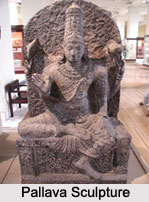
 Pallava sculptures came into being from the 4th to 9th centuries. It was during the Pallava reign that the rock cut architecture flourished. The earliest specimens of Pallava art and architecture dated back to the 610 to 690 AD. The other temples, on the other hand, were constructed from 690 to 900 AD. In fact, the rock cut caves also came into trend during the Pallava Empire. For the first time the, a predominant feature of the South Indian temples, were fast replaced by the innovative rock architecture and sculptures. Pallava sculptures came into being from the 4th to 9th centuries. It was during the Pallava reign that the rock cut architecture flourished. The earliest specimens of Pallava art and architecture dated back to the 610 to 690 AD. The other temples, on the other hand, were constructed from 690 to 900 AD. In fact, the rock cut caves also came into trend during the Pallava Empire. For the first time the, a predominant feature of the South Indian temples, were fast replaced by the innovative rock architecture and sculptures.
History of Pallava sculptures Sangam Period’s traditional Manimekalai, features the beginning of the first Pallava King from a connection between the daughter of Naga king of Manipallava, named Pilli Valai with a Chola king Killivalavan. One more description states that "Pallava" was born from the union of the Brahmin Ashvatthama with a Naga Princess also supposedly supported in the sixth verse of the Bahur plates. The Pallavas themselves claimed to move down from Brahma and Ashvatthama. Although to the Manimekalai posits, Ilam Tiriyan as a Chola, not a Pallava, the Velurpalaiyam plates dated to 852, do not bring up the Cholas. Various Pallava Sculptures The Pallavas initiated the skill of excavating temples from the rock. In fact, the Dravidian style of temple architecture began with the Pallava rule. It was a regular development starting from the cave temples to monumental rathas and concluded in structural temples. The growth of temple architecture under the Pallavas can be seen in 4 stages. Mahendravarman I introduced the rock-cut temples. This style of Pallava temples are seen at places like Mandagappattu, Mahendravadi, Mamandur, Dalavanur, Tiruchirappalli, Vallam, Siyamangalam and Tirukalukkunram pallava art. The second stage of Pallava architecture is represented by the monolithic rathas and Mandapas found at Mamallapuram. Narasimhavarman I took the recognition for these magnificent architectural monuments. The five rathas, generally called as the Panchapanadava rathas signifies five diverse styles of temple architecture. The mandapas enclose stunning sculptures on its walls. The last stage of the Pallava art is also represented by structural temples built by the later Pallavas. The Vaikundaperumal temple, Muktheeswara temple and Matagenswara temples at Kanchipuram belong to this stage of structural design. The Pallavas were involved in the evolution from rock-cut architecture to stone temples. The earliest examples of Pallava constructions are rock-cut temples dating from 610 to 690 and structural temples between 690 to 900. A number of rock-cut cave temples bear the message of the Pallava king, Mahendravarman I and his descendants. The Kailasanatha temple in Kanchipuram and the Shore Temple built by Narasimhavarman II, rock cut temple in Mahendravadi by Mahendravarman are fine examples of the Pallava style temples. |
| |||



Home > Art & Culture > Indian Sculpture > Indian Temple Sculptures > South Indian Temple Sculpture > Pallava Sculptures
Pallava Sculptures
| Pallava Sculptures for the first time introduced the use of rock in Indian architecture. |
| ||||||||||||||||||||||||||||

