





 Indian religious sculptures represent different religious faiths and beliefs which find expressions through artistic elements. India is a mosaic of religions and every faith has carved out a cosy niche for itself. Hence numerous Indian religious sculptures evolved over the years. These religious buildings offer a comprehensive insight to the history and culture of the sub-continent as well. The tradition of portraying one's religious beliefs can be traced back to the Indus Valley Civilization. The terracotta statues of mother goddesses and Lord Shiva are living proofs of their spiritual beliefs. Indian religious sculptures represent different religious faiths and beliefs which find expressions through artistic elements. India is a mosaic of religions and every faith has carved out a cosy niche for itself. Hence numerous Indian religious sculptures evolved over the years. These religious buildings offer a comprehensive insight to the history and culture of the sub-continent as well. The tradition of portraying one's religious beliefs can be traced back to the Indus Valley Civilization. The terracotta statues of mother goddesses and Lord Shiva are living proofs of their spiritual beliefs.
Features of Indian Religious Sculptures At a much later era the places of worship were commissioned to exhibit artistic endowments. Monuments belonging to Hinduism, Islam, Buddhism, Jainism and Christianity were thus constructed inexhaustibly. While Buddhism was one of the early religious principles to capture the hearts of the people Hinduism, too, dates back to the ancient ages. 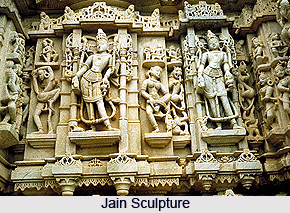 The Indian religious sculptures are greatly indebted to the episodes from the Hindu epics, Puranas and other legends. The sculptors have heavily borrowed from these sources. Although the religious sentiments of all the faiths are more or less similar but sculptures differ from each other. While the Hindu temple sculptures are identified with ornamentation, the Buddhist and Jain sculptures are simpler. On the other hand the Islamic sculptures are impressive with their intricate details and thickness. The Christian sculptures are reminiscent of the European gothic art and architecture.These Indian religious sculptures are also representatives of the several schools of architecture that developed here from time to time including Indo Islamic, Indo Saracenic and others. The Indian religious sculptures are greatly indebted to the episodes from the Hindu epics, Puranas and other legends. The sculptors have heavily borrowed from these sources. Although the religious sentiments of all the faiths are more or less similar but sculptures differ from each other. While the Hindu temple sculptures are identified with ornamentation, the Buddhist and Jain sculptures are simpler. On the other hand the Islamic sculptures are impressive with their intricate details and thickness. The Christian sculptures are reminiscent of the European gothic art and architecture.These Indian religious sculptures are also representatives of the several schools of architecture that developed here from time to time including Indo Islamic, Indo Saracenic and others.
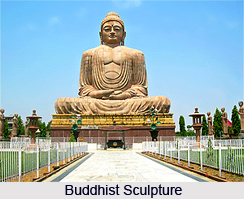
Buddhist Sculpture Buddhist sculpture evolved in the country in 255 BC during the reign of Ashoka, Mauryan Emperor. These were comparatively simpler from other styles and can be prominently seen in the different monuments at Buddhist pilgrimage sites. Buddhist sculpture also inculcated foreign elements. Jain Sculpture Jain sculptures are characterized by their magnificence and grandeur. Images of Jain Tirthankaras are the most significant feature of these sculptures. This holds a distinct place among all the Indian religious sculptures owing to their subsidiary figures, style and ornamentation. Hindu Sculpture Hindu sculpture marked its beginning with the rise of Magadha Empire in India and gradually evolved with the arrival of different dynasties. 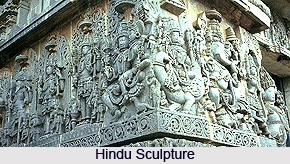 Events from epics such as Ramayana, Mahabharata and Puranas found great expressions through these sculptures along with the beliefs and legends. A number of Hindu temples scattered all around the nation are the magnificent representatives of different Hindu sculptural styles and their evolution. Events from epics such as Ramayana, Mahabharata and Puranas found great expressions through these sculptures along with the beliefs and legends. A number of Hindu temples scattered all around the nation are the magnificent representatives of different Hindu sculptural styles and their evolution.
Islamic Sculpture Islamic sculpture originated by blending the elements of Persian art and the ancient Hindu art. It gained its zenith during the reign of Delhi Sultanate. Intricate carvings and elaborate designs are the most distinguishing features of this style. A number of magnificent monuments still standing in India are the testaments of this exquisite sculpture and its evolution over time. Christian Sculpture Christian sculpture gained prominence in India with the arrival of British rule. It quickly gathered momentum and resulted in the construction of a number of monuments, especially in churches, adorned with unique Christian sculptures. Indo Saracenic and Gothic styles were found significantly among the Christian sculptures. 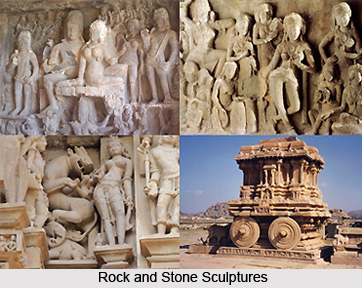
Sikh Sculpture Sikh sculpture, since ages, has produced remarkable specimens of art. It mainly emerged by an amalgamation of Hindu and Muslim styles but gradually attained a separate identity. There are certain specific features defining Sikh sculptures which are essentially found in almost all the Sikh monuments. Although times have changed but the religious sentiments are still the same. Religious sculptures and buildings are carved out on stone or metal even today. In many instances different styles of Indian religious sculptures have fused together to form some of the wondrous specimens of art and can be seen in various monuments. Besides the brilliance, perfection and opulence what is remarkable in these monuments is the love and devotion with which the Indian religious sculptures and architecture have been built. |
| ||||||||||||||||||||||||||||

