


 The history of Bengali theatre is rich, pregnant with its copious heritage. The beginning of the Bengali theatre can be traced to the construction of the Kolkata theatre back in the year 1779. However, nothing remarkable happened till the end of 1794. The year was 1795 and it was for the very first time the then intelligentsias of Kolkata witnessed Bengali theatre as the Russian dramatist Horasim Lebedev along with a Bengali theatre connoisseur Goloknath Das staged the Bengali translations of two English comedies, "Disguise" and "Love is the best doctor" in Kolkata. That was the time since when Bengali theatre started its journey. With few unstable steps and later with long strides it was with time, Bengali theatre gained a redefined dimension. By the year 1831 Bengali theatre became a whole new art form to mirror the then Bengal amidst its artistry. The history of Bengali theatre is rich, pregnant with its copious heritage. The beginning of the Bengali theatre can be traced to the construction of the Kolkata theatre back in the year 1779. However, nothing remarkable happened till the end of 1794. The year was 1795 and it was for the very first time the then intelligentsias of Kolkata witnessed Bengali theatre as the Russian dramatist Horasim Lebedev along with a Bengali theatre connoisseur Goloknath Das staged the Bengali translations of two English comedies, "Disguise" and "Love is the best doctor" in Kolkata. That was the time since when Bengali theatre started its journey. With few unstable steps and later with long strides it was with time, Bengali theatre gained a redefined dimension. By the year 1831 Bengali theatre became a whole new art form to mirror the then Bengal amidst its artistry.
It is with the establishment of "Hindu Rangamanch" at Kolkata by Prasanna Kumar Thakur further supported Bengali theatre to take that steady step towards maturity. Prasanna Kumar staged Wilson's English translation of Bhavabhuti's Sanskrit Languagedrama "Uttar Ramacharitam" whilst laying the foundation for modern theatre in India. The history of Bengali theatre then gained a new diction. Other important attempts in developing Bengali theatre in the then Bengal include Nabin Basu's Jorasanko Natyashala, the private stages of Ashutosh Deb and Ramjay Basak , Vidyotsahini Mancha , Metropolitan Theatre , Shobhabazar Private Theatrical Society and most importantly the Bagbazar Amateur Theatre. Bengali theatre, which was already rich as an art form by then, became a vehicle of mass education, an effort in reflecting the then society. Bengali theatre again in the 19th century witnessed a colossal change as the rich, young Bengalis of Kolkata started to write plays based on British realistic manikins whilst ideally weaving them with Indian songs, classical dance and music to add that little extra. Rabindranath Tagore's Raktakarabi (Red Oleanders) and Raja (The King of the Dark Chamber) became an important part of this effort. At that time the works of William Shakespeare were also widely translated and adapted in the Bengali theatre whilst redesigning Bengali theatre to befit the Indian urban tastes. 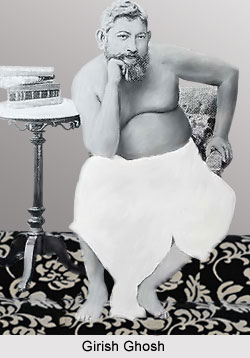 The history of Bengali theatre is thus the saga of changing tradition. Bengali theatre soon became a strong medium of expression to mirror the socio- political and contemporary issues to the common Indians. The main aim was then to make the mass aware of the then socio political scenario. Quite ideally therefore the playwrights, director and even the actors in Bengali theatre with their unparallel contribution illustrated the colonial fragrance in perhaps the right way. One such play of that time was Nildarpan, which depicted the misery of the indigo cultivators. Dinabandhu Mitra, with his refined creation like "Sadhabhar Ekadasi" and Lilabati, added to the maturity of the Bengali theatre whilst carrying it to the next level of maturity.
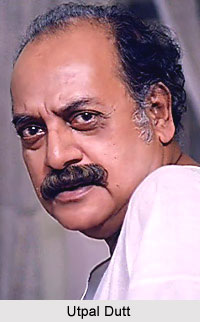
With the establishment of Indian People's Theatre Association (IPTA), the history of Bengali theatre took a new turn. Theatre in Bengal then became even closer to the people. The famous stages of Bengali theatre like the Girish Mancha and star theatre then witnessed a huge change in order to befit the requirement where the aura of the "Classical dance drama " was no more and on the contrary emerged a whole new concept of theatre -- "Peoples Theatre" which was definitely "for the people and by the people". Theatre continued to flourish in Bengal. Dwijendra Lal Roy, Girish Ghosh, Bijon Bhattacharya, Utpal Dutt, Shombhu Mitra, Balraj Sahani, Habib Tanvir and several others contributed to its maturity. It was much later the very concept of Bengali Theatre as the representation of the age-old British colonialism gradually faded away and theatre became lot more naturalistic. However, right after independence the very demand of the realistic theatre approach was so much vibrant that Famous theatre personalities like Utpal Dutta, Shombhu Mitra and Badal Sarkar designed a whole new concept - Realistic theatre in Bengali. That was just the beginning of a history. The trend then was to reflect the daily life, social issues, political turmoil and indeed the economic scenario of India in a realistic way. The post-Independence period offered a marked change in Bengali theatre whilst making it rather stylistic in its approach. With the coming of the theatre personalities like Badal Sircar, Mohit Chattopadhya, Arun Mukherjee and others the timeline of Bengali theatre gained that desired contour. The trend which started is still continuing and today the contemporary Bengali theatre with its distinct aura and Natya has become one of the well-recognized art form. More on West Bengal |
| |||



Home > Movies & Entertainment > Indian Drama & Theatre > Regional Theatre in India > Bengali Theatre > History of Bengali Theatre
History of Bengali Theatre
| Blessed with its rich heritage the history of Bengali theatre is the saga of the journey of Bengali Theatre |
| ||||||||||||||||||||||||||||

