


 Hindu temple sculpture was evolved with the rise of the Magadha Empire in India. Till then it was nature worship and Buddhism dominated the sub-continent. The rise of Magadha dynasty led to an absolute change in the religious architecture and sculpture. Some of the most exquisite sculptures were created during the Mauryan and Sunga eras. Stone sculptures decorate the interiors and the exteriors of the sophisticated temples; later temples are completely covered with sculpture. Each piece of temple sculpture has a precise iconographic meaning and plays a role in identifying and celebrating the principal deity housed in the temple as well as in symbolizing the Hindu cosmos. Hindu temple sculpture was evolved with the rise of the Magadha Empire in India. Till then it was nature worship and Buddhism dominated the sub-continent. The rise of Magadha dynasty led to an absolute change in the religious architecture and sculpture. Some of the most exquisite sculptures were created during the Mauryan and Sunga eras. Stone sculptures decorate the interiors and the exteriors of the sophisticated temples; later temples are completely covered with sculpture. Each piece of temple sculpture has a precise iconographic meaning and plays a role in identifying and celebrating the principal deity housed in the temple as well as in symbolizing the Hindu cosmos.
Famous Hindu Temple Sculpture The Gupta Empire encouraged a cultural florescence. Sculpture produced throughout the Gupta Empire has a relatively uniform "classic" style. It spread through much of India and along with the trade routes to influence the art of the countries of South and Southeast Asia. The Gupta style also greatly influenced the art of north Indian kingdoms for centuries after the end of the Gupta dynasty. There were two main artistic centres for sculpture production: Sarnath produced images with clinging material while Mathura created images with patterns of string folds in the material. 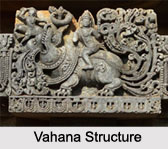 Most of the sculptures and monuments in south India dated from the 7th through the 9th centuries. They are associated with important dynasties: the Pallavas and the Pandyas, both of them were Hindus. The creative brilliance of South India also came to the forefront with the construction of the temples. The sculpture of Brihadisvara Temple, Hampi and the sculpture of Mukteshvara temple are some of the finest specimens of Hindu temple sculpture. In fact throughout numerous Hindu places of worship were carved out. But primarily these temples were modelled upon the two key schools of Hindu temple architecture and sculptures. Most of the sculptures and monuments in south India dated from the 7th through the 9th centuries. They are associated with important dynasties: the Pallavas and the Pandyas, both of them were Hindus. The creative brilliance of South India also came to the forefront with the construction of the temples. The sculpture of Brihadisvara Temple, Hampi and the sculpture of Mukteshvara temple are some of the finest specimens of Hindu temple sculpture. In fact throughout numerous Hindu places of worship were carved out. But primarily these temples were modelled upon the two key schools of Hindu temple architecture and sculptures.
Chola rulers also constructed enormous stone temple complexes decorated inside and out with painted and sculpted representations of the Hindu gods. While the stone sculptures and the inner sanctum image empowered the temple. The main motifs that formed the part of the Hindu temple sculptures included episodes from Ramayana, Mahabharata and the Puranas. Popular beliefs, legends, court scenes, animal and plant motifs, kirtimukhas, gods and goddesses and eroticism are widely found engraved on the walls of the Hindu temples. In the original temples, the construction was a small cubical structure with a single doorway. Afterwards it grew into a larger compound. Mandapa is the doorway to the temple. Dances and such other amusements are practiced here. A number of temples have numerous mandapas in different sizes named as Ardhamandapa, Mandapa and Mahamandapa. Shikhara or Vimanam are the ton like the spire of a free-standing temple. Shikhara is found in North Indian temples and Vimanam is found in South Indian temples. Shikhara has a curve outline whereas vimanam has a pyramidal-like construction. Amalaka is a stone round like construction at the peak of the temple and they are ordinary in North Indian temples. Kalasha is the highest point of the temple and usually seen in North Indian temples. Antarala is an evolution region between the Garbhagriha and the temple’s main passage (mandapa). Jagati is a raised platform for sitting and praying and is common in North Indian temples. Vahana is the go up or vehicle of the temple’s main goddess along with a standard pillar or Dhvaj which is placed axially before the workroom. The position of an image in a temple is cautiously planned: for example, river goddesses (Ganga and Yamuna) are visually found at the entrances in a Nagara temple, Dwarapalas are regularly found on the entry or gopurams of Dravida temples, likewise mithunas (erotic images), navagrahas ( the 9 auspicious planets) and Yakshas are also placed at the entrances to guard them. Nagara is the style of temple building which became trendy in Northern India. Earliest temples had only one shikhara (tower), but in the afterwards periods, numerous shikharas came. Latina is the easy and most ordinary type of shikhara. Latina types are mostly used for lodging the garbhagriha. Later on, the Latina buildings grew compound and in its place of appearing like a single tower, the temple began to support many little towers, which were clustered jointly like rising ton type with the tallest one being in the middle. Phamsana are broader and shorter than Latina form. Their roof is composed of some slabs that quietly rise to a single point over the centre of the building, unlike the Latina ones which look like roughly rising towers. Phamsana roofs do not bend inwards; in its place, they incline rising on a straight incline. In many north Indian temples, the phamsana type is used for mandapas while the chief garbhagriha is housed in a Latina construction. Valabhi are rectangular buildings with a roof that rises into a vaulted hall. The border of the vaulted hall is round, like the bamboo or wooden wagons that would have been drawn by bullocks in very old times. The shape of this temple is influenced by very old building forms that were already in survival. Terracotta was the major medium of building of North-East, Bengal, and Odisha temples. Most of the antique temples are located in earliest Kalinga - current Puri district, including Bhuvaneswar or ancient Tribhuvaneswar, Puri, and Konark. |
| |||



Hindu Temple Sculpture
| Hindu Temple Sculpture traces its history back to the Magadhan Empire. During the rule of Magadha Empire, Hindu temple sculpture was for the first time conveyed on the stone structures. |
| ||||||||||||||||||||||||||||

