Features Of Delhi Sultanate Sculptures
|
Features of Delhi Sultanate Sculptures for the first time introduced the Islamic style of architecture.
|
|
|
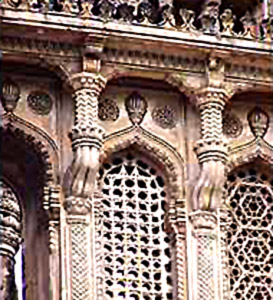 A new era ushered in India with the arrival of the Islamic empires. Numerous changes seeped in the social and political arena. The field of art and architecture also witnessed diametric changes in the architecture, sculpture and painting. The features of Delhi Sultanate sculptures were trendsetting and still stand as one of the finest examples of Muslim Indian Sculpture. Who knew then that these architectural elements would be profusely incorporated within Indian architecture! The Muslim dynasty first came into existence in the 13th century with the Slave dynasty. What followed was a succession of such dynasties that includes the Khalji dynasty, Tughluq dynasty, Saiyyid dynasty and Lodhi dynasty. These empires are collectively known as the Delhi Sultanate of India. The monuments constructed by these empires strictly followed the features of the Delhi Sultanate sculptures. These characteristics were later amalgamated with the regional sculpture and thus the Indo-Islamic architecture evolved. A new era ushered in India with the arrival of the Islamic empires. Numerous changes seeped in the social and political arena. The field of art and architecture also witnessed diametric changes in the architecture, sculpture and painting. The features of Delhi Sultanate sculptures were trendsetting and still stand as one of the finest examples of Muslim Indian Sculpture. Who knew then that these architectural elements would be profusely incorporated within Indian architecture! The Muslim dynasty first came into existence in the 13th century with the Slave dynasty. What followed was a succession of such dynasties that includes the Khalji dynasty, Tughluq dynasty, Saiyyid dynasty and Lodhi dynasty. These empires are collectively known as the Delhi Sultanate of India. The monuments constructed by these empires strictly followed the features of the Delhi Sultanate sculptures. These characteristics were later amalgamated with the regional sculpture and thus the Indo-Islamic architecture evolved.
The Sultanate architecture was instrumental in introducing mainly two key features: the domes and the pointed arches and beams. Their amalgamation with the Hindu architecture was an easy task as there were certain common features in both the idioms. For instance both the mosques and temples have open courtyards in front of them. As far as the dome is concerned it evolved as the main decorative element of the Muslim architecture and sculpture. The pointed arches drifted away completely from the kinds of arches used in the ancient Hindu temples. These were further decorated with thick foliage sculptures.
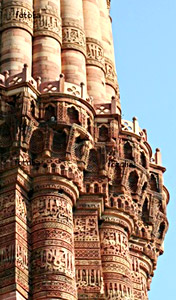 With the introduction of this new feature of the amalgamation of Hindu and Islam architecture a new experimentation in the Delhi Sultanate sculpture followed. This is evident from the fact that the Persian domes soon had the Hindu lotus motifs. The artisans who built the Muslim monuments belonged to the Hindu community too. Amongst the early Muslim dynasties the Slave dynasty and the Khalji dynasty constructed some of the most amazing monuments with impressive works of art. The Tughlaq monuments were, however, less ornamental. The later dynasties, like, Sayyids and Lodhis, resorted to more plush styles. From time to time new concepts were kept introduced. For example the double domes and enameled tiles. Terracotta sculpture remained popular even during the Muslim era.
One of the many prominent monuments from the Delhi sultanate is the Qutb Minar. It is the highest minaret in the world. Apart from this there is the Alai Darwaza, Jami Masjid and others. However with the passage of time the features of Delhi Sultanate architecture met with regional variations. If one moves away from the monuments of Delhi the architecture elsewhere assumed a completely different identity. The features of this new style differed from place to place; region to region. The Muslim rulers of Gujarat, Punjab, Bengal, Malwa, some parts of south India and Kashmir patronized this new style.
Simultaneously the features of the Delhi sultanate were also adopted by Hindu architecture. This style is quite prominent from the features of the Rajput sculptures.
|
|
|
|





