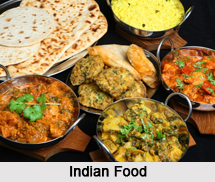
 Curry is a synonymous term in India, with almost every preparation requiring this creamy, spicy paste, used both in vegetarian and non-vegetarian dishes. The zesty and fiery aroma that emanates from curry makes one go weak in the knees, with mouth watering for more of masala served hot. Curry is truly a gourmet`s delight; yet, in order to grasp the fine art of cookery in curry and make it available to others, it is necessary to master the basic elements of curry, which are in fact pretty deviated from British notion. Curry was to some extent popularised in Indian by British Raj, with their anglicised impact touching the Indian native kitchen. Evolvement of curry in India is a long story of patience and triumph, making `curry` unanimously admired in East as well as West. Prior to British advent, Indian cooking was largely followed in the footsteps of Mughals and Islamic rule, with richness and enormity being personified in each delicacy. The basic elements of curry today under Indian cuisine marks much deviation from both Mughal and British culinary, making Indian cuisine escalate towards perfection.
The present times in India however witness a change in culinary style. Curry has evolved into a completely different aspect, with pan-Asian and cosmopolitan outlook being applied in every Indian restaurant and households. Curry is not only restricted to a biased method of preparation, but several innovative measures are applied to make it look and taste exquisite. Every province lays its influence on Indian curry, with the essential ingredients mostly remaining the same. The basic elements of curry would be: spices, curry leaves and its final seasoning.
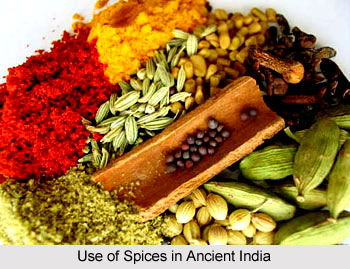
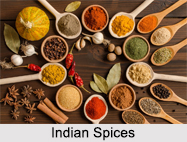
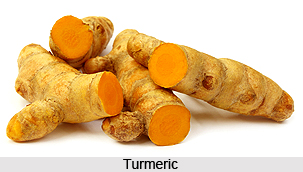
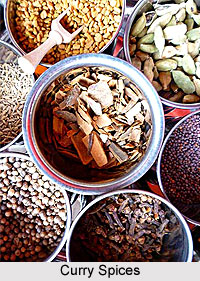 Indian Spices: Spices are the indispensable ingredients of `Curry`. Without it, the dish would just be pathetically bland and tasteless and odourless. Spices are referred to as `Masala` in India. The basic spices needed to make a curry are black pepper, chilli pepper, cloves, coriander, fenugreek, cinnamon, cardamom, cumin, ginger, turmeric and nutmeg. However, one can mix his/her own curry powder according to individual taste.
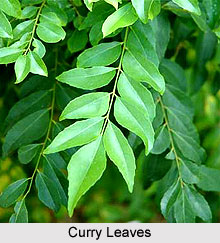
Curry leaves: Curry Leaves are a kind of herbs readily available in India. It is referred to as `kadhi-patta` in Hindi. They look like small lemon leaves and are grown at homes and also grow wild in most forest regions of India and are used as a seasoning. The curry leaf plant is a native of Tropical Asia, southern India and Sri Lanka. It is applied in curries as well as other dishes in India. It is best to use a fresh piece of curry leaf, fried in hot oil and ghee for the aroma. Curry leaf is predominately a seasoning leaf, to be used only in specific curries to provide specific tanginess. Very rarely it is applied in a ground format along with other spices. Customarily, curry leaf is the first thing in the oil to be used to make the curry itself.
Final Seasoning: A mixture of garlic, ginger, tomatoes and onions form the second level of seasoning for curry, comprising the last level in basic elements of Indian curry. These are the other most essential ingredients for any Indian food other than the spices. Final seasoning forms the base for the spicy and tangy taste of Indian culinary. Anything without these is considered bland. The famous ginger-garlic paste used to make curry is made by scraping the skin from the ginger and garlic.