Developments in Mathematics, British India - Informative & researched article on Developments in Mathematics, British India
  Indianetzone: Largest Free Encyclopedia of India with thousand of articles History of India


in  
Art & Culture | Entertainment | Health | Reference | Sports | Society | Travel
Forum  | Free E-magazine
History of India : Sources of History of India l Ancient History of India l Medieval History of India l Modern History of India l Indian Historical Dynasties l Indian Battles l Sepoy Mutiny 1857 l Indian Rulers l History of India l Indian Freedom Struggle l Indian Governor- Generals l British Indian Acts l Post Independence India l Iron Age in India
Home > Reference > History of India > Modern History of India > British Empire in India > Developments During British Regime > Developments in Mathematics
Developments in Mathematics, British India
Developments in mathematics in British India happened further in the already esteemed line-up of ancient Indian mathema.

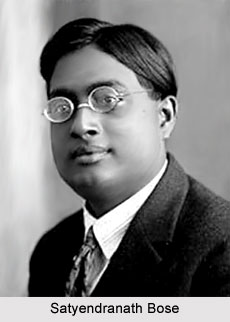
Mathematics was a unique arena, in which since prehistoric period India was much advanced of its times. With people like Aryabhata, Bhaskaracharya, Varahamihira and later people like Satyendranath Bose or Prasanta Chandra Mahalanobis, development in mathematics and calculation was never something unknown to Indian population. However, with some basic and routine problems, the field did not receive much advancement within the plebeian community. The British supremacy further contributed considerably to developments in mathematical grounds, sometimes with treatises.

On one such occasion, Henry Thomas Colebrooke (1765-1837) analysed and corrected the mathematical basis of the Hindu astronomers` assertions, regarding tie timing of equinoxes and movements of planets.

From 1783 onward, Reuben Burrow (1747-1792), as a member of the Asiatic Society of Bengal, attempted the translation of numerous Hindu works of algebra and arithmetic. Emanating from this work was his paper entitled "A Proof that the Hindus had the Binomial Theory".

Developments in mathematics in the later stages were even more nourished, when Reverend John Henry Pratt (d.1871), Archdeacon of Calcutta and member of the Asiatic Society, produced The Mathematical Principles of Mechanical Philosophy (1836) and Scripture and Science not at Variance (1856). He also worked out his theory of isostatic compensation as applied to survey work.

This article is a stub. You can enrich by adding more information to it. Send your Write Up to content@indianetzone.com
(Last Updated on : 9/04/2009)
  More Articles in Developments During British Regime
 
Scientific Developments during British Regime Developments in Archaeology Astronomical Developments in 19th Century
Developments in Forestry Developments in Medicine Developments in Geography
Developments in Mathematics Developments in Zoology Developments in Geology
Developments in Botany Technological Developments in British India Meteorological Developments in British India
Developments in Public Works Indian Films during the British Regime Indian Art and Craft during British Rule
Indian Industries during British Rule Natural History and Art during British Rule Painting During Early British rule
Developments in Metallurgy Development in Shipbuilding Development in Transport
Development in Telegraph System    
Recently Updated Articles in History of India
  • Mughal Architecture
    Mughal architecture is a combination of Islamic, Persian, Turkish and Indian architecture. It is a style that was developed under the Mughal dynasty in the sixteenth and seventeenth centuries.
  •  
  • Mansabdari System in Mughal Dynasty
    Akbar introduced the Mansabdari System in the Mughal army which primarily meant the ranking of officers on decimal system.
  •  
     
  • Deccan Policy of Mughal Dynasty
    Deccan Policy of the Mughal dynasty was weak during the reign of Babur and Humayun but after the accession of Akbar on the throne, the political situation changed and the Deccan policy was a success.
  •  
  • Coins of Pandyas
    Coins of Pandyas bear the legend of different Pandya ruler in different times.
  •  
  • Art and Architecture of Mughal Empire
    Art and architecture of Mughal Art offers an aesthetic degree to all art lovers. The subtlety of the finesse and the dazzle of the aura create huge amount of interest among tourist.
  •  
    E-mail this Article | Post a Comment
    RSS Feeds
    Forum
    Forum on History of India

    Free E-magazine
    Subscribe to Free
    E-Magazine on Indian Crafts
     
     
    Developments in Mathematics, British India - Informative & researched article on Developments in Mathematics, British India
    Sitemap
    Contact Us   |   RSS Feeds
    Copyright © 2008 Jupiter Infomedia Pvt. Ltd. All rights reserved including the right to reproduce the contents in whole or in part in any form or medium without the express written permission of Jupiter Infomedia Pvt. Ltd.