


 Astronomy and its other vast mystic findings were partially opened up to ancient Indian seekers. But it was rather a panoramic view of the huge subject. Quite ideally therefore much remained in the dark, waiting to throw light upon celestial bodies. The British advent changed everything in astronomical developments to its subsidiary parts. The Indian astronomers came up with innovative ideas while joining hands with the British thinkers. As such astronomical developments in 19th century welcomed a future process in the form of celestial discoveries, observatories and thesis papers. Astronomy and its other vast mystic findings were partially opened up to ancient Indian seekers. But it was rather a panoramic view of the huge subject. Quite ideally therefore much remained in the dark, waiting to throw light upon celestial bodies. The British advent changed everything in astronomical developments to its subsidiary parts. The Indian astronomers came up with innovative ideas while joining hands with the British thinkers. As such astronomical developments in 19th century welcomed a future process in the form of celestial discoveries, observatories and thesis papers.
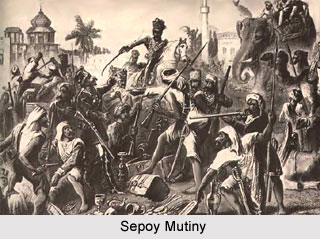
During the years of 1840-1857, Major Richard Wilcox (1802-1848) was chosen to operate the Royal Observatory of Lucknow. He completed a programme of study of major planets, eclipses of Jupiter's satellites, osculations of stars near the moon and meridional observations. In 1849, the King of Oudh ordered the abolition of the observatory's operations. In the course of the Sepoy Mutiny of 1857, the Observatory and its records were destroyed. In 1837, the construction of the Travancore Observatory in Trivandrum was completed by John Caldecott (1800-1849). Caldecott served as its director from 1837 to 1849. He executed some noteworthy observations on the comets of 1843 and 1845 and the solar eclipse of December 21, 1843. In spite of hugely obstructing conditions towards developments in astronomy during the 19th century, English researchers went ahead with their plans to ground astronomical works successfully. During the 1840s, Thomas Glanville Taylor (1804-1848) equipped Madras Observatory with transit instruments, astronomical clocks, telescopes and a circular measurer. From data provided by this equipment, he compiled the data published in his Star Catalogue (1844), which fixed the location of 11,000 stars. In May 1842, Captain William Stephen Jacob (1813-1862) established the Poona (present-day Pune, Maharashtra) Observatory. From 1845 to 1848, he observed several eclipses of Jupiter's satellites which allowed him to determine Poona's (Pune) longitude. Later from 1848 to 1859, Jacob was named Director of the Madras Observatory. He added to Taylor's Star Catalogue an additional 1440 stars. He continued his special studies of double stars and observed the planet Neptune, the satellites of Saturn, the mass of Jupiter and the transparency of Saturn's ring. Astronomical developments during the 19th century were moving on fast, with British India slowly accepting the phenomenon of celestial bodies. During the years of 1861-91, Norman Robert Pogson (1829-1891) was appointed Director of the Madras Observatory. After equipping the Observatory with new instruments, he discovered five new minor planets and the comet Blela in December 1872. On August 18, 1868 at Masulipatnam, Pogson became the first to observe the line spectrum of the sun's corona during a total solar eclipse. His other observations suggested a linkage between sunspots and India's droughts and subsequent famines. In 1885, the Royal Society constituted the Indian Observatories Committee comprising the Astronomer Royal and members of the Royal Society and the Royal Astronomy Society. The Committee's charge embraced the coordination of the work of the Madras and Bombay observatories. In 1897 it was later merged with an Imperial Observatories Committee. In 1898, Sir Norman Lockyer toured five Indian astronomical observatories making a detailed report on them to the India Office. He recommended the further development of the Kodaikanal Observatory for pure research in solar physics. This very sophisticated branch of physics, astronomy was receiving considerable monetary and educative facilities from both England and English officers in India. As such developments in astronomy during the ongoing years of 19th century went much ahead of its times to make way for future astronomical improvements. In 1900, the Solar Physics Observatory began functioning at Kodaikanal, Madras. The Observatory investigated sunspot spectra, hydrogen content of solar prominences, night sky spectra and meteorological and seismological studies. |
| |||



Home > Reference > History of India > Modern History of India > British Empire in India > Developments During British Regime > Astronomical Developments in 19th Century
Astronomical Developments in 19th Century
| Astronomical developments in 19th century under British India were exhaustively completed with perfect scientific tools. |
| ||||||||||||||||||||||||||||

