 Warren Hastings, the first governor-general of Bengal was in the midst of huge dishonour and arguments as he committed a crime while in term of office. That hideous crime was a terrible wrong imposed on a native resident, by the name of Nandkumar, an Indian tax official. Hastings teamed with his trusted band of ministers who were all members of the Supreme Court of India, accused Nandkumar to trial on the charge of forgery as provided for within the English law of forgery. Finally Nandakumar was hanged.
In consequence of this much-criticised case of Nandkumar, British law both in India and England sat up to take attention in the holes committed by lawmakers sitting in Indian governance. British rule was being shunned in every corner of India, making the English rulers think of a fresh path to justice. The Amending Act of 1781 was that fresh path, which was looked after carefully and formulated quite solemnly. The shame to top the whole incident was that the Supreme Court was in question of forgery and judicial callousness.
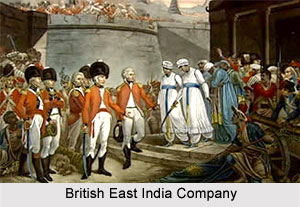
On 1st February 1781, the House of Commons heard three petitions criticising the conduct of the Supreme Court of Calcutta. The petitions emanated from the Governor and Council of Bengal, from the British East India Company and one signed by 648 British subjects living in Bengal. The petitions were referred to a Select Committee of the Commons, known as the Touchet Committee.
On 15th February, the Touchet Committee began its examination of the justice system in Bengal.
On 5th July 1781, Parliament passed the Amending Act to the Regulating Act of 1773, which significantly reduced the powers of the Supreme Court at Calcutta. It separated the Governor-General-in-Council and revenue matters from the Court`s jurisdiction. The act`s geographic jurisdiction became limited to only Calcutta. The Act recognised the appellate jurisdiction of the Governor-General-in-Council. It empowered the Governor-General and Council to convene as a Court of Record to hear appeals from the Provincial Courts on civil cases. Likewise, as a Court of Record it held the power to formulate regulations for the operations of the Provincial Courts. The Act also asserted that Mohammedan cases should be determined by Mohammedan law and Hindu law applied in Hindu cases.
On the same date in the same year, the Bengal Government passed into law a compilation of ninety-five articles prepared by Sir Elijah Impey (1732-1809), amending and consolidating pre-existing rules of civil procedure. The regulation appeared in English, Persian and Bengali languages. This code set a precedent for future consolidations of law over the next few decades until 1834 and the appearance of the first Bengal code.
On 29th June 1782, Hastings issued a proclamation which ostensibly made all zamindars, chowdris, taluqdars and other property owners in the `Mofussil` (places and areas that did not fall under city categories, remote districts) responsible for preventing crime and for bringing to justice those who did commit crimes. This measure was fleetingly honoured in spirit, but proved impossible to execute. Yet, Amending Act of 1781 had tried to recover much of the `native` blunders committed, owing to the keenest attention paid by English lawmakers after their stupidity in the Nandkumar case.
On 29th October 1782, Impey received from Lord Shelburne (1737-1805) a letter of recall from his position of Chief Justice of the Supreme Court of Calcutta. Politics aside, the recall regarded Impey`s acceptance of the position on the Sadar Diwani Adalat. In addition, Impey also had to hold the position of Chief Justice of the Bengal Supreme Court, as possessing the implications of a conflict in interests.
In 1786, an Act of Parliament made British subjects in India subject to the Courts of Oyer and Terminer and Gaol Delivery for all criminal offences.
In 1787, Lord Charles Cornwallis (1738-1805) revised the civil court system to reunite in the provinces criminal justice and revenue issues under the superintendence of the Collector, but in separate courts. Having gained some experience, in 1793 he changed his mind and again separated judicial from revenue adjudication.