





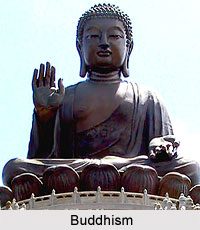
 Satya is a Sanskrit word which means 'truth'. It means purity and is the emblem of peaceful social movements. The path to ultimate truth or sat or the Supreme Being is 'Satya'. Thus all the deeds, words, and wisdom that take closer to the almighty are the truth or Satya. Satya is a Sanskrit word which means 'truth'. It means purity and is the emblem of peaceful social movements. The path to ultimate truth or sat or the Supreme Being is 'Satya'. Thus all the deeds, words, and wisdom that take closer to the almighty are the truth or Satya.
Satya, philosophically means 'unchangeable', that which has no distortion and that which pervades the universe in all its constancy. It is believed that Human life progresses through different stages, from childhood to adolescence, from adolescence to youth, and youth to old age. In these phases of life, people progress in the evident world. That is why human life is not Satya. 'Satya' also means the Supreme consciousness or Purusha. The analysis however, is that the Satya or the Truth is equal to love. This concept of truth is not merely a synonym of fact or correctness, but is more metaphysical, like the difference between brain and mind. Satya means a higher order, a higher principle, a higher knowledge, but not necessarily a higher being or creator. Satya is what one becomes aware of upon becoming a Bodhi. Satya acts as modifier, like 'ultra' or 'highest,' or more literally 'truest,' connoting purity and excellence. In Buddhism Satya means 'right' and is specified as the Noble Eightfold Path, such as Right view, Right intention, Right speech, Right action, Right livelihood, Right effort, Right mindfulness and Right concentration. The Four Noble Truths were called by the Buddha as Aryasatya. In Jainism Satya is considered to be one of its five core principles and all Sadhus or sages must take a vow to stick to the ethics. |
| ||||||||||||||||||||||||||||

